Bathroom design trends that improve small space usability
Exploring the latest bathroom design trends can make a dramatic difference in how a small bathroom looks, feels, and functions. From space-saving layouts and floating vanities to brighter finishes and smart storage, the right ideas help turn limited square footage into a more comfortable daily experience. This guide highlights practical design directions that improve usability without sacrificing style.
For homeowners, apartment residents, and renovation decision-makers, small bathrooms often create the same 4 pressure points: limited movement, poor storage, weak lighting, and cleaning difficulty. In today’s market, the most practical bathroom design trends focus less on decoration alone and more on spatial efficiency, durability, water control, and long-term maintenance.
From GIAM’s perspective as an intelligence platform covering sanitary spaces, building materials, and smart bath systems, the strongest trends are those that connect aesthetics with measurable usability. In compact bathrooms of roughly 3–6 square meters, even a 10–20 cm layout adjustment can improve circulation, reduce splash zones, and create more functional storage.
Why small-space bathroom design is changing fast
The shift in bathroom design trends is closely linked to urban living patterns. More consumers now live in apartments, compact houses, or mixed-use developments where bathrooms must support daily comfort within a tighter footprint. In these environments, every fixture depth, door swing, and storage layer affects usability.
Another reason is rising demand for materials that perform better over 5–10 years. Buyers are no longer choosing only by color or style. They compare water-saving fittings, anti-bacterial surfaces, easy-clean wall finishes, and moisture-resistant cabinets because maintenance costs and hygiene are part of the value equation.
The four usability goals that shape current choices
- Improve movement clearance by keeping at least 60–70 cm of comfortable standing space in front of the vanity or toilet.
- Increase usable storage volume without adding bulky floor cabinets.
- Boost reflected light through surface selection, mirror sizing, and lighting layers.
- Reduce cleaning effort by minimizing joints, ledges, and hard-to-reach corners.
What consumers now expect from modern sanitary spaces
In compact bathrooms, users increasingly expect 3 things at once: visual calm, practical storage, and water efficiency. That combination explains why bathroom design trends now favor wall-mounted fixtures, slim profiles, neutral finishes, and integrated accessories rather than oversized decorative elements.
The table below shows how older planning habits compare with newer small-space strategies that deliver better daily performance.
The pattern is clear: the best bathroom design trends for small spaces improve how the room works every day. When circulation, lighting, and storage are planned together, the bathroom feels larger without physically expanding it.
Layout trends that create more usable space
Layout is the first design decision because even premium materials cannot solve a poor plan. In a small bathroom, 3–5 fixture relationships matter most: entry path, toilet clearance, vanity depth, shower opening, and towel access. The strongest bathroom design trends start by removing physical friction from these daily movements.
Floating vanities and open floor lines
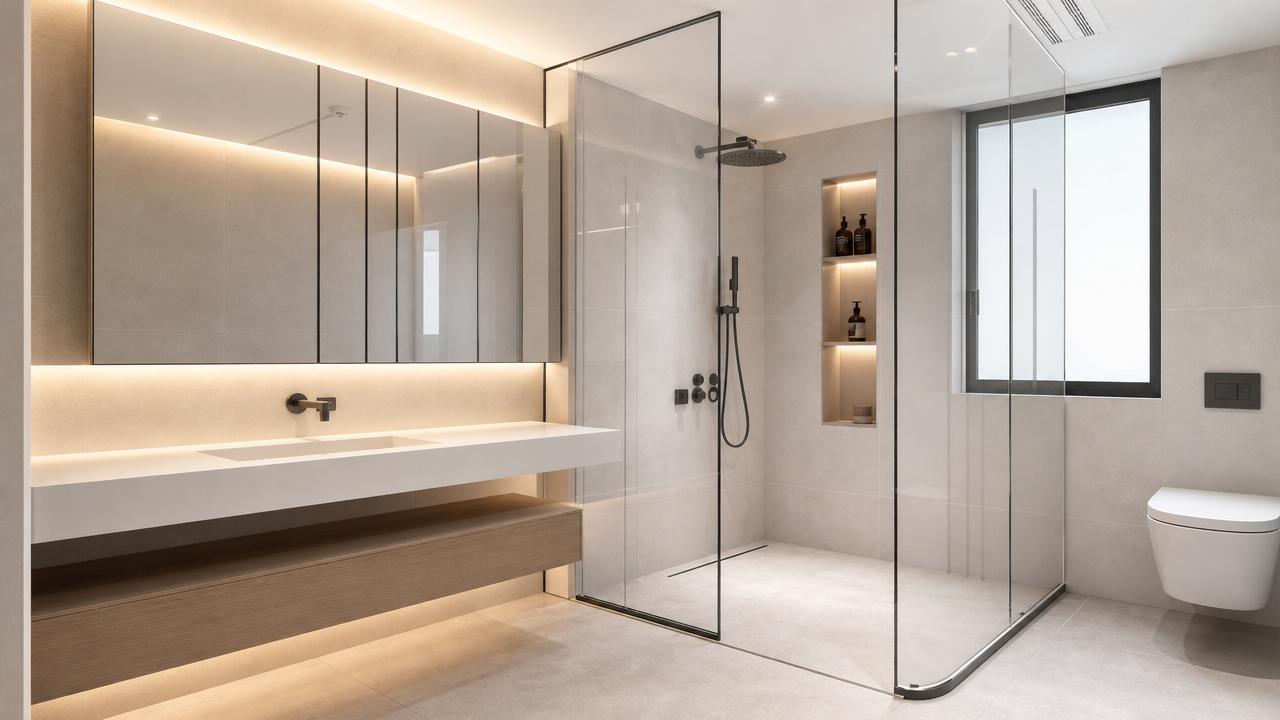
Floating vanities remain one of the most effective upgrades for compact bathrooms. By lifting the cabinet off the floor by 20–30 cm, designers create visual openness and allow easier floor cleaning. Slim models between 60 and 90 cm wide often provide enough storage for 1–2 users without making the room feel crowded.
When to choose a slim-depth vanity
A slim vanity is especially useful when the walkway is under 80 cm. Reducing cabinet depth from 55 cm to 40 cm can noticeably improve comfort. However, buyers should check basin projection, drawer organization, and splash control so the gain in circulation does not reduce practical use.
Walk-in showers instead of bulky enclosures
Many current bathroom design trends replace visually heavy shower cabins with walk-in formats. A fixed glass panel, usually 80–120 cm long, keeps sightlines open and reduces frame buildup where soap residue and moisture often collect. This trend works especially well in bathrooms where swing doors block circulation.
For safe use, floor slope and drainage planning are essential. A subtle gradient and properly positioned drain can control water spread more effectively than a larger enclosure that is poorly sealed.
Pocket doors and outward-opening solutions
Door geometry is often ignored, yet it can free up significant usable space. In bathrooms under 4 square meters, switching from an inward-opening hinged door to a pocket door or outward-opening option can unlock a full corner for storage, towel hooks, or a better vanity position.
Common layout mistakes to avoid
- Choosing fixtures by appearance before checking dimensions and clearance zones.
- Using oversized basins that leave less than 60 cm standing space.
- Adding storage where it interrupts elbow movement or mirror use.
- Ignoring wet and dry zone separation, which increases slipping and cleaning issues.
Material and color trends that make small bathrooms feel larger
Among the most influential bathroom design trends, surface strategy has a direct impact on perceived size. Small rooms benefit from finishes that reflect light evenly, reduce visual noise, and resist moisture over repeated cleaning cycles. The goal is not simply to make the room white, but to control contrast and texture carefully.
Lighter palettes with warmer undertones
Cool bright white can still work, but many consumers now prefer softer tones such as warm white, sand, pale greige, or muted stone. These colors reflect light well while making the room feel less clinical. In a bathroom with limited natural light, this shift can improve visual comfort throughout all 24 hours of use.
Large-format tiles and fewer grout lines
Large-format wall and floor tiles help reduce pattern interruption. Fewer grout lines create a cleaner visual field and can simplify maintenance. Depending on the room size, formats such as 60 x 60 cm or 60 x 120 cm are commonly selected to create continuity without making the room feel fragmented.
The table below compares common finish choices for compact bathrooms from a usability perspective.
These material choices show that bathroom design trends are increasingly tied to maintenance realities. A surface that looks premium but stains easily can reduce satisfaction within months, while a durable finish often performs better over years.
Mirror scale and lighting integration
A mirror that spans most of the vanity width, or slightly more, can visually widen the room. Integrated LED lighting also reduces shadow zones around the face and basin. In many small bathrooms, combining ceiling light, mirror light, and niche or under-vanity lighting creates a 3-layer system that feels more refined and more usable.
Storage trends that reduce clutter without adding bulk
Storage is central to successful bathroom design trends because clutter quickly makes a small room feel even smaller. The most effective solutions distribute storage vertically and discreetly instead of depending on one oversized cabinet. This approach improves organization while keeping the floor line open.
Mirror cabinets and recessed niches
Mirror cabinets combine 2 functions in one footprint. They are ideal for daily-use items such as skincare, toothbrushes, and medicines, while recessed shower niches prevent bottles from collecting on the floor or in hanging racks. Even a niche depth of 8–12 cm can make a meaningful difference in shower comfort.
Vertical shelving and over-toilet storage
Unused wall height is a common missed opportunity. Narrow vertical shelving, typically 15–20 cm deep, can hold towels, backup toiletries, and cleaning supplies. Over-toilet cabinets also work well when designed with clean lines and moisture-resistant materials.
A simple storage planning method
- Separate items into daily, weekly, and backup categories.
- Keep daily items within arm’s reach of the basin or shower.
- Move backup stock above eye level or behind closed storage fronts.
- Reserve at least 1 easy-access area for cleaning tools and spare paper products.
This type of storage planning aligns with current bathroom design trends because it supports better routines, cleaner visuals, and easier restocking without requiring a larger room.
Smart and sustainable upgrades with practical value
Not every technology feature is useful in a compact bathroom, but some upgrades deliver clear benefits. As GIAM tracks the integration of water-saving technologies and smarter sanitary systems, the most practical trend is selective adoption: choosing a few features that improve hygiene, efficiency, or maintenance rather than overloading the room.
Water-saving fittings that support everyday efficiency
Low-flow faucets, efficient shower mixers, and dual-flush toilets are no longer niche choices. For many households, they offer a straightforward way to reduce water use while keeping comfort stable. Buyers should compare flow ranges, pressure compatibility, and cartridge quality before purchase, especially in buildings with variable supply conditions.
Touchless and easy-clean features
Anti-fog mirrors, touchless faucets, rimless toilets, and concealed hardware all support easier upkeep. These options are especially valuable in shared family bathrooms where daily use is frequent and cleaning time is limited to short weekly windows.
What to prioritize on a realistic budget
- First priority: layout correction and moisture-resistant materials.
- Second priority: lighting, mirror strategy, and practical storage.
- Third priority: water-saving fixtures and selected smart features.
- Last priority: purely decorative items that add visual noise but little function.
For many consumers, this order gives the best return because the room becomes more useful before it becomes more complex.
How to choose bathroom solutions that stay effective over time
The most durable bathroom design trends are those that continue to work after installation day. A smart buying decision balances appearance, cleaning demands, fixture lifespan, and compatibility with local building conditions. In small spaces, mistakes are more visible because there is less room to absorb them.
A practical evaluation checklist
- Measure the room at least twice, including door swing and pipe positions.
- Confirm fixture depths, not just widths and heights.
- Ask how each material responds to moisture, hard water, and cleaning agents.
- Review installation complexity, spare part access, and replacement cycles.
- Check whether the design improves both visual openness and daily routine speed.
Frequent buying mistakes in compact bathrooms
One common mistake is prioritizing showroom appearance over real-life cleaning and movement. Another is mixing too many trends at once, such as dark finishes, heavy textures, open shelving, and oversized fittings. In a room under 5 square meters, simplicity usually performs better than excessive layering.
A second mistake is underestimating installation details. Drain alignment, waterproofing quality, and cabinet fixing conditions can determine whether the final result feels premium or problematic within the first 6–12 months.
Who benefits most from these trends
These bathroom design trends are especially useful for urban apartment owners, renovators upgrading older homes, landlords improving rental appeal, and families that need stronger storage and easier maintenance in one compact room. They also support buyers who want a cleaner aesthetic without sacrificing practical performance.
The most effective bathroom design trends for small spaces are not about chasing novelty. They combine better layout logic, lighter and more durable finishes, layered storage, and selective smart features to improve everyday use in measurable ways. When planned well, even a modest bathroom can feel calmer, brighter, and easier to maintain.
GIAM follows these changes through material innovation, sanitary space intelligence, and evolving consumer expectations across global residential and commercial environments. If you are comparing fixtures, finishes, or smart bath solutions for a compact bathroom project, now is the right time to evaluate options with long-term usability in mind.
To explore more bathroom design trends, compare practical product directions, or get a tailored solution for small-space renovation, contact us today and learn more about the right sanitary space strategy for your needs.
Industry Briefing
Get the top 5 industry headlines delivered to your inbox every morning.