CPSC Tightens Lead Limit for Faucets and Showers
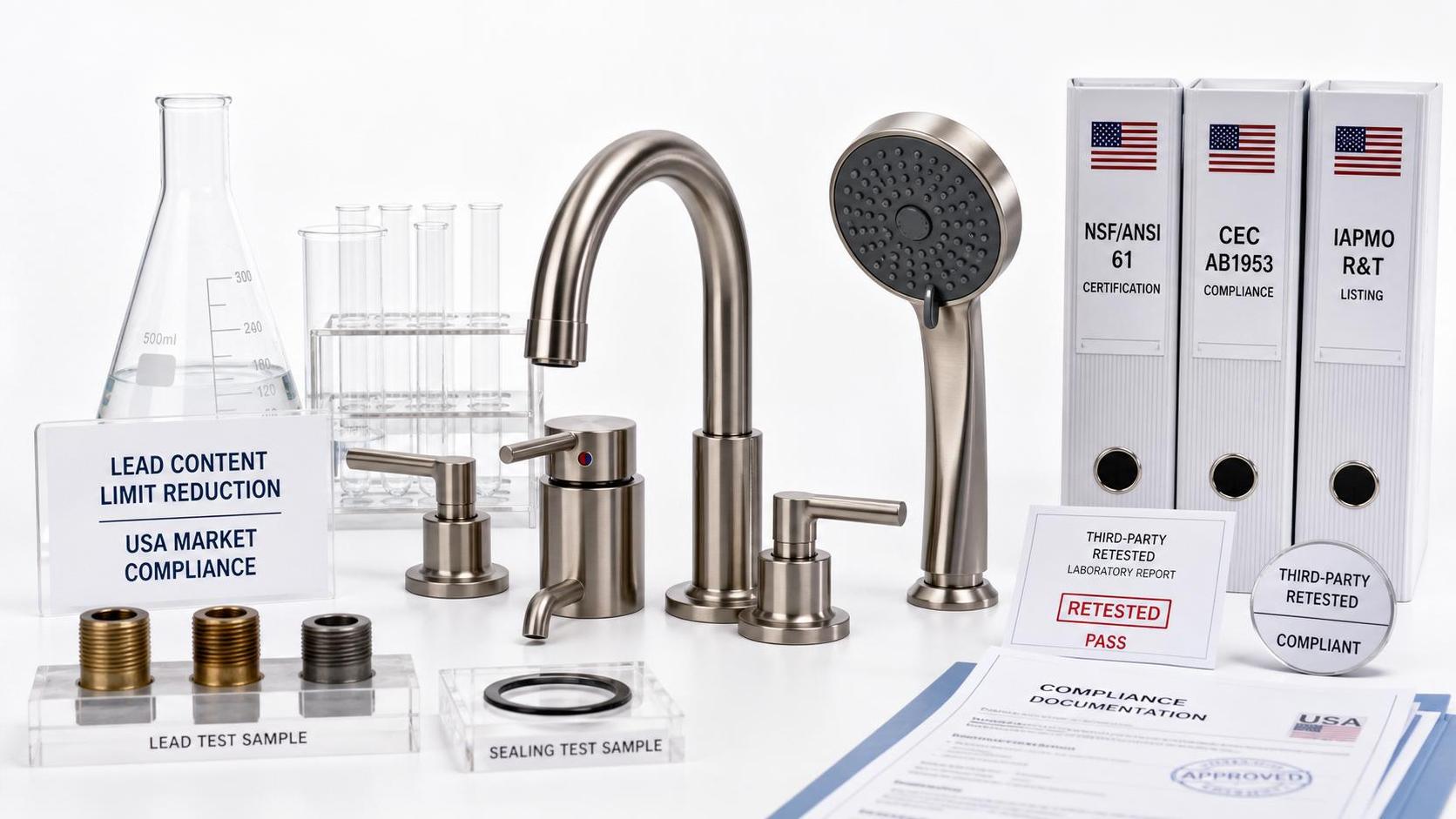
On October 1, 2026, the planned enforcement date attached to a U.S. Consumer Product Safety Commission move on plumbing fixtures became a focal point for faucet and shower exporters, testing providers, compliance teams, and buyers. The underlying development is a July 14, 2026 revision proposal, Docket No. CPSC-2026-0031, that would lower the soluble lead limit for these products from 1.0 ppm to 0.25 ppm. For companies shipping into the U.S. market, the issue is not only the tighter threshold itself, but also the related need for renewed third-party testing, joint FDA/CPSC filing work, and the possible effect on customs clearance for existing inventory and on the cost structure of new orders.
What the proposal changes in practical terms
According to the information provided, the CPSC issued a revised draft titled Lead Content Reduction Directive for Plumbing Fixtures on July 14, 2026 under Docket No. CPSC-2026-0031. The draft concerns faucets and shower products and proposes to reduce the allowable soluble lead content limit from the current 1.0 ppm to 0.25 ppm. The planned mandatory implementation date is October 1, 2026.
The same input also indicates that the adjustment would trigger a new round of third-party laboratory retesting and joint FDA/CPSC filing. It would also affect customs clearance for existing inventory and alter the cost structure of new orders for Chinese export companies.
Where the pressure is likely to appear first
Exporters may face immediate compliance timing pressure
From an industry perspective, direct trading companies focused on the U.S. market are likely to feel the impact early because their shipment schedules, product documentation, and customer commitments are tied closely to market-entry compliance. The main pressure points are likely to be whether current models can still support shipment plans under the tighter threshold, whether existing inventory can move through clearance smoothly, and how quickly updated test and filing materials can be assembled.
Manufacturers will need to reassess product readiness
Analysis shows that processing and manufacturing companies are affected at the product level. A lower soluble lead threshold means the compliance basis for faucet and shower lines becomes stricter than before. In business terms, this is less about headline policy language and more about whether current products can pass retesting, whether production batches remain aligned with customer requirements, and whether new order pricing needs to reflect added compliance work.
Testing and compliance service providers could see a heavier workload
Observably, laboratories and filing-related service providers are tied directly to the implementation path described in the input. Because the proposal is linked to a new round of third-party testing and joint FDA/CPSC filing, workload, scheduling, and document accuracy become practical concerns. For companies relying on outside support, turnaround time and file completeness may become as important as the testing result itself.
Buyers and channel partners may revisit order rhythm and delivery expectations
For procurement teams, importers, and distribution-side partners, the issue is likely to surface through delivery timing, document requirements, and cost discussions. What deserves closer attention is not only whether a product is still commercially available, but whether the supporting compliance package remains usable for U.S.-bound shipments after the planned implementation point.
What companies should watch now
Track the official wording and any rule-stage updates
Analysis shows that the distinction between a revision proposal and mandatory implementation matters in practice. Companies should focus on the exact official wording attached to Docket No. CPSC-2026-0031, the implementation timing tied to October 1, 2026, and any subsequent clarification affecting scope, documentation, or execution. For operations teams, this is the difference between general awareness and shipment-level decision making.
Separate existing inventory from future production planning
The input specifically notes potential effects on customs clearance for existing inventory and on the cost structure of new orders. That means companies should treat stock already produced and business still under quotation or production as two different compliance questions. Existing inventory raises clearance and document readiness issues, while new orders raise pricing, testing, and lead-time questions.
Prepare for retesting and filing coordination early
Because a new round of third-party laboratory retesting and joint FDA/CPSC filing is identified in the provided information, companies should pay close attention to internal sample management, test scheduling, filing materials, and the consistency of product data across documents. In practice, delays often come from coordination gaps rather than from a single technical point.
Align supplier, customer, and delivery communication
From an operational perspective, this development also calls for tighter communication across suppliers, factories, exporters, and buyers. What deserves closer attention is whether all parties are using the same compliance assumptions for the same product line. Misalignment here could affect quotations, promised delivery windows, and acceptance conditions at the customer side.
Why this looks bigger than a routine threshold adjustment
Observably, this is not just a technical update to a numeric limit. The move signals a stricter compliance expectation around faucet and shower products entering the U.S. market. At the same time, it is more appropriate to understand this as a regulatory development with immediate operational implications rather than as a fully settled long-term market conclusion. The confirmed facts point to a tighter limit, retesting, and filing consequences; the broader competitive and sourcing effects still require continued observation.
Analysis shows that the significance lies in how a lower threshold can ripple through testing cycles, filing workflows, customs handling, and order economics at the same time. That combination makes the development relevant not only to compliance departments, but also to sourcing, sales, and delivery management.
How this development is best understood at this stage
At this point, the information is best read as a concrete compliance change with near-term business consequences and with longer-tail implications still unfolding. The direct meaning is clear: faucet and shower products bound for the U.S. market are facing a much lower soluble lead threshold and related procedural work. The broader industry meaning is not that every outcome is already fixed, but that affected companies should treat this as a live operational issue rather than a distant policy signal.
Basis of this article and points for ongoing verification
This article is based on the user-provided news title, event date, and event summary. The specific official source link was not provided in the input, so the exact source text and any follow-up official clarification still need to be continuously verified. For this type of industry development, commonly relevant source categories include official notices, company announcements, industry association updates, authoritative media coverage, and standards-related documents. The main follow-up points to watch are whether the official wording changes further, how the implementation requirement is expressed in subsequent materials, and whether there are additional clarifications on retesting, filing, and inventory-related execution.
Industry Briefing
Get the top 5 industry headlines delivered to your inbox every morning.