Saudi SABER Update Tightens Faucet and Shower Filings
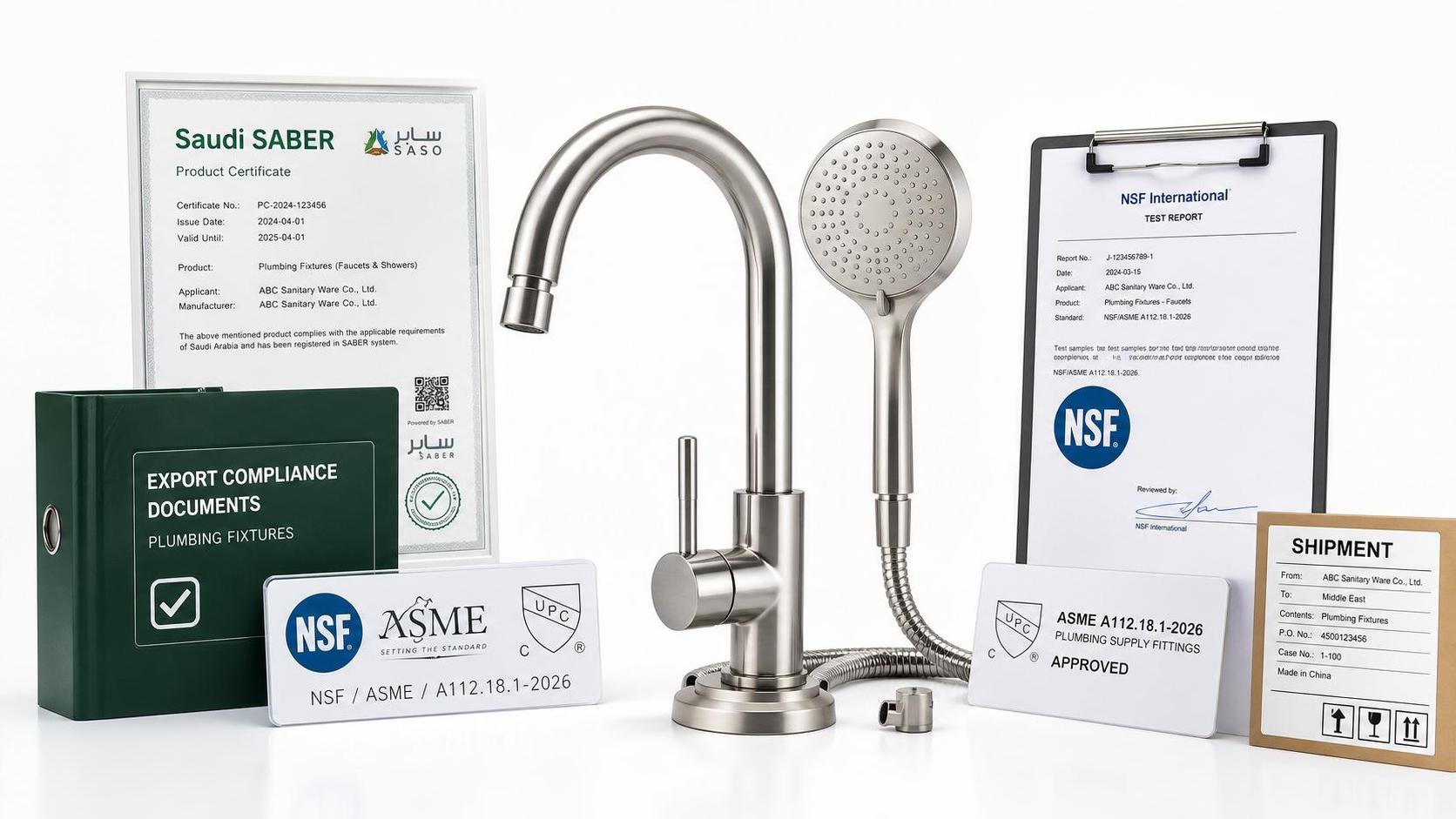
On July 1, 2026, Saudi Arabia’s SABER electronic clearance platform introduced a stricter filing requirement for imported faucets and showers: shipments in this category must now be linked to a valid NSF or ASME water-efficiency certificate under the latest A112.18.1-2026 standard. For companies involved in product certification, export documentation, customs filing, and shipment scheduling, the immediate invalidation of the older A112.18.1-2022 version makes this more than a paperwork adjustment, because filings without the updated certificate are automatically rejected by the system.
What the platform change now requires
According to the provided event information, SASO completed the SABER platform upgrade on July 1, 2026. After the upgrade, all imported goods declared under the Faucets & Showers category must be associated with a valid NSF or ASME certificate based on A112.18.1-2026. The previous A112.18.1-2022 certificate version ceased to be valid immediately. If the required certificate is not linked, the system automatically returns the filing.
Where the operational impact is likely to appear
For exporters and direct trading companies
From an industry perspective, these companies are likely to face the most immediate filing risk because they are directly responsible for preparing shipment-related compliance documents. The main impact is likely to appear at the declaration stage, where use of an outdated certificate or failure to link the updated one can interrupt the submission process. What deserves closer attention is whether current product files for Saudi-bound shipments still rely on A112.18.1-2022 documentation.
For manufacturers supplying the Saudi market
Analysis shows that manufacturers may be affected through product compliance coordination rather than through customs operations alone. If a factory’s faucet or shower products were previously supported by the older certificate version, the practical issue is whether updated certification documents are already available for customers and importers to use in SABER. The core concern here is document readiness tied to active orders and delivery timelines.
For importers, distributors, and procurement teams
Observably, downstream market participants may encounter delays not because of product demand, but because clearance submissions can be rejected automatically when certificate linkage is missing. The business impact is therefore likely to concentrate on inbound planning, order acceptance, and delivery commitments. These parties should pay close attention to whether suppliers can provide valid A112.18.1-2026 certification before shipment booking or filing begins.
For compliance and supply-chain service providers
Service providers involved in certification handling, documentation review, and customs support are also likely to see a direct workload shift. The change raises the importance of version control in compliance files and of checking whether the SABER record is correctly linked before submission. In practice, the main pressure point is the handoff between certificate status and platform operation.
What companies should review immediately
Check certificate version alignment
The first practical issue is whether products under the Faucets & Showers category are still supported by A112.18.1-2022 documents. Based on the provided information, that version is no longer accepted after the July 1, 2026 platform upgrade, so businesses should distinguish clearly between a certificate that exists internally and one that is actually valid for SABER filing.
Reconfirm filing readiness before shipment moves
What deserves closer attention is the timing gap between having goods ready and having compliant documentation properly linked in the system. Where shipment schedules are tight, companies may need to verify filing readiness before dispatch, rather than treating certification review as a final-step formality.
Coordinate supplier and customer communication
For businesses working across multiple parties, the practical focus should be on document confirmation and expectation management. Suppliers, exporters, importers, and filing teams should align on whether the required A112.18.1-2026 certificate is available and linked, especially for orders already in process around the date of the platform change.
Continue monitoring how the rule is applied in practice
Although the core requirement in the provided information is clear, companies should still watch for any further official wording, clarification, or implementation detail related to category scope, document acceptance, or platform handling. This is particularly relevant where internal teams are translating the rule into day-to-day filing procedures.
Why this should be read as more than a technical update
Analysis shows that this development is best understood as an immediate compliance enforcement signal rather than a routine digital platform adjustment. The key point is not only that SABER has been upgraded, but that the platform is now being used to enforce certificate-version validity in real time through automatic rejection. At the same time, it is more appropriate to understand this as a specific operational requirement already in effect for the named product category, while broader implications beyond faucets and showers still require continued observation rather than assumption.
How to interpret the change at this stage
At this stage, the most rational reading is that the update creates an immediate execution issue for any business declaring faucets and showers into Saudi Arabia without a valid NSF or ASME A112.18.1-2026 water-efficiency certificate linked in SABER. It is not simply a short-term notice, because the platform-level rejection mechanism gives the requirement direct operational force. Even so, the wider market effect should be assessed carefully and based on actual implementation outcomes, not on overextended conclusions.
Basis of this article and points for continued verification
This article is based on the user-provided news title, event date, and event summary. For this type of industry update, relevant source types would usually include official notices, corporate announcements, industry association information, authoritative media reporting, and standard-organization documents. No specific official source link was provided in the input, so the exact original release path still needs ongoing verification. Continued attention should focus on any further official clarification regarding SABER filing practice, certificate acceptance, and implementation details for the affected product category.
Industry Briefing
Get the top 5 industry headlines delivered to your inbox every morning.