
Vietnam Requires VIETCERT QR Codes on Imported Showers
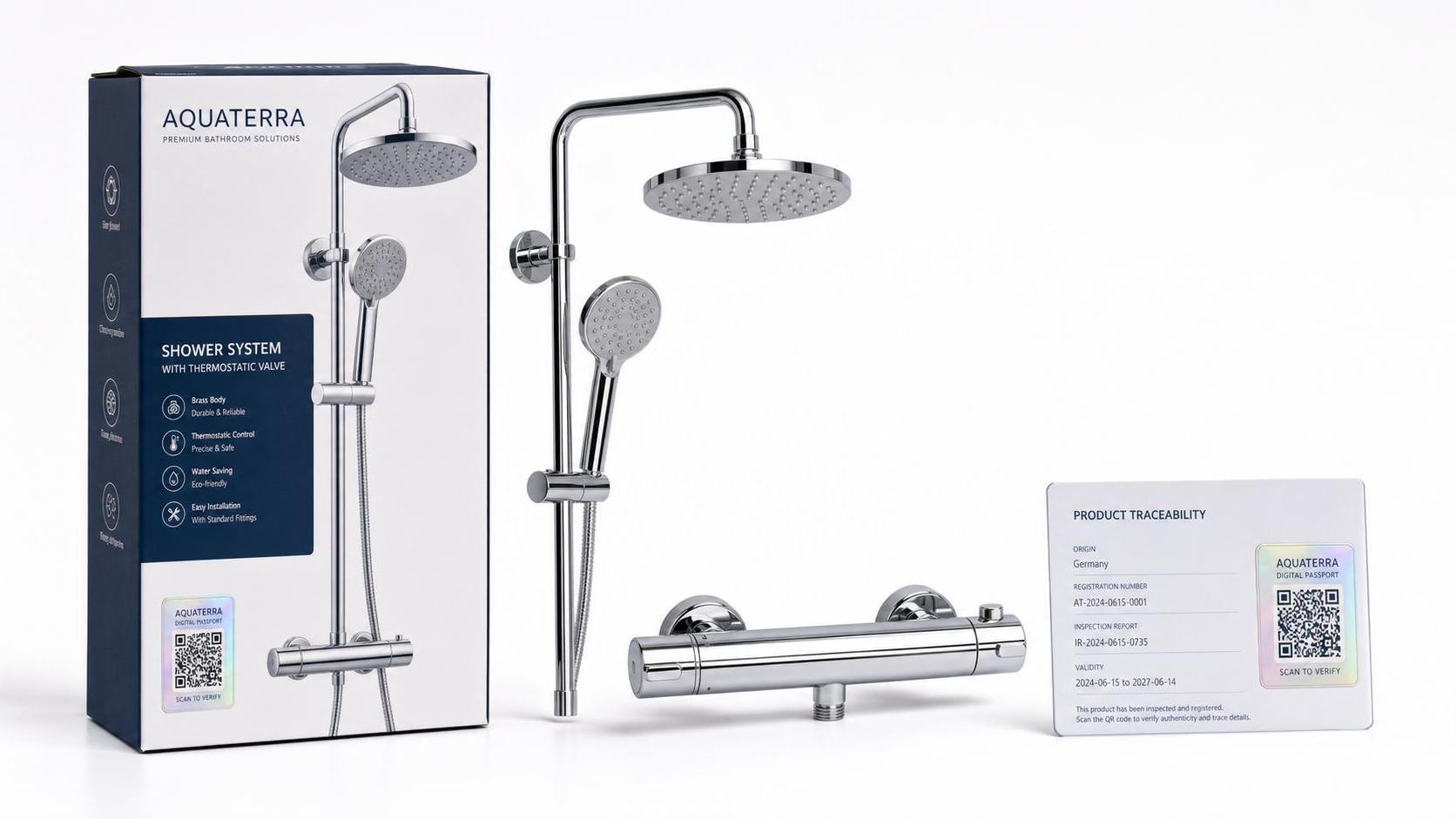
Vietnam’s Ministry of Industry and Trade (MOIT) is moving imported faucets and showers into a stricter traceability framework. Under Circular No. 127/2026/TT-BCT, effective August 15, 2026, imported Faucets & Showers products, including shower systems and thermostatic mixing valves, must carry a VIETCERT-issued dynamic QR code on the smallest sales unit. For importers, manufacturers supplying Vietnam, distributors, and compliance teams, the development is worth close attention because it links product labeling, inspection information, and accountability at the unit level rather than only at shipment or document level.
What the Circular Requires
According to the information provided, MOIT issued Circular No. 127/2026/TT-BCT on June 28, 2026. The measure takes effect on August 15, 2026 and applies to all imported Faucets & Showers products, including shower systems and thermostatic mixing valves.
The rule requires a dynamic QR code issued by VIETCERT to be affixed to the smallest sales unit. When scanned, the code must display the country of origin, the manufacturer registration number, the inspection report number, and the validity period in real time.
The stated purpose of the measure is to strengthen traceability and quality accountability for imported sanitary hardware products.
Where the Impact Is Likely to Be Felt First
Import operations will face unit-level compliance pressure
From an industry perspective, direct trading companies importing these products into Vietnam may be the first to feel the operational impact. The reason is straightforward: the requirement is tied to the smallest sales unit, which means compliance is no longer limited to customs documentation or batch records. The practical focus is likely to shift toward packaging readiness, label application, and consistency between physical goods and traceable data.
Overseas manufacturers will need tighter product-data coordination
Analysis shows that manufacturers serving the Vietnam market may be affected even if they are not the importer of record. The QR code must display specific information in real time, including origin, manufacturer registration number, and inspection report details. That makes product-data accuracy and document alignment more important in export preparation, especially for product lines such as shower systems and thermostatic mixing valves that fall within the stated scope.
Distributors and channel partners may need clearer verification routines
For channel and distribution businesses, the main issue is not only whether products arrive, but whether saleable units carry compliant QR identification. Observably, the traceability requirement can affect receiving checks, stock acceptance, and downstream customer communication. Market participants handling imported bathroom hardware may need to watch for how QR verification becomes part of routine product handling.
Service and supply-chain support functions may see added coordination work
Supply-chain service providers, labeling partners, and compliance support teams may also be drawn more directly into the workflow. The measure connects inspection information and validity status to a scannable code, so coordination across packaging, documentation, and release timing could become a more visible part of delivery execution.
What Companies Should Watch Now
Check which SKUs fall within the stated product scope
What deserves closer attention is product classification at the business level. The information provided explicitly mentions imported Faucets & Showers products, including shower systems and thermostatic mixing valves. Companies supplying multiple sanitary hardware categories should first identify which imported SKUs are clearly within scope and where smallest-unit labeling may require adjustment.
Review document consistency behind the QR display
Because the QR code must show the country of origin, manufacturer registration number, inspection report number, and validity period in real time, companies should pay close attention to whether these data points are complete and internally consistent. This is a practical issue for supplier qualification, document preparation, and communication between exporter, importer, and compliance teams.
Separate policy wording from execution details
Analysis shows that the core obligation is already clear, but businesses should distinguish between the announced requirement and the operational details that may shape implementation. In practice, teams will want to monitor how labeling, timing, and verification are handled in actual transactions, especially where shipment schedules and retail packaging are already fixed.
Prepare for customer and partner communication around effective dates
The effective date of August 15, 2026 creates an immediate timing issue for orders, inventory planning, and delivery coordination. Importers, distributors, and suppliers may need to align expectations with customers and partners on which product units require the VIETCERT dynamic QR code and when compliance becomes necessary in the flow of goods.
Why This Looks Like More Than a Labeling Detail
Observably, this development is not just about adding another mark to imported products. The requirement ties each smallest sales unit to live traceability information and named compliance fields, which suggests a stronger emphasis on product-level accountability in imported bathroom hardware.
It is more appropriate to understand this as a concrete regulatory step with immediate operational consequences, while also treating it as a longer-term signal about how traceability may be enforced in practice. At the same time, it remains necessary to keep watching how implementation works on the ground before drawing broader conclusions beyond the stated product scope and data requirements.
How the Market May Read This Development
In summary, the new Vietnam requirement matters because it brings traceability obligations closer to the retail unit for imported faucets and showers products covered by the circular. The confirmed facts point to a clear compliance change effective August 15, 2026, while the broader market significance lies in how importers, manufacturers, and channel partners adapt their documentation, packaging, and verification processes.
A neutral reading is that this is both an immediate compliance matter and a regulatory signal worth continued monitoring. It should not be overstated as a market-wide outcome beyond the information provided, but it does merit practical attention from companies involved in supplying imported shower systems, faucets, and thermostatic valve products into Vietnam.
Basis of This Article
This article is based on the user-provided news title, event date, and event summary concerning MOIT Circular No. 127/2026/TT-BCT and the VIETCERT dynamic QR code requirement for imported Faucets & Showers products. No additional unverified facts, market data, company cases, or external source links have been introduced.
For this type of industry update, commonly relevant source categories may include official government notices, corporate compliance notices, industry association updates, authoritative media reporting, and standards or certification documents. The specific official source link was not provided in the input, so continued verification remains necessary. Follow-up attention should focus on any later official clarifications, execution details, or scope-related interpretations connected to the QR traceability requirement.
Industry Briefing
Get the top 5 industry headlines delivered to your inbox every morning.