
China's MIIT Launches 2026 Industrial Energy Efficiency Diagnostics
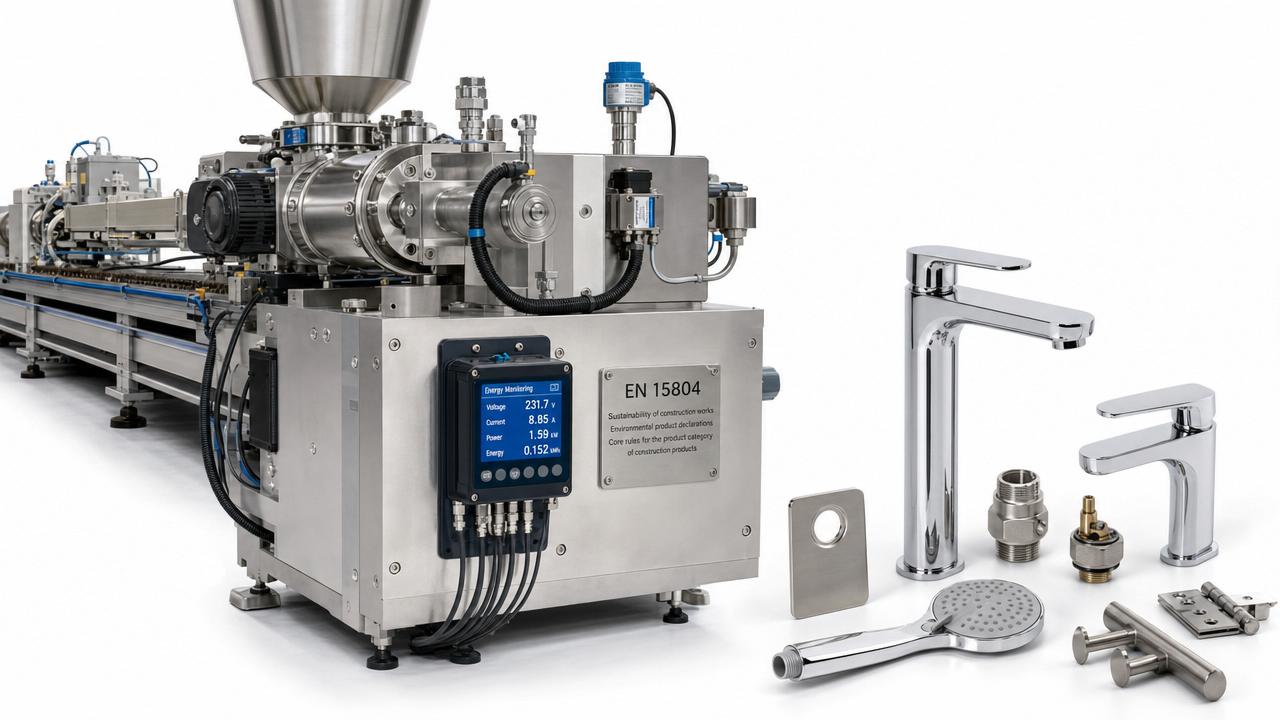
On May 16, 2026, China’s Ministry of Industry and Information Technology (MIIT) launched the 2026 Industrial Energy Efficiency Diagnosis initiative, explicitly targeting ceramic, smart bathroom, and architectural hardware manufacturing enterprises. The move signals a structured effort to align Chinese industrial environmental data with EU Environmental Product Declaration (EPD) requirements—particularly through EN 15804-compliant data structuring and direct integration with the EU EPD database. This development is especially relevant for manufacturers exporting to or supplying into EU-regulated construction value chains.
Event Overview
On May 16, 2026, MIIT issued the Notice on Conducting the 2026 Annual Industrial Energy Efficiency Diagnosis Service. The notice identifies ceramic, smart bathroom, and architectural hardware manufacturing enterprises as the first batch of entities subject to mandatory energy efficiency diagnosis. It further specifies that diagnostic data will be processed in accordance with the EN 15804 standard and directly interfaced with the EU EPD registration platform.
Which Subsectors Are Affected
Manufacturers Exporting to the EU Construction Sector
These enterprises are directly affected because their products fall under CE-marked construction products requiring EPDs under EU Regulation (EU) 2023/988 (the Construction Products Regulation). The diagnosis results—structured per EN 15804—may serve as foundational input for future EPD declarations, reducing time-to-compliance for EU market access.
Domestic Tier-1 Suppliers to EU-Targeted OEMs
Suppliers providing ceramic tiles, sanitary ware components, or metal fittings to OEMs marketing in the EU face upstream data demands. Even if not directly exporting, they may be required to provide verified energy and material flow data to support their customers’ EPD submissions—making participation in the MIIT diagnosis functionally relevant.
Raw Material Providers Serving the Target Sectors
Producers of clay, glazes, brass alloys, or stainless steel used in ceramic, bathroom, or hardware manufacturing may experience increased traceability requests. While not listed as primary diagnostic subjects, their material data (e.g., embodied energy, recycled content) may be needed to complete full cradle-to-gate life cycle assessments aligned with EN 15804.
What Enterprises or Practitioners Should Focus On and How to Respond Now
Monitor official implementation guidance from MIIT and provincial authorities
The Notice marks the launch—not the full rollout—of the program. Enterprises should track subsequent technical guidelines, eligibility criteria, and timelines for data submission, especially regarding verification protocols and third-party validation requirements.
Identify and map product lines subject to EU EPD mandates
Not all ceramic, bathroom, or hardware products face equal regulatory pressure. Prioritize items covered by EU harmonized standards (e.g., EN 14411 for ceramic tiles, EN 200 for faucets), as these are most likely to require EPDs in public procurement or green building certification schemes (e.g., BREEAM, DGNB).
Distinguish between policy signaling and operational readiness
The linkage to the EU EPD database is stated as an objective—not yet confirmed as live interoperability. Enterprises should treat this as a preparatory signal: current diagnostics may feed future EPD workflows, but no automatic EPD issuance or EU recognition is implied at this stage.
Begin internal data collection for energy, fuel, and material inputs
Start compiling facility-level data on electricity, natural gas, thermal energy, raw material consumption, and waste generation—by production line and product family. Aligning early with EN 15804’s modular structure (e.g., modules A1–A3 for cradle-to-gate) supports both MIIT diagnosis and future LCA modeling.
Editorial Perspective / Industry Observation
Observably, this initiative functions primarily as a capacity-building and data harmonization measure—not an immediate compliance mandate. Analysis shows it reflects China’s strategic response to tightening EU sustainability gateways, particularly for construction-related exports. From an industry perspective, it is more accurately understood as an early-stage alignment mechanism rather than an enforcement action. The emphasis on EN 15804 structuring—and not just domestic metrics—suggests long-term intent to reduce friction in cross-border environmental reporting. However, actual integration with the EU EPD platform remains contingent on technical, governance, and mutual recognition developments still underway.
This is not yet a de facto EPD pathway, but it is a calibrated step toward one. Stakeholders should therefore monitor—not assume—interoperability outcomes, while treating the diagnostic process as a low-risk opportunity to strengthen foundational LCA data infrastructure.
The broader significance lies in institutionalizing standardized environmental data collection at the factory level within key export-oriented subsectors. For the ceramic, smart bathroom, and architectural hardware industries, this represents the first coordinated national effort to pre-position supply chain data for global sustainability frameworks—starting with the EU’s EPD ecosystem.
Current understanding should emphasize preparation over obligation: the initiative sets a directional benchmark, not an immediate deadline. Its value emerges incrementally—as diagnostic outputs inform internal LCA capability, supplier engagement practices, and future EPD development—not as a standalone certification event.
Source: Ministry of Industry and Information Technology (MIIT) of the People’s Republic of China — Notice on Conducting the 2026 Annual Industrial Energy Efficiency Diagnosis Service, issued May 16, 2026.
Note: Direct technical integration with the EU EPD database and associated validation procedures remain pending official technical specifications and are subject to ongoing observation.
Industry Briefing
Get the top 5 industry headlines delivered to your inbox every morning.