
EU Rule Takes Effect on Smart Toilet Compliance Labels
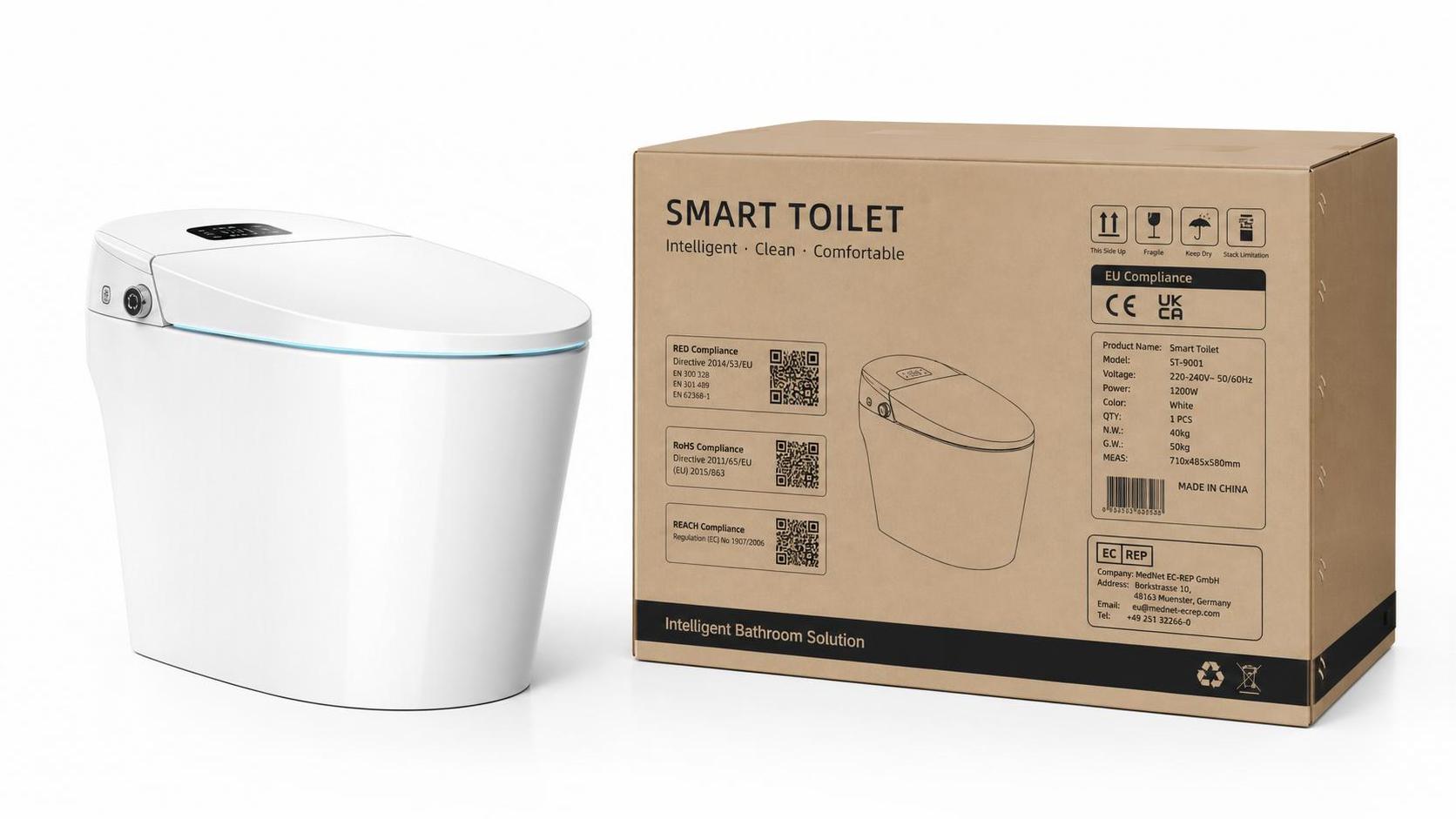
From July 17, 2026, Smart Toilets entering the EU market are subject to a new compliance requirement under EU 2026/1189: products must be registered through the ECCS and carry a dynamic digital compliance label with a QR code on both the product and its packaging. For exporters, manufacturers, certification-related teams, and delivery planners, this matters because the rule links market access more directly to registration, labeling, and document-ready product information, while also affecting export procedures and compliance costs for Chinese suppliers.
What the new requirement now requires
According to the provided information, the EU's Digital Compliance Identification Regulation for Smart Sanitary Products, EU 2026/1189, officially took effect on July 17, 2026. The rule requires all Smart Toilets entering the EU market to be registered through the ECCS, or European Cyber-Compliance System.
The regulation also requires a dynamic digital compliance label with a QR code to be affixed both to the product itself and to its packaging. The label must cover antibacterial performance, water-use efficiency, firmware update logs, and a data privacy statement.
The information provided further indicates that this requirement directly affects export delivery processes and certification costs for Chinese manufacturers.
Where the operational impact is likely to appear
Export-facing manufacturers will feel it first in shipment readiness
From an industry perspective, manufacturers shipping Smart Toilets to the EU are likely to be affected most directly because the rule is tied to whether products can enter the market. The immediate pressure point is likely to be shipment readiness: registration through ECCS, label preparation, and ensuring that the required information appears on both product and packaging in a usable form.
What deserves closer attention is whether internal product, packaging, and documentation workflows are aligned tightly enough to avoid delays at the point of export handover.
Compliance and certification functions face a broader information burden
Analysis shows that the rule is not limited to a physical mark. Because the label must include information on antibacterial performance, water-use efficiency, firmware update logs, and data privacy statements, compliance-related teams may need to coordinate a wider set of product information than under a simpler labeling regime.
The likely business impact appears in document preparation, data consistency, and cost control, especially where product claims and digital disclosures must be kept aligned with the QR-linked label content.
Supply chain and delivery service providers may see added coordination steps
Observably, logistics coordinators, packaging partners, and export service providers may also be affected because the rule changes what must be present before goods are ready for EU delivery. Where labeling is incomplete or registration is not in place, the disruption would likely show up in handover timing, packaging execution, or pre-shipment checks.
For these participants, the key issue is less the regulation itself than the timing and accuracy of upstream compliance preparation.
What companies should be reviewing now
Registration and labeling should be treated as part of delivery preparation
Analysis shows that companies exporting Smart Toilets to the EU should not treat ECCS registration and QR-code label application as a separate afterthought. In practical terms, both appear to become part of the delivery chain, since the requirement applies to market entry and covers both the product body and retail or transport packaging.
Product information must be ready for repeated verification
What deserves closer attention is the content carried by the digital compliance label. Because the required fields include antibacterial performance, water-use efficiency, firmware update logs, and data privacy statements, companies should review whether those items are prepared in a way that can support consistent external communication across product, packaging, and compliance materials.
Cost and lead-time planning need closer monitoring
From an industry perspective, the provided information already points to direct effects on certification cost and export delivery processes for Chinese manufacturers. That means procurement, sales operations, and fulfillment teams may need to watch for changes in lead time, approval sequencing, and customer-facing delivery commitments.
Official wording and implementation details still warrant tracking
Observably, the regulation is already in force, but companies should continue watching how official wording, platform processes, and execution requirements are expressed in practice. The distinction between a clear policy requirement and day-to-day implementation steps is often where operational friction appears first.
Why this reads as more than a label update
Analysis shows that this development is better understood as a compliance workflow change rather than a simple packaging revision. The required QR-based digital label brings together product performance information, firmware update history, and privacy disclosure in one visible compliance touchpoint.
It is more appropriate to understand this as a concrete near-term operational change with longer-term signaling value. The near-term change is clear: exporters of Smart Toilets to the EU must adapt registration and labeling procedures. The longer-term signal, based only on the information provided, is that digital, updateable, and disclosure-linked compliance presentation is becoming more central in market access requirements for connected sanitary products.
How to read the significance at this stage
At this stage, the most neutral reading is that the rule has already created a practical compliance threshold for Smart Toilets entering the EU. It should not yet be overstated beyond the provided facts, but it is clearly more than a short-lived procedural adjustment for affected exporters.
Current industry attention is best directed toward execution: registration readiness, QR-code label deployment, consistency of required disclosures, and the cost and timing effects on export delivery. In that sense, this is best understood as an implemented regulatory change with ongoing implications that still require close observation in practice.
Basis of this article and follow-up points
This article is generated based on the user-provided news title, event date, and event summary concerning the July 17, 2026 implementation of EU 2026/1189 for Smart Toilets. For this type of industry update, commonly relevant source categories may include official regulatory notices, corporate announcements, industry association updates, authoritative media reporting, and standard-setting or compliance documentation.
No specific official source link was provided in the input, so the exact primary source link remains to be verified on an ongoing basis. Follow-up attention should remain on official wording, ECCS-related implementation details, and any further clarification that may affect registration, labeling execution, or export delivery procedures.
Industry Briefing
Get the top 5 industry headlines delivered to your inbox every morning.