
On June 1, 2026, the China-Europe Railway Express service from Hefei reached a cumulative 6,000 trips, with routes covering 20 countries including Germany, Poland, and Hungary. The development is particularly relevant to building materials exporters, bathroom product suppliers, project contractors, and supply chain service providers, as customized building materials trains and mixed less-than-container-load services are becoming a notable part of cross-border project procurement.
Event Overview
As of June 1, 2026, the China-Europe Railway Express service from Hefei had operated 6,000 cumulative trains. The route network currently reaches 20 countries, including Germany, Poland, and Hungary.
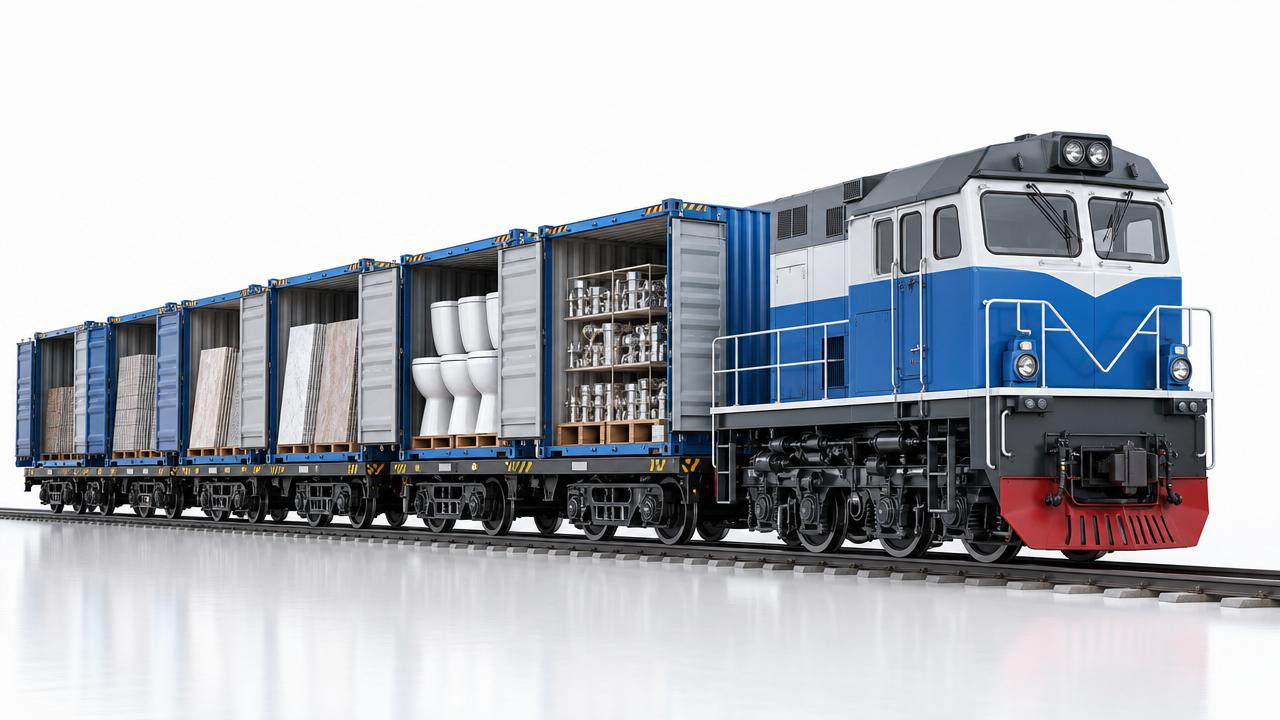
Publicly available information also shows that dedicated building materials trains now account for 18% of the service. A newly added mixed less-than-container-load service combines tiles, smart toilets, and hardware fittings, supporting project-based export packaging. Under this model, a single container can be configured with a full range of bathroom space categories.
The disclosed information indicates that engineering contractors in the Middle East and Eastern Europe can use this model to lock delivery schedules, simplify customs clearance, and reduce overall procurement costs.
Which Segments Are Affected
Building Materials Exporters
Building materials exporters are directly affected because the dedicated building materials train has become a defined part of the Hefei-Europe railway service. The reported 18% share suggests that building materials are no longer only occasional cargo within the route structure.
From an industry perspective, the main impact is on export organization. Companies shipping tiles, bathroom products, and related hardware may need to pay closer attention to project-based packing, container configuration, and delivery coordination, rather than treating each product category as a separate export order.
Bathroom Product and Hardware Suppliers
Suppliers of tiles, smart toilets, and hardware fittings are affected because the new mixed less-than-container-load service is built around these categories. The service allows multiple bathroom-related products to be combined in one container, which may change how suppliers coordinate product readiness and documentation.
Analysis shows that the key issue for these suppliers is not only transportation availability, but also whether product specifications, packing lists, customs documents, and delivery timelines can be aligned under one project shipment.
Engineering Contractors in the Middle East and Eastern Europe
Engineering contractors in the Middle East and Eastern Europe are specifically relevant because the disclosed model supports project-based export packaging and can help lock delivery schedules, simplify customs clearance, and reduce comprehensive procurement costs.
What deserves more attention now is the procurement model. Contractors that previously purchased bathroom-related materials from multiple channels may need to evaluate whether consolidated container-based procurement can better match project schedules and site delivery requirements.
Supply Chain and Freight Service Providers
Supply chain service providers are affected because mixed less-than-container-load shipments require more coordination than single-category cargo. The combination of tiles, smart toilets, and hardware fittings in one shipment raises practical requirements for cargo matching, packing sequence, customs documentation, and delivery communication.
Observably, this creates demand for service providers that can manage cross-category cargo consolidation and project-based export processes. However, this should be understood as a service opportunity linked to the disclosed route model, not as a guaranteed market outcome.
What Companies and Practitioners Should Watch and How to Respond
Track Official Updates on Route Capacity and Service Scope
Companies should continue monitoring official statements related to the Hefei China-Europe Railway Express, especially updates on building materials trains, destination coverage, and mixed less-than-container-load services. Since the currently confirmed information is limited to the 6,000 cumulative trips, 20-country coverage, the 18% share of building materials trains, and the newly added mixed service, further business planning should be based on verified updates.
Review Product Categories Suitable for Project-Based Consolidation
Exporters and suppliers should identify whether their product lines fit the disclosed combination of tiles, smart toilets, and hardware fittings. From an industry perspective, the practical focus should be on whether a full bathroom space package can be assembled in one container without creating delays in product readiness, packing, or customs documentation.
Separate Transport Signals from Actual Order Execution
It is more appropriate to understand this development as a logistics and procurement model signal rather than proof that all related companies will immediately benefit. Companies should distinguish between the availability of a mixed shipment service and the actual ability to execute project orders, meet delivery dates, and coordinate customs clearance.
Prepare Documentation and Communication Before Shipment
For companies considering this model, practical preparation should include unified packing lists, clear product classification, confirmed delivery schedules, and communication with freight and customs service partners. This is especially important when tiles, smart toilets, and hardware fittings are combined in one container for a project-based shipment.
Editor’s View / Industry Observation
Analysis shows that the 6,000-trip milestone is important not only as an operational figure, but also because the disclosed building materials share and mixed cargo service point to a more specialized use of the Hefei-Europe rail corridor.
Observably, the more important industry signal is the shift from single-category transportation to project-based building materials consolidation. For bathroom space procurement, the ability to combine tiles, smart toilets, and hardware fittings in one container may help align transportation with engineering project needs.
It is more appropriate to understand this as an emerging logistics configuration with clear relevance to building materials trade, rather than as a complete change in the market. The actual impact will depend on how consistently the service is used, how well companies coordinate documentation and delivery, and whether contractors in the Middle East and Eastern Europe adopt this procurement model in practice.
Conclusion
The Hefei China-Europe Railway Express reaching 6,000 cumulative trips highlights the continuing role of rail freight in cross-border building materials logistics. For exporters, bathroom product suppliers, contractors, and supply chain service providers, the key point is the rise of customized building materials trains and mixed project-based container services.
Current evidence supports a cautious and practical interpretation: this is a meaningful logistics signal for building materials and bathroom space procurement, but companies should base decisions on confirmed service details, project requirements, and verifiable follow-up information.
Information Source Statement
Main source: Provided event information on the Hefei China-Europe Railway Express as of June 1, 2026.
Items requiring continued observation: future official updates on building materials train operations, mixed less-than-container-load service coverage, destination markets, customs procedures, and actual project-based adoption by contractors in the Middle East and Eastern Europe.