
SMIC, Hua Hong Launch Global Electronic Materials Supply Hub
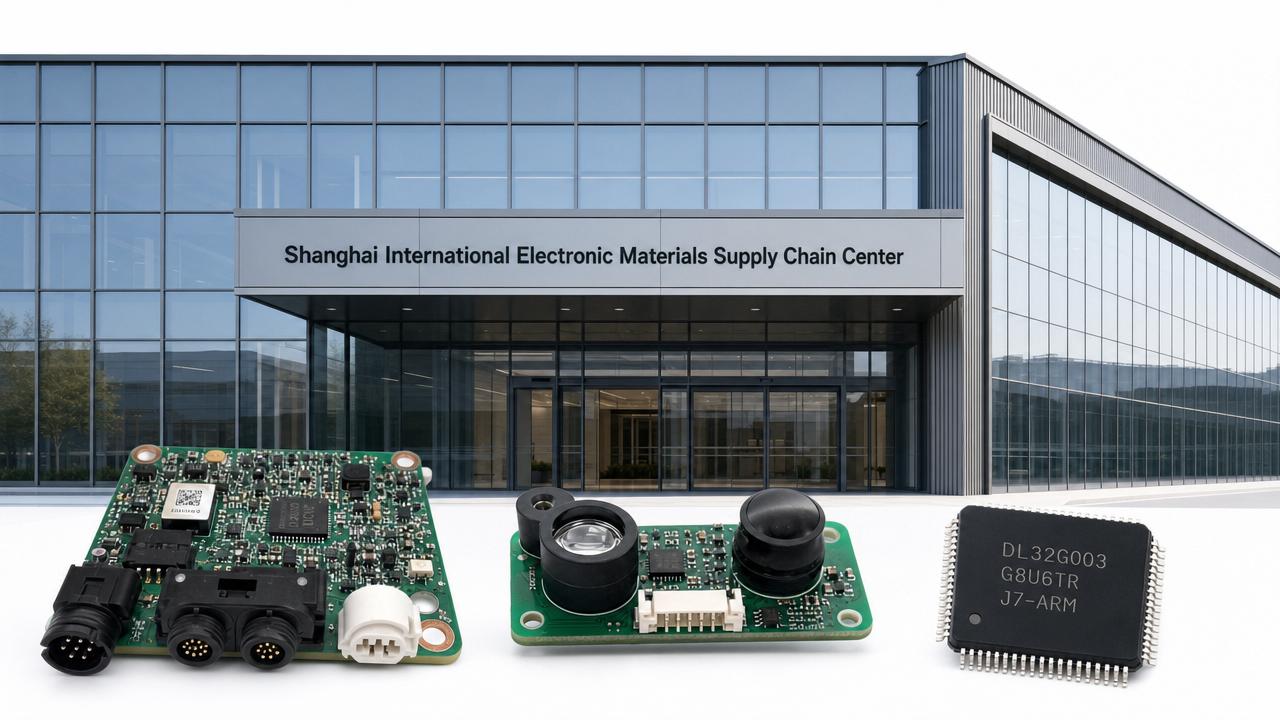
On May 20, 2026, Semiconductor Manufacturing International Corporation (SMIC), Hua Hong Group, and other industry partners jointly established the Shanghai International Electronic Materials Supply Chain Center — a strategic initiative aimed at accelerating local chip delivery for intelligent bathroom and kitchen appliances. The move directly addresses persistent supply chain bottlenecks in high-mix, low-volume semiconductor components critical to smart toilets, intelligent cabinetry sensors, and digital lock microcontrollers — segments increasingly subject to regulatory scrutiny and just-in-time demand from EU and US buyers.
Event Overview
On May 20, SMIC, Hua Hong Group, and affiliated entities formally launched the Shanghai International Electronic Materials Supply Chain Center with registered capital of RMB 200 million. The center focuses on global distribution of electronic specialty materials and direct component supply of semiconductors. It targets delivery lead times of ≤14 days for core chips used in smart toilet control boards, smart cabinet sensing modules, and digital lock MCUs. The platform explicitly supports JIT (just-in-time) fulfillment for small-batch, multi-variant orders.
Industries Affected
Direct Trade Enterprises: Export-oriented OEM/ODM manufacturers supplying smart bathroom and kitchen systems to EU and US markets face tighter delivery windows and heightened compliance expectations. With shorter chip lead times and flexible lot sizing, these firms gain improved responsiveness to seasonal promotions, retailer-driven SKU changes, and regional certification cycles — but only if they align procurement planning with the center’s JIT cadence.
Raw Material Procurement Enterprises: Companies sourcing electronic-grade substrates, photoresists, high-purity gases, or packaging materials benefit from centralized logistics and standardized quality documentation. However, their exposure increases to pricing volatility tied to global material shortages — as the center aggregates demand rather than insulates it.
Manufacturing Enterprises: Contract manufacturers and system integrators relying on imported MCU, sensor IC, or power management chips can now reduce buffer stocks and accelerate NPI (new product introduction) timelines. Yet this advantage depends on consistent qualification of new lots across foundry nodes — a process not covered by the center’s scope.
Supply Chain Service Providers: Third-party logistics providers, customs brokers, and inventory financing platforms may see shifting service demands: less need for long-haul air freight buffering, more requirement for rapid cross-border documentation handling and real-time inventory visibility integration with the center’s ordering portal.
Key Considerations and Recommended Actions
Align procurement cycles with JIT parameters
Importers and contract manufacturers should revise internal order forecasting models to reflect 14-day guaranteed lead times — including buffer time for customs clearance and final test validation — rather than treating the timeline as a theoretical minimum.
Evaluate qualification dependencies
Since the center supplies finished chips (not wafers or bare die), users must verify whether their existing design-qualified parts are included in the initial product portfolio — and whether requalification is needed for alternate package variants or process revisions.
Assess logistics handoff points
Delivery within 14 days assumes seamless transfer between the center’s bonded warehouse and end-manufacturing sites. Firms should map current receiving processes — especially for mixed-SKU shipments — to identify potential chokepoints in inspection, traceability logging, or ERP synchronization.
Monitor export control implications
While the center facilitates faster delivery, its international sales mandate means dual-use materials and certain logic ICs may still be subject to updated EAR or EU Dual-Use Regulation classifications — requiring updated classification reviews before placing first orders.
Editorial Perspective / Industry Observation
Observably, this initiative is less about replacing global supply chains and more about creating a certified, responsive interface layer between China’s domestic semiconductor ecosystem and overseas appliance OEMs. Analysis shows the 14-day target reflects logistical optimization — not foundry cycle time reduction — meaning yield stability and packaging capacity remain upstream constraints. From an industry perspective, the center’s true value will be measured not in absolute speed gains, but in its ability to absorb variability: fluctuating certifications, fragmented customer specifications, and shifting tariff regimes. Current evidence suggests it functions best as a ‘certified conduit’, not a de facto substitution for diversified sourcing.
Conclusion
This development marks a calibrated step toward supply chain resilience — not autonomy — in a highly regulated, fast-evolving segment of consumer electronics. It does not eliminate dependency on foreign equipment or design tools, nor does it resolve long-term IP licensing or advanced node access challenges. Rather, it improves execution fidelity within existing technical boundaries. A rational interpretation is that it enhances operational agility for exporters already compliant with prevailing trade rules — not a structural shift in global semiconductor governance.
Source Attribution
Official announcement issued by Shanghai Municipal Commission of Economy and Informatization, May 20, 2026; supplementary details confirmed via press briefing hosted by SMIC and Hua Hong Group. Product portfolio coverage, customs clearance protocols, and eligibility criteria for JIT scheduling remain under active refinement — to be monitored through Q3 2026 updates.
Industry Briefing
Get the top 5 industry headlines delivered to your inbox every morning.