
Saudi ZATCA Rule Tightens Smart Bathroom Imports
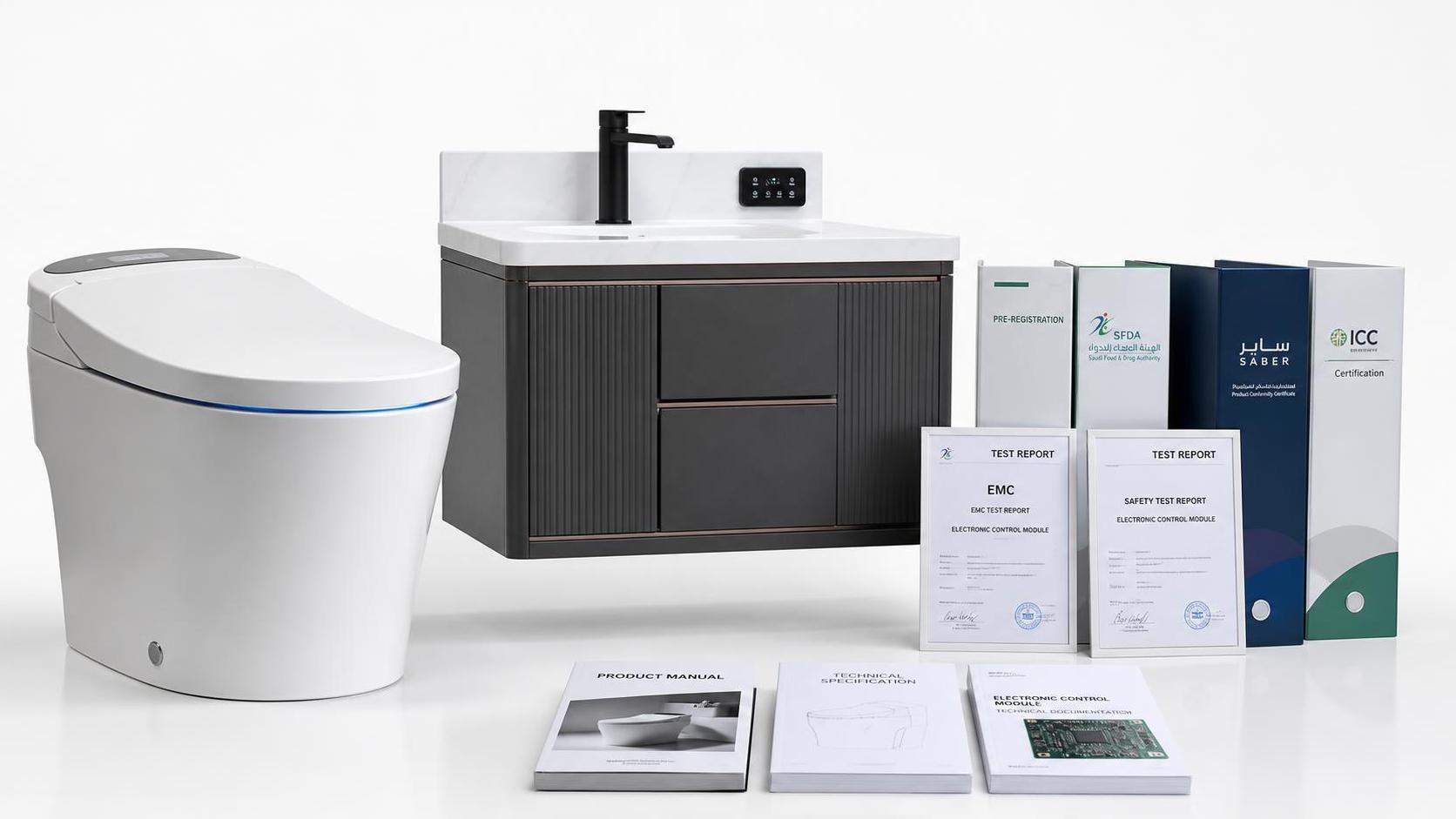
On August 1, 2026, Saudi Arabia’s ZATCA put a new compliance requirement into effect for imported smart sanitary products that contain electronic control modules, including smart toilets and smart bathroom cabinets. For companies selling into the Saudi market, the development matters not only at customs clearance but also across product documentation, testing readiness, local representation, and market-entry structure, because access now depends on pre-registration and localized compliance materials rather than shipment execution alone.
What the Rule Now Requires
According to the information provided, the new ZATCA rule applies to imported sanitary products with electronic control modules, including smart toilets and smart bathroom cabinets. Before customs clearance, the products must complete ZATCA pre-registration.
The required submission materials include Arabic-language technical documentation, information on a local authorized representative, and test reports showing compliance with SASO IEC 60335-1 and SASO IEC 62040 standards.
The same information indicates that the rule directly affects the export route used by global suppliers. Pure trading models are restricted under this arrangement, and compliant market entry must be completed through a locally licensed Saudi agent or through the establishment of a local entity.
Where the Pressure Falls Across the Supply Chain
Export traders face a narrower market-entry path
From an industry perspective, direct trading companies are likely to feel the impact first because the rule changes the conditions for customs access. The issue is not limited to shipping execution; it now touches the legal and operational route used to place products into the Saudi market. What deserves closer attention is whether existing export structures rely mainly on cross-border trading without a local licensed agent or local entity support.
Manufacturers must align documentation and testing with import timing
For manufacturers of smart sanitary products, the likely pressure point is upstream preparation. Analysis shows that Arabic technical documentation and test reports are no longer peripheral materials; they become part of the entry condition before clearance. This means product teams, compliance teams, and export operations may need to coordinate earlier in the shipment cycle, especially where models include electronic control functions.
Channel and distribution partners may need to recheck authorization arrangements
Distributors and channel operators connected to Saudi-bound products may also be affected because local authorized representative information is now part of the required submission set. Observably, this places more weight on who is formally recognized in the local market and whether that role matches the actual commercial arrangement used for import and distribution.
Supply chain service providers will need to watch documentation completeness
For logistics, customs, and related service providers, the likely impact is procedural rather than commercial. The key change is that clearance readiness may depend on whether pre-registration, Arabic documentation, representative details, and test reports are complete before the shipment reaches the customs stage. In practice, document gaps may become a more immediate operational risk than transport execution itself.
What Companies Should Review Now
Check whether affected products fall within the electronic-control category
Companies should first review which exported sanitary products include electronic control modules and therefore fall within the scope described in the provided information. This is a practical distinction because the rule is framed around that technical feature rather than around sanitary ware in general.
Reassess the readiness of Arabic technical files
What deserves closer attention is whether Arabic-language technical documentation is already available in a usable compliance format. Firms that previously treated technical translation as a later-stage commercial support task may need to treat it as a customs-access requirement tied directly to shipment planning.
Confirm the local representation route before shipment planning
The information provided makes clear that pure trading models are restricted and that compliant entry requires either a locally licensed Saudi agent or a local entity. For affected businesses, this means local representation is not a secondary contracting issue; it is part of the access model itself. Companies should therefore distinguish between having a commercial customer in the market and having a compliant import structure in place.
Match testing materials to the stated standards requirement
Analysis shows that the reference to SASO IEC 60335-1 and SASO IEC 62040 should be treated as a concrete documentation checkpoint. Businesses involved in quotation, procurement, production scheduling, and delivery commitments should verify whether the required test reports are available and aligned with the products intended for Saudi import.
Why This Looks Larger Than a Single Filing Step
Observably, this development is more than a paperwork adjustment. It signals that smart sanitary products with electronic components are being treated through a more structured compliance gate before customs clearance. That matters because the rule connects technical documentation, local representation, and testing evidence to the import path itself.
It is more appropriate to understand this as both an immediate operational change and a longer-term market-access signal. The immediate change is clear: affected products now require pre-registration and supporting materials before clearance. The longer-term signal is that exporters may need to rely less on low-commitment trading arrangements and more on formalized local compliance structures. Even so, the practical effect across different product lines and business models still deserves continued observation.
How the Market Should Read the Change
At this stage, the most grounded reading is that Saudi market access for imported smart bathroom products has become more compliance-led and less dependent on a simple shipment-and-trade model. The rule does not by itself define every commercial outcome, but it clearly raises the importance of pre-registration, Arabic documentation, local authorization, and standards-based test reporting.
For the industry, this is best understood as a confirmed short-term compliance change with broader structural implications that warrant ongoing attention. Companies tied to smart sanitary exports, distribution, customs handling, and procurement should focus on execution details rather than assumptions, particularly where current sales into Saudi Arabia still depend on pure trading arrangements.
Basis of This Article
This article is based on the user-provided news title, event date, and event summary concerning the ZATCA rule that took effect on August 1, 2026. In reporting of this kind, relevant source types typically include official notices, company announcements, industry association updates, authoritative media coverage, and standards-related documents.
No specific official source link was provided in the input, so the exact official publication path remains to be verified on an ongoing basis. Follow-up attention should focus on any further official wording, implementation clarifications, scope interpretation for affected product categories, and any practical updates related to registration, documentation, and local authorization requirements.
Industry Briefing
Get the top 5 industry headlines delivered to your inbox every morning.