Anti-bacterial architecture in public buildings: what holds up
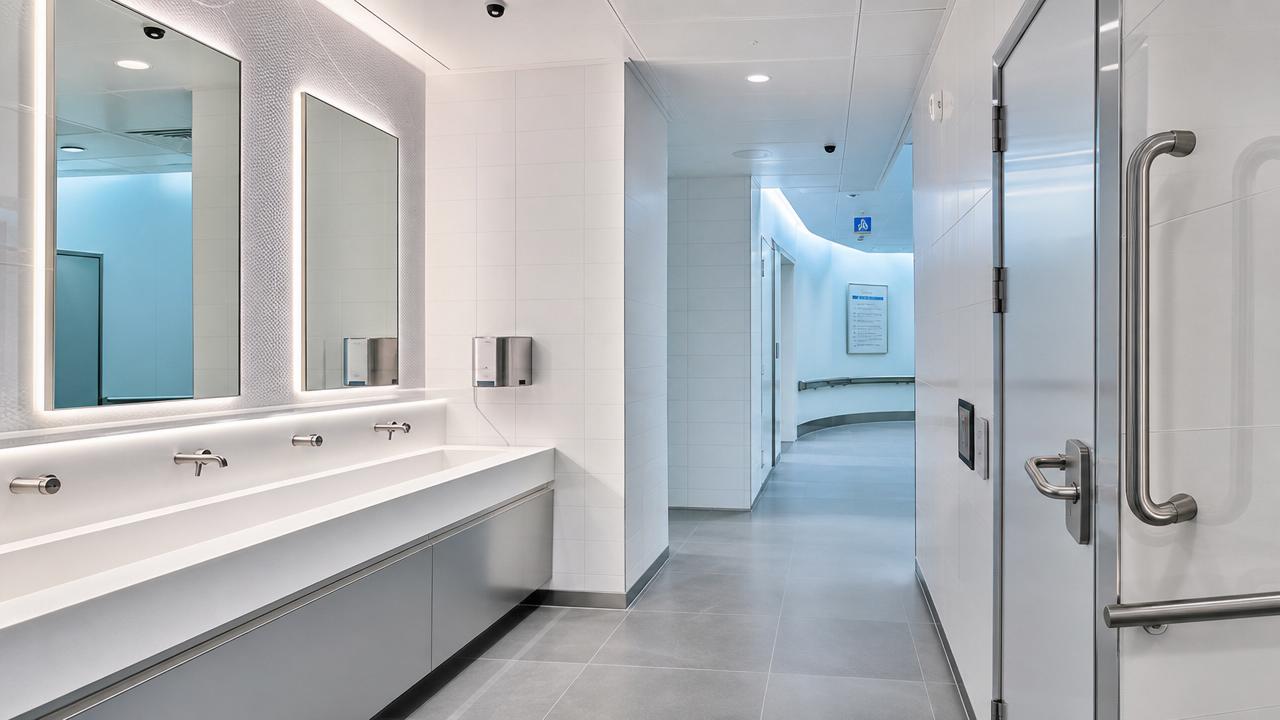
In public facilities, anti-bacterial architecture is judged not by claims, but by how well it performs under constant use, strict cleaning routines, and rising safety expectations. For quality control and safety managers, the real question is what materials, surface systems, and design strategies continue to protect hygiene standards over time. This article explores what truly holds up in high-traffic buildings and why long-term performance matters more than short-term specification.
Across schools, transport hubs, clinics, offices, public washrooms, and mixed-use commercial buildings, anti-bacterial architecture has moved from a premium feature to a risk-control requirement. The pressure is practical: surfaces may be touched 500 to 5,000 times per day, cleaning cycles may run 2 to 6 times in 24 hours, and any hygiene failure can trigger complaints, downtime, or corrective works that cost far more than the original specification.
For B2B decision-makers, especially quality control teams and safety managers, the key issue is not whether a material is marketed as hygienic. It is whether the complete building system—substrate, coating, jointing, detailing, drainage, ventilation, and maintenance protocol—can maintain measurable performance after 12, 24, or 60 months of use. That is where procurement discipline and design intelligence matter most.
Why Long-Term Performance Defines Anti-Bacterial Architecture
Anti-bacterial architecture is often misunderstood as a single product choice. In reality, it is a building performance strategy. A wall panel with antimicrobial additives may contribute to hygiene, but if the installation leaves open joints, traps moisture behind the substrate, or degrades under chlorine-based cleaning within 6 to 12 months, the protection fails where risk is highest.
Public buildings create a harsh operating environment. Surfaces face abrasion, impact, humidity swings, soap residues, hand oils, and disinfectants with pH values that can move from mildly acidic to strongly alkaline. Under these conditions, the materials that hold up are usually those tested not only for microbial resistance, but also for cleanability, joint integrity, stain resistance, water absorption, and coating adhesion.
What “holds up” really means in operational terms
- Surface performance remains stable after repeated cleaning cycles, often 1,000 to 10,000 wipe or scrub events.
- Low-porosity materials do not trap moisture, organic residue, or cleaning chemicals in micro-cracks.
- Sealants, grout lines, and junction details resist mold growth and edge failure over 3 to 5 years.
- Touchpoints keep their finish despite frequent contact, often exceeding 100 users per hour in peak zones.
- Maintenance teams can clean surfaces quickly without special chemicals, complex training, or shutdown periods.
Why claims alone are insufficient
Many anti-bacterial claims focus on laboratory conditions rather than building life. A product may perform well on a small sample in controlled humidity, yet underperform once exposed to grout haze, scratched finishes, hard water deposits, or incompatible detergents. Quality teams should therefore ask four practical questions: What is the active mechanism, how durable is it, what cleaning regime is compatible, and what happens when the surface is damaged?
This distinction matters in procurement. A lower-cost material may reduce capex by 8% to 15%, but if replacement, re-sealing, or complaint handling begins within 18 months, total ownership cost rises quickly. Anti-bacterial architecture only adds value when it survives real-world use without creating maintenance complexity.
Primary failure points in public buildings
The most common failures are not always on the visible face of a material. They often occur at transitions: floor-to-wall junctions, sink back edges, cubicle anchor points, drain perimeters, door hardware fixings, and movement joints. These are the zones where water, dirt, and bacteria can accumulate within days if detailing is weak.
Materials and Surface Systems That Perform Under Pressure
When evaluating anti-bacterial architecture for public buildings, decision-makers should assess systems rather than isolated products. The strongest hygiene outcomes typically come from matching durable, low-porosity materials with compatible sealants, hardware, and cleaning protocols. Below is a practical comparison of common options used in sanitary and high-contact environments.
The table shows that anti-bacterial architecture works best when the material’s hygiene advantages are supported by installation quality. Dense porcelain and stainless steel often perform well over 5 to 10 years, but only if joints, fixings, and access points are specified with equal discipline. In practice, the hidden weak point is more often the seam than the surface.
Surface coatings versus intrinsic material performance
Some systems rely on antimicrobial coatings, while others depend on inherently dense, easy-to-clean surfaces. Both approaches can be valid, but they carry different risk profiles. Coatings may offer an early hygiene benefit, yet if they wear away in 12 to 36 months under heavy scrubbing, the building loses part of its intended protection. Intrinsic performance tends to be easier for QC teams to manage over longer asset cycles.
For this reason, many safety managers prioritize low-porosity ceramics, non-absorbent composites, stainless touchpoints, and smooth, closed-surface joinery in high-risk zones. These are not always the cheapest line items, but they often reduce uncertainty across cleaning, inspection, and replacement planning.
Best-fit applications by zone
- Public washrooms: dense wall and floor finishes, integrated basins, moisture-resistant partition systems.
- Reception and lobbies: durable door hardware, lift call surfaces, and easy-clean wall protection at hand height.
- Transit corridors: impact-resistant cladding and low-maintenance handrail systems.
- Education and civic spaces: surfaces that tolerate 3 to 5 cleaning events daily without visual breakdown.
Design Details That Make or Break Hygiene Outcomes
In anti-bacterial architecture, detailing is where specification becomes real performance. Public buildings may use the right materials and still fail hygiene audits if design leaves too many dirt traps, absorbent interfaces, or inaccessible cleaning areas. Quality and safety teams should therefore review design details as rigorously as they review material data sheets.
High-risk design errors to eliminate early
- Open horizontal ledges that collect water and dust within 24 to 72 hours.
- Deep grout joints or uneven tile lippage above 1.5 mm in wet zones.
- Exposed fixings and hollow sections around washbasins, rails, or dispensers.
- Poor drainage slopes that leave standing water after 10 to 15 minutes.
- Ventilation blind spots where humidity remains elevated for more than 2 hours after peak use.
Key design principles for durable anti-bacterial architecture
The first principle is surface continuity. Fewer joints generally mean fewer contamination points. Coved skirtings, integrated splashbacks, welded or tightly controlled seams, and rounded internal corners help maintenance teams clean faster and more consistently. In many public washrooms, reducing joint complexity by even 20% can materially improve cleaning outcomes over a full year.
The second principle is moisture control. Bacteria and mold do not develop from touch alone; they thrive where water is allowed to stay. Effective drainage falls, vapor control behind wet walls, and balanced airflow rates are therefore central to anti-bacterial architecture. In practical terms, a hygienic design is often one that dries quickly after use and after cleaning.
The third principle is access for maintenance. If a cleaner cannot safely reach a surface in under 30 to 60 seconds, that area often becomes inconsistently maintained. Recesses, shadow gaps, decorative grooves, and inaccessible hardware may look refined on drawings, but they can weaken hygiene reliability during operation.
The following checklist helps teams review design and installation points before handover, especially in sanitary spaces and shared public interiors.
This checklist highlights a practical truth: anti-bacterial architecture is not achieved by one high-performance finish. It is maintained through coordinated decisions across detailing, commissioning, and cleaning access. For quality teams, these checkpoints are often more predictive than broad marketing claims.
Procurement, Validation, and Lifecycle Control for QC Teams
For quality control and safety managers, the procurement stage is where anti-bacterial architecture either gains resilience or inherits hidden risk. A strong tender package should require evidence on at least 4 levels: material composition, surface durability, cleaning compatibility, and installation method. Without this structure, suppliers may submit technically compliant but operationally weak alternatives.
A five-step evaluation framework
- Define the exposure category: dry touch zone, humid touch zone, splash zone, or continuous wet zone.
- Map cleaning frequency: for example, 1 time daily in office corridors versus 4 to 6 times daily in major public washrooms.
- Verify chemical compatibility with the disinfectants already used on site.
- Review installation tolerances, junction details, and replacement method for damaged sections.
- Set post-handover inspection intervals at 30 days, 6 months, and 12 months.
Questions buyers should ask suppliers
Request evidence that goes beyond a product brochure. Ask whether the anti-bacterial effect depends on a topcoat, an embedded additive, or simply a cleanable non-porous surface. Ask how performance changes after abrasion, repeated disinfection, or minor impact damage. Ask which substrates, adhesives, and sealants are approved together, because hygiene failures often start at incompatible interfaces rather than at the face material itself.
It is also wise to request a maintenance matrix. This should describe cleaning frequency, suitable detergents, prohibited chemicals, stain removal steps, and the expected inspection cycle. A building product that requires highly specialized care every week may not be the right fit for a municipal facility, school, or transport node with limited maintenance labor.
Common procurement mistakes
- Selecting a surface for laboratory antimicrobial claims without checking wear resistance.
- Approving value-engineered substitutions after mock-up review but before cleaning trials.
- Ignoring the service life of sealants, which may need renewal every 3 to 7 years depending on exposure.
- Overlooking replacement logistics for panels, hardware, or modular sanitary elements.
Lifecycle metrics that matter
Useful lifecycle indicators include the time needed to clean one unit area, the percentage of touchpoints that show visible wear after 12 months, the number of moisture-related corrective actions per quarter, and the average time to replace a damaged component. These figures help turn anti-bacterial architecture from a design concept into a manageable facility performance system.
For organizations managing portfolios across multiple buildings, standardizing 3 to 5 approved material systems can also improve consistency. It simplifies training, controls spare parts, and reduces the risk of incompatible cleaning methods between sites. This is especially useful in large public estates where operational reliability matters more than decorative variation.
Where GIAM Intelligence Adds Value to Safer Public Building Decisions
In a market where anti-bacterial architecture intersects with sanitation design, smart hardware, water management, and evolving building standards, decision quality depends on current, cross-disciplinary intelligence. That is where GIAM’s sector focus is especially relevant. By connecting material science, sanitary space planning, and commercial insight, GIAM helps industry stakeholders compare what is specified with what can actually endure.
For quality and safety managers, this matters in at least 3 ways. First, it shortens the gap between emerging material options and practical application. Second, it supports risk screening when tariffs, supply conditions, or compliance requirements change across regions. Third, it helps procurement teams judge whether a product’s hygiene promise is matched by durability, maintenance efficiency, and long-term value in real projects.
As public buildings become more performance-driven, anti-bacterial architecture will increasingly be evaluated alongside water-saving systems, touch-reduction hardware, and low-carbon material strategies. The strongest specifications will be those that unify hygiene, resilience, and serviceability instead of treating them as separate disciplines.
Practical Takeaway for Safety Managers and Project Teams
What holds up in anti-bacterial architecture is rarely the loudest claim. It is the material system with low porosity, durable detailing, chemical compatibility, maintainable access, and documented performance under repeated use. In public buildings, long-term hygiene depends on the combined reliability of surfaces, joints, drainage, hardware, and cleaning routines over years, not weeks.
For teams responsible for quality, safety, and procurement, the best next step is to evaluate public-facing spaces through a lifecycle lens: define exposure, verify compatibility, inspect detailing, and plan maintenance from day one. If you need deeper guidance on anti-bacterial architecture, sanitary material selection, or resilient building systems for high-traffic environments, contact GIAM to get a tailored solution, discuss product details, or explore more sector-specific insights.
Industry Briefing
Get the top 5 industry headlines delivered to your inbox every morning.