Building material solutions that simplify future maintenance
Building material solutions are shifting from installation value to lifecycle value
For after-sales maintenance teams, the right building material solutions do more than support installation—they reduce service complexity, shorten repair cycles, and improve long-term performance.
As buildings become smarter and standards grow stricter, easy-to-maintain systems are no longer optional. They directly influence operating continuity, safety outcomes, and customer satisfaction.
This shift is visible across residential projects, hospitality spaces, offices, healthcare sites, and mixed-use developments. Maintenance-friendly choices now shape asset value long after handover.
Within this context, building material solutions must support durability, component compatibility, quick diagnostics, and predictable replacement cycles. Future maintenance begins at the specification stage.
Trend signals show maintenance is becoming a design priority
Several market signals confirm a clear change. Projects are increasingly judged by serviceability, not only by appearance, cost, or launch speed.
Energy codes, hygiene standards, water efficiency rules, and smart system integration all create new maintenance demands. Poor material coordination now causes higher costs later.
GIAM has observed that premium building material solutions are gaining attention because they help connect construction performance with interior usability and long-term operational control.
In sanitary spaces and smart kitchen and bath environments, this trend is stronger. Hidden failures, leak risks, sensor mismatches, and hard-to-source parts create expensive service pressure.
- Faster retrofit cycles are compressing maintenance windows.
- Smart devices require material and hardware compatibility.
- Water-saving systems need cleaner, more precise servicing.
- Antibacterial and low-carbon materials need verified lifecycle performance.
Why building material solutions now define future maintenance quality
The rise of maintenance-focused selection is not random. It is driven by structural changes in technology, regulation, and user expectations.
These drivers explain why building material solutions are becoming strategic. The best options reduce hidden complexity across the entire building lifecycle.
Maintenance value starts with compatibility
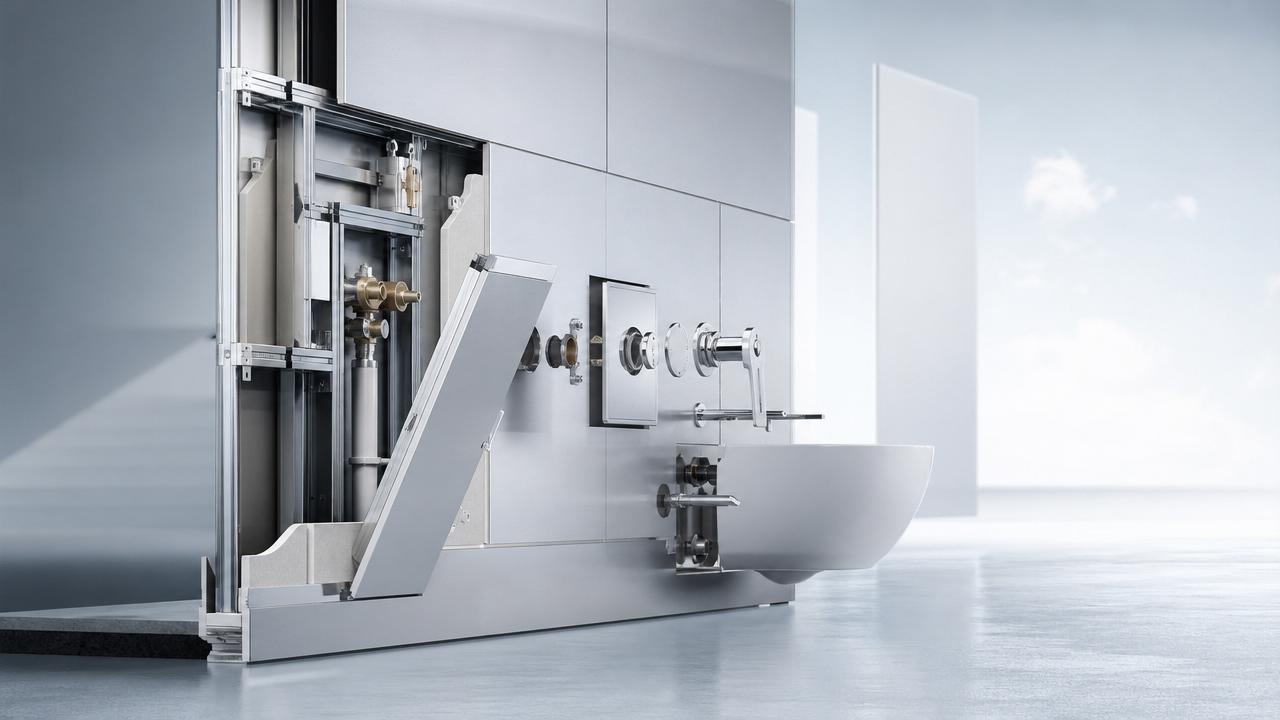
A durable material alone is not enough. Effective building material solutions also align with fixtures, fastening methods, sealing systems, access panels, and digital controls.
When these elements are incompatible, maintenance teams lose time diagnosing failures that should have been prevented during planning and material selection.
The impact reaches every stage of building operations
Maintenance-friendly building material solutions influence far more than repair work. They affect uptime, labor efficiency, resource use, and perceived quality.
In residential environments, they help reduce recurring complaints around moisture, fixture instability, surface wear, and hard-to-operate smart devices.
In commercial spaces, they support faster room turnover, fewer service interruptions, and more predictable maintenance scheduling across large property portfolios.
- Design coordination improves when materials allow easy inspection access.
- Installation quality improves when systems use standardized interfaces.
- After-sales service improves when replacement parts are modular.
- Asset performance improves when surfaces withstand cleaning and moisture stress.
This is why GIAM’s intelligence focus on core materials, sanitary spaces, and smart kitchen and bath systems matters. These categories sit at the center of frequent service interactions.
The strongest building material solutions share several practical features
Not every product marketed as advanced is future-ready. The most reliable building material solutions usually demonstrate a few consistent characteristics.
- Modular construction that allows partial replacement without major demolition.
- Stable material performance under humidity, temperature change, and cleaning chemicals.
- Clear documentation for installation, maintenance, and spare part identification.
- Compatibility with water-saving valves, smart controls, and sensor-based systems.
- Standard dimensions or adaptable interfaces across common project conditions.
- Lower embodied waste during repair or refurbishment cycles.
These criteria matter across tiles, wall systems, sealants, access hardware, sanitary fixtures, cabinetry substrates, and connected kitchen and bath components.
Watch for hidden maintenance costs
Some building material solutions look efficient during procurement but create future service burdens. Custom-only fittings, sealed inaccessible cavities, and nonstandard electronics often increase total cost.
A lower initial price can quickly disappear when repair labor, downtime, and part sourcing become difficult. Lifecycle thinking is the better decision filter.
What deserves closer attention in the next planning cycle
The next wave of building material solutions will likely be judged by service data, not only technical brochures. Maintenance evidence will become a stronger selection benchmark.
- Track mean time to repair for high-contact material systems.
- Compare spare part availability across regions and suppliers.
- Check whether smart components can be upgraded without replacing surrounding finishes.
- Review cleaning protocols against actual surface resistance performance.
- Confirm water, sealing, and hardware systems are tested as an integrated assembly.
This approach aligns with GIAM’s mission to connect hard construction logic with modern spatial intelligence. Better intelligence helps every component deliver stronger long-term value.
A practical response framework for future-ready maintenance
The market is moving toward smarter, greener, and more accountable spaces. In that environment, building material solutions that simplify future maintenance will continue to outperform.
Use the next review cycle to identify service bottlenecks, test compatibility assumptions, and compare lifecycle evidence. Stronger maintenance outcomes begin with better material intelligence today.
Industry Briefing
Get the top 5 industry headlines delivered to your inbox every morning.