
How modular commercial space design lowers fitout risk
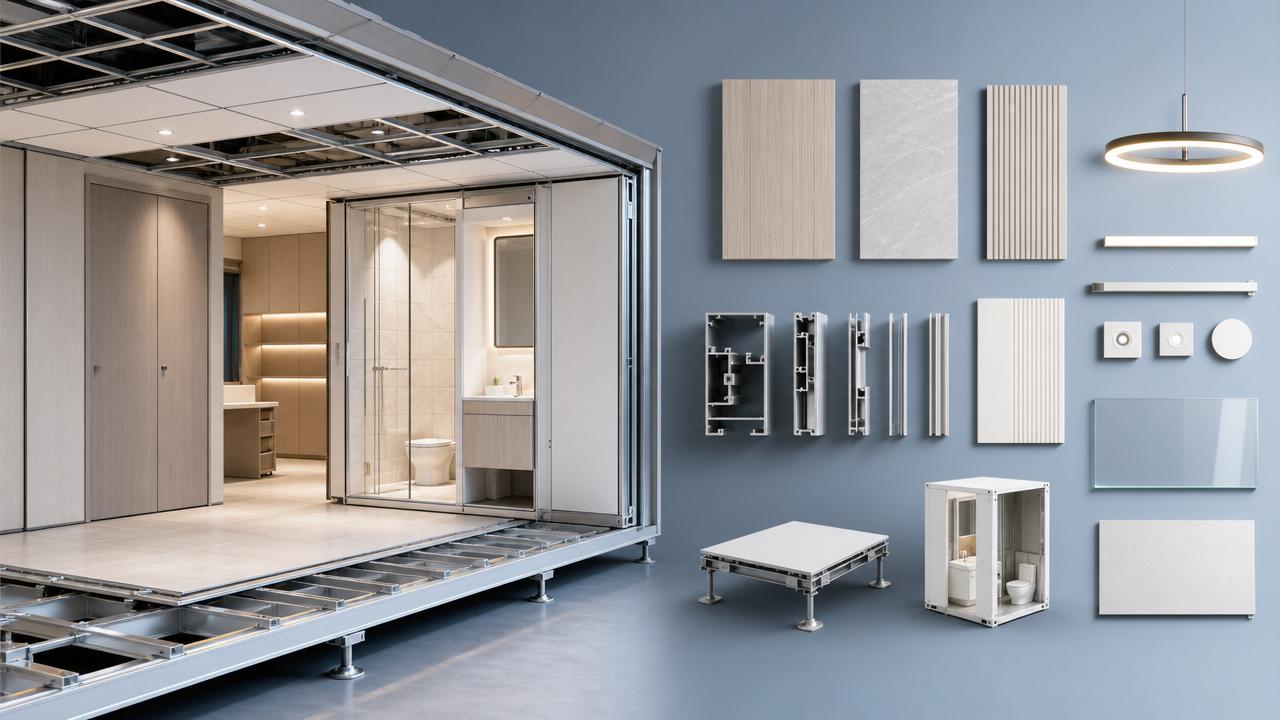
Fitout uncertainty can derail budgets, timelines, and stakeholder confidence before a commercial space opens.
Modular commercial space design reduces these risks through standardized components, clearer procurement, controlled quality, and faster installation.
As smart systems, material performance, and sustainability rules become more complex, modular thinking supports safer decisions across the project lifecycle.
How modular commercial space design lowers fitout risk
A commercial fitout is rarely a single construction task. It combines materials, services, finishes, furniture, compliance, and operational expectations.
Risk appears when these elements are designed separately, purchased late, or adjusted repeatedly on site.
Modular commercial space design changes the planning logic. It breaks space into repeatable, coordinated, and replaceable systems.
Instead of treating every wall, room, or service point as unique, teams define modules with known dimensions and performance.
This does not mean every workplace, hotel, store, or clinic looks identical.
It means the hidden structure behind design decisions becomes more disciplined, measurable, and easier to deliver.
Definition and planning logic
Modular commercial space design is a method for organizing interiors around pre-defined spatial and technical units.
These units may include partition systems, ceiling grids, raised floors, service cores, washroom pods, storage walls, and smart control zones.
Each unit is planned with dimensional rules, material standards, connection details, and maintenance access.
The method differs from traditional bespoke fitout, where many details are resolved through site negotiation.
With modular commercial space design, more decisions shift to early coordination, supplier validation, and performance testing.
This reduces uncertainty because drawings, procurement packages, and installation sequences share the same underlying system.
The most effective modular approach balances repetition with flexibility.
Core components remain standardized, while finishes, colors, lighting scenes, and branding elements remain adaptable.
Industry background and current fitout pressure
Commercial interiors now face stronger pressure from cost volatility, shorter lease cycles, and higher sustainability requirements.
Material supply is also more exposed to trade policy changes, certification demands, and regional energy standards.
Smart kitchen, bath, access, lighting, and environmental systems add further coordination requirements.
In this environment, modular commercial space design helps convert unpredictable fitout work into a controlled delivery model.
These signals are visible across offices, retail stores, hospitality spaces, healthcare environments, education facilities, and mixed-use assets.
GIAM tracks these changes through intelligence on materials, sanitary spaces, and smart building systems.
The same intelligence supports better decisions when modular commercial space design is used to reduce fitout exposure.
How modular systems reduce budget risk
Budget risk often begins with incomplete scope. Ambiguous details lead to allowances, variations, and late-stage negotiations.
Modular commercial space design creates clearer cost units. Each module can carry a defined price, specification, and installation allowance.
This allows earlier cost comparison between material grades, performance levels, and supplier options.
It also helps separate design value from uncontrolled customization.
For example, a standardized washroom module may support different finishes while keeping plumbing positions stable.
A workplace meeting room module may change acoustic fabric, lighting scenes, or door hardware without changing its service logic.
The benefit is not only lower cost. It is more reliable cost visibility before commitment.
Procurement control
Procurement becomes less reactive when modules are defined before tendering.
Quantities are easier to verify, lead times are easier to forecast, and substitutions become easier to evaluate.
Modular commercial space design also reduces dependence on site interpretation, which often creates hidden commercial risk.
How modular planning lowers schedule risk
Time risk comes from coordination delays, sequencing conflicts, and repeated inspections after rework.
A modular approach supports parallel activity. Components can be manufactured, pre-assembled, or tested while site preparation continues.
When modules arrive with known interfaces, installation crews spend less time resolving uncertain details.
This is especially important in occupied buildings, shopping centers, airports, hospitals, and phased refurbishment projects.
In these environments, every extra day may affect revenue, safety, or operational continuity.
Modular commercial space design helps compress on-site duration without relying only on labor intensity.
The schedule advantage comes from better preparation, fewer unknowns, and repeatable installation learning.
Quality, compliance, and performance value
Quality risk increases when construction quality depends heavily on variable site conditions.
Modular commercial space design supports factory-level checks, sample approval, mock-up testing, and consistent assembly details.
This is valuable for acoustic rooms, hygienic surfaces, water-saving sanitary systems, fire-rated partitions, and smart access points.
Compliance also becomes easier when documentation follows a repeatable component library.
Certificates, maintenance manuals, material declarations, and performance data can be attached to each module type.
For sustainable fitouts, this improves traceability of recycled content, low-emission finishes, and disassembly potential.
For smart spaces, it improves integration between sensors, controls, locks, energy monitoring, and user interfaces.
The result is a stronger link between design intent and actual performance after occupancy.
Typical applications and object classification
The value of modular commercial space design changes by asset type and operational need.
Some projects prioritize speed. Others prioritize hygiene, adaptability, acoustic control, or future relocation.
Across these settings, modular commercial space design works best when the module supports both construction and operation.
A module that installs quickly but is difficult to repair simply moves risk into the occupancy phase.
Practical design and delivery recommendations
Successful modular delivery begins with a clear hierarchy of what must be standardized and what may remain flexible.
The following steps help turn modular commercial space design into a reliable fitout strategy.
- Define repeatable zones before detailed finishes are selected.
- Lock critical dimensions for partitions, ceilings, floors, doors, and service routes.
- Create a component library with approved materials and tested alternates.
- Coordinate mechanical, electrical, plumbing, data, and control systems at module level.
- Use mock-ups for high-risk areas, including washrooms, acoustic rooms, and smart access zones.
- Track lifecycle factors, including replacement access, cleaning methods, and future disassembly.
A modular strategy should not ignore local building codes, fire requirements, accessibility rules, or landlord guidelines.
It should translate them into repeatable technical rules before procurement begins.
Early coordination with suppliers is also essential, especially for long-lead sanitary products, smart hardware, and certified green materials.
Poorly chosen modules can create design rigidity, storage challenges, or transportation limits.
Therefore, modular commercial space design needs evidence-based selection, not only visual preference.
Risk checklist before implementation
Before adopting modular commercial space design, the project scope should be tested against practical delivery questions.
- Which spaces repeat often enough to justify a modular approach?
- Which elements carry the highest cost, schedule, compliance, or maintenance risk?
- Can suppliers provide verified performance data and stable lead times?
- Are module interfaces coordinated with structure and building services?
- Can the modules support future layout change without major demolition?
- Is documentation sufficient for operation, warranty, and sustainability reporting?
This checklist keeps the discussion focused on measurable risk reduction.
It also prevents modular planning from becoming a cosmetic label without delivery discipline.
Strategic intelligence for safer spatial decisions
The commercial fitout market is moving toward faster delivery, lower carbon impact, and more intelligent building operation.
Modular commercial space design aligns with these priorities by making complexity easier to manage.
It connects material science, hydraulic design, smart systems, and economic forecasting into practical spatial decisions.
GIAM supports this connection through sector news, evolutionary trend analysis, and commercial insight across building materials and smart spaces.
For teams assessing fitout risk, the next step is to map repeatable spaces, compare component options, and validate supplier evidence.
With the right intelligence, modular commercial space design becomes more than a construction method.
It becomes a risk management framework for cost, time, quality, sustainability, and future adaptability.
Building industrial foundations and leading spatial intelligence starts with clearer systems, stronger data, and fitouts designed for change.
Industry Briefing
Get the top 5 industry headlines delivered to your inbox every morning.