Sustainable Building Practices That Lower Risk During Approval
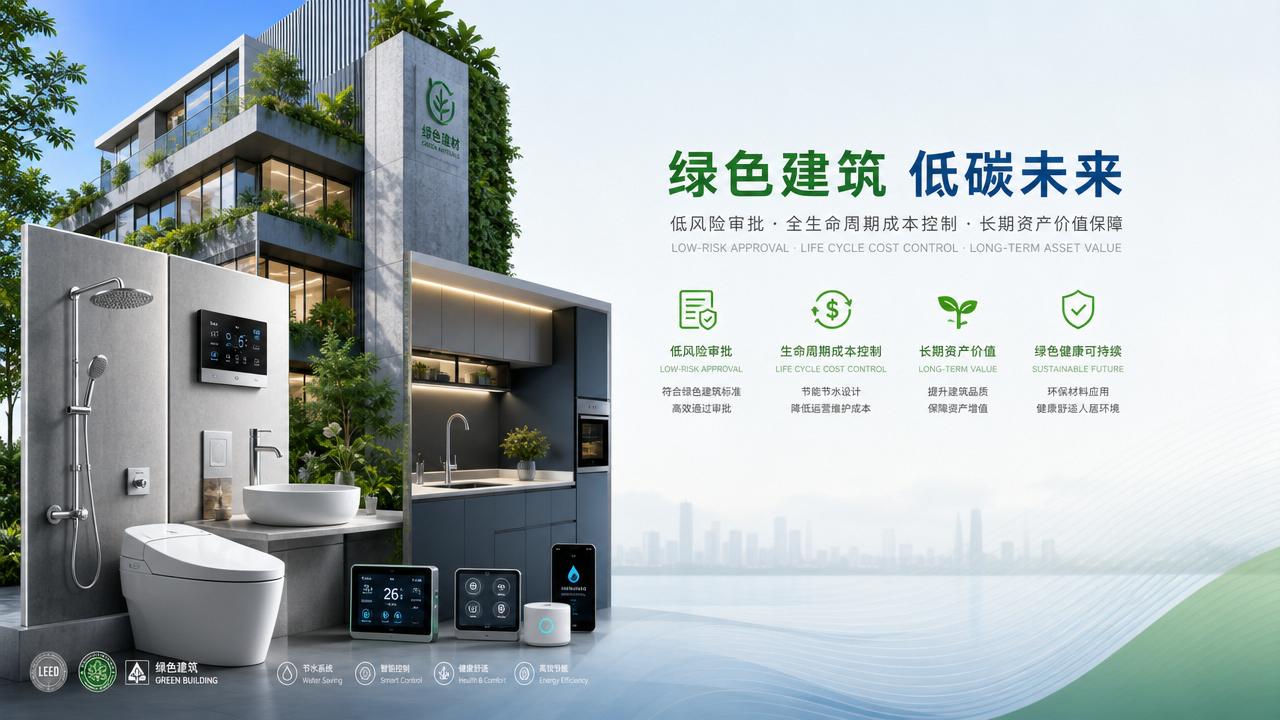
For financial approvers, sustainable building practices are no longer just a compliance trend—they are a practical way to reduce approval delays, control lifecycle costs, and strengthen project certainty. By aligning material choices, energy standards, and documentation with evolving regulations from the start, developers can lower risk during approval while improving long-term asset value and market competitiveness.
In capital-intensive building projects, approval risk often comes from incomplete specifications, unclear performance assumptions, and late-stage design revisions rather than from the headline budget alone. That is why sustainable building practices matter to finance teams: they create a clearer path to predictable capex, fewer compliance surprises, and stronger defensibility when a project is reviewed by investment committees, lenders, insurers, or public authorities.
For GIAM’s audience across core building materials, sanitary spaces, and smart kitchen and bath systems, the value is especially practical. Sustainable decisions at the material, water, energy, and systems level can reduce approval friction in 3 key ways: by improving document readiness, by lowering operating risk over a 10- to 20-year asset horizon, and by supporting premium positioning in markets where green and intelligent spaces increasingly influence tenant demand and project valuation.
Why Sustainable Building Practices Reduce Approval Risk
Financial approvers typically assess more than initial construction cost. They want to know whether a project can move from submission to approval without repeated clarification cycles, whether future operating expenses are controllable, and whether the asset will remain competitive under tighter building standards in the next 5 to 10 years. Sustainable building practices help answer all 3 questions with measurable inputs.
1. Better alignment with current and future regulations
Energy codes, water-efficiency requirements, emissions disclosures, and indoor material standards are changing faster than many approval workflows. If a project is designed only to meet the minimum current threshold, it may still face questions during financing or permitting if the approval process stretches over 8 to 16 weeks. Sustainable building practices reduce that risk by specifying higher-performance envelopes, efficient fixtures, lower-emission materials, and more traceable product documentation from day one.
Where finance teams gain confidence
- Fewer late-stage substitutions caused by non-compliant materials
- Lower probability of redesign after authority or investor review
- Stronger support for long-term utility cost assumptions
- Improved resilience against tariff, sourcing, or standard changes
2. More predictable lifecycle economics
Approval decisions are often delayed when projected savings are vague. Sustainable building practices become finance-friendly when they are linked to lifecycle models rather than broad environmental claims. For example, a water-saving sanitary package can be assessed through fixture flow ranges, maintenance intervals, and expected consumption reduction over a 7- to 12-year replacement cycle. Likewise, smart kitchen and bath systems can be evaluated through sensor reliability, serviceability, and utility management value, not just technology appeal.
The following framework shows how finance teams can compare traditional specifications against sustainability-led alternatives during approval.
The key takeaway is that sustainable building practices make approvals easier when they translate sustainability into risk control language. Finance reviewers respond well to traceability, service life estimates, replacement assumptions, and measurable resource performance because these factors reduce uncertainty more effectively than generic green positioning.
3. Stronger marketability and valuation support
In both residential and commercial space development, sustainable building practices can protect downside risk linked to slower absorption, weaker tenant demand, or lower pricing power. Projects using healthier materials, water-saving sanitary products, and integrated smart systems often gain an advantage in segments where occupiers compare running costs and usability. For financial approvers, that can strengthen revenue assumptions and reduce the gap between underwriting projections and operational reality.
What Financial Approvers Should Evaluate Before Sign-Off
Not every sustainability claim lowers approval risk. Some add complexity if they rely on untested products, unclear installation requirements, or weak documentation. A disciplined review structure helps finance teams separate useful sustainable building practices from specifications that may cause cost drift or commissioning delays.
Core evaluation criteria
- Compliance readiness: Are data sheets, certifications, and performance statements complete before submission?
- Supply continuity: Can the specified materials or systems be sourced within a normal 4- to 12-week delivery window?
- Lifecycle value: Is there a realistic maintenance and replacement plan over at least 5 years?
- Integration risk: Will the sustainable solution affect plumbing, MEP coordination, controls, or finishing trades?
- User adoption: In smart kitchen and bath applications, is the system intuitive enough to avoid operational misuse?
Red flags that often delay approvals
Projects tend to stall when product selections are made too late, when “equivalent” substitutions are not technically equivalent, or when savings assumptions are copied from unrelated project types. In wet areas and sanitary spaces, even a small mismatch in pressure range, connection standard, or control protocol can trigger redesign work. In financial terms, a 2-week procurement slip can cascade into contractor claims, revised cash-flow timing, and additional review rounds.
This checklist helps approvers test whether sustainable building practices are mature enough for reliable approval.
A useful pattern emerges from the checklist: the most effective sustainable building practices are not the most complex ones. They are the ones that combine measurable performance with manageable delivery risk. Financial approvers should favor solutions that fit normal construction sequencing and have clear documentation for each approval gate.
High-Impact Sustainable Building Practices in Materials, Sanitary Spaces, and Smart Systems
GIAM operates at the intersection of material science, hydraulic design, and smart living systems. For this reason, sustainable building practices should be examined where approval risk is often concentrated: envelope and finishing materials, sanitary areas with water-performance implications, and smart kitchen and bath systems that affect user efficiency and future competitiveness.
Material choices that improve approval confidence
In the materials category, finance teams should look beyond unit price to 4 criteria: service life, maintenance frequency, emissions profile, and replacement complexity. A tile, panel, sealant, or surface finish that lasts 12 to 20 years with lower cleaning chemistry demand can outperform a cheaper alternative that requires visible remediation after 3 to 5 years. This matters in both premium residential and commercial assets, where interior refresh cycles affect occupancy disruption and capital reserves.
Practical material priorities
- Low-emission finishes for enclosed interior environments
- Durable surfaces in high-moisture zones such as bathrooms and utility kitchens
- Products with stable supply documentation across regions
- Components that reduce cleaning labor or chemical use over time
Water-saving sanitary spaces as a finance case
Sanitary spaces are one of the clearest areas where sustainable building practices convert directly into reduced operating risk. A specification package that combines efficient faucets, optimized flushing systems, leak-aware controls, and easy-access maintenance points can reduce both resource waste and service disruption. For approval purposes, what matters is not just a lower nominal flow rate, but whether the complete hydraulic design remains stable across typical pressure conditions and user loads.
In many projects, reviewers work with common ranges rather than fixed universal figures. For example, fixture strategies may be evaluated against expected use frequency, maintenance intervals of 6 to 12 months, and replacement planning over 5 to 8 years. That gives finance teams a realistic way to compare alternatives without relying on inflated savings narratives.
Smart kitchen and bath systems with measurable value
Smart systems support sustainable building practices when they improve control, detect inefficiency early, or simplify user management. Examples include leak detection, occupancy-responsive water delivery, smart locks that reduce key-management overhead, and device-level monitoring that supports maintenance planning. However, financial approvers should ask 3 questions before accepting the premium: Does the system reduce a specific operating risk? Can the building team maintain it without specialist dependency? Is there a fallback mode if connectivity is interrupted?
If the answer to those questions is yes, smart systems can strengthen approval cases for premium developments, hospitality assets, mixed-use schemes, and future-ready residential programs. If the answer is unclear, the technology may look attractive but remain weak from an approval-risk perspective.
Implementation Roadmap: How to Build a Lower-Risk Approval Package
Even strong sustainable building practices can lose value if they are introduced too late. A disciplined implementation path helps finance teams review sustainability as a controlled investment decision rather than a reactive design add-on. In most projects, this can be organized into 5 practical steps.
Step 1: Define approval-critical performance targets
Set 3 to 6 measurable targets at concept stage. These may include energy-use direction, water-efficiency expectations, indoor material quality, and digital controllability for key systems. The objective is not to over-design every category, but to avoid unstructured sustainability claims that create ambiguity later.
Step 2: Lock high-risk specifications early
Prioritize items with long lead times or high coordination impact, such as façade components, sanitary systems, valves, controls, and smart hardware. In many international supply chains, the difference between an 8-week and 14-week lead time can change the project’s exposure profile significantly. Early locking reduces substitution pressure and preserves approval assumptions.
Step 3: Build a finance-readable documentation set
Approvers need concise, decision-grade information. A useful package includes technical datasheets, compliance references, maintenance assumptions, lifecycle rationale, and a summary of operational impacts. GIAM’s intelligence-led approach is relevant here because decision-makers often need cross-functional clarity, not disconnected product data from multiple suppliers.
Step 4: Test substitution and service scenarios
Before final sign-off, review at least 2 alternate sourcing or replacement pathways for critical items. This is particularly important for imported materials, specialized sanitary components, and connected devices. Finance teams should know whether an alternative product can maintain the same performance band without redesign cost.
Step 5: Link sustainability to post-approval governance
Approval is only the start. Sustainable building practices protect value when they are connected to commissioning checks, maintenance planning, and procurement controls after project release. A review at 90 days, 180 days, and 12 months can help confirm whether the approved assumptions on water use, system reliability, and material performance are holding in operation.
Common Approval Mistakes and How to Avoid Them
Many teams still treat sustainable building practices as a branding layer rather than a risk-management tool. That approach often weakens approval cases. Finance reviewers are more likely to support sustainability when it is tied to delivery certainty, maintainability, and market durability.
Mistake 1: Focusing only on upfront cost
A lower purchase price can be offset quickly by higher maintenance, earlier replacement, utility inefficiency, or tenant dissatisfaction. Approvals improve when capex is reviewed alongside 5-year and 10-year operating implications.
Mistake 2: Approving sustainability claims without operational detail
If a specification promises savings but lacks installation requirements, maintenance logic, or compatibility notes, the finance case remains incomplete. Sustainable building practices should always be paired with clear implementation conditions.
Mistake 3: Underestimating documentation quality
In many approval environments, weak documentation causes more delay than weak intent. A complete submittal package can shorten clarification cycles and reduce cross-department friction, especially when projects involve multiple consultants, overseas suppliers, and mixed-use operational requirements.
For financial approvers, the most effective sustainable building practices are those that improve certainty across the entire decision chain: specification, compliance, procurement, commissioning, and long-term asset performance. In GIAM’s sectors—from core materials to sanitary spaces and smart kitchen and bath systems—the commercial value of sustainability is strongest when every choice is documented, measurable, and aligned with how buildings are actually financed and operated.
If you are evaluating projects where approval speed, lifecycle cost control, and future marketability all matter, a more intelligence-led sustainability strategy can materially reduce risk. Contact GIAM to explore tailored insights, compare solution pathways, and get a more decision-ready view of sustainable building practices for your next project approval.
Industry Briefing
Get the top 5 industry headlines delivered to your inbox every morning.