
What Causes Delays in Industrial Equipment Delivery?
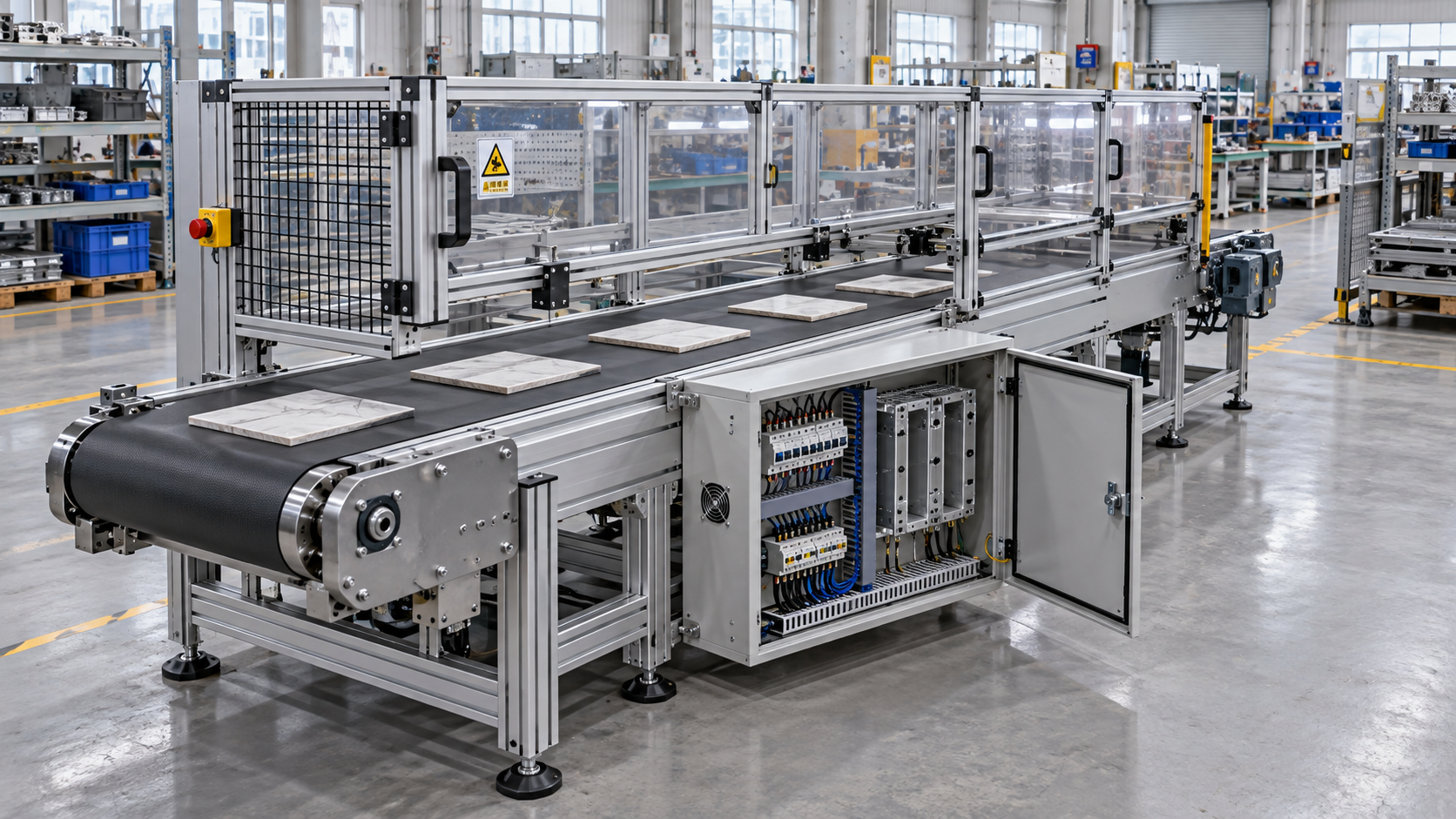
What Causes Delays in Industrial Equipment Delivery?
What causes delays in industrial equipment delivery? Usually, it is not one late truck or one congested port. A missed delivery date often starts much earlier: an unresolved specification, a component ordered too late, a production slot that was never secured, or a factory test that exposes an integration problem.
For manufacturers, procurement teams, and construction project managers, these delays can leave installation crews waiting and commissioning dates slipping. The challenge is separating the visible symptom from the actual constraint. Expedited freight will not rescue equipment that has not passed testing. More frequent progress meetings will not replace an unavailable drive.
Whether the purchase is a building-material production line, a sanitaryware handling system, or equipment for smart kitchen assembly, reliable delivery depends on managing the handoffs between engineering, purchasing, manufacturing, logistics, and site preparation.
The first problem may be the meaning of “delivery”
A supplier may quote a lead time measured from receipt of the deposit and approval of drawings. The buyer may assume the clock starts when the purchase order is issued. If drawing approval takes longer than expected, both parties can believe they are following the agreed schedule while working toward different dates.
The endpoint matters just as much. “Ready for dispatch,” “handed to the carrier,” “arrived at site,” and “ready for commissioning” describe different milestones. Incoterms can clarify certain transport obligations, costs, and risk transfers, but they do not replace a detailed project schedule or define technical acceptance by themselves.
Before treating a quoted lead time as a project commitment, confirm its starting conditions, endpoint, and dependencies. Separate the contractual delivery date from the date the equipment must be available for installation. Otherwise, the project may have no allowance for customs clearance, unloading, inspection, or positioning.
Incomplete specifications create delays that surface late
Equipment can be ordered before the buyer has settled the details needed to build it. Typical gaps include electrical supply, product dimensions, throughput requirements, utility conditions, control interfaces, and the boundary between the machine supplier’s work and the site contractor’s work.
Consider a sanitaryware production project where handling equipment must accommodate several product geometries. If the approved product range changes after grippers and fixtures enter fabrication, the effect may extend beyond replacement tooling. Motion paths, guarding, controls, and acceptance tests may also need revision. What looks like a small product change becomes a sequence of engineering tasks.
The practical safeguard is a documented design freeze, with unresolved items clearly identified. It should establish what is fixed, who approves remaining decisions, and which assumptions the supplier is using. Changes can still be worthwhile, but their schedule effects should be assessed before approval—not discovered during assembly.
For smart kitchen and bath manufacturing systems, pay particular attention to software and data interfaces. A mechanically complete station may still require development work if its communication with test devices, traceability software, or factory systems was never properly defined.
One missing component can hold the whole machine
Industrial equipment depends on a chain of sub-suppliers. Motors, drives, control hardware, bearings, specialty valves, sensors, and fabricated assemblies may each follow different purchasing and production schedules. The machine builder’s overall capacity tells you little about whether a particular critical item will arrive on time.
A nearly finished machine is not necessarily nearly ready to ship. A missing control module can prevent software validation; an unavailable seal can stop pressure testing. Progress measured by expenditure or the number of installed parts can therefore give a misleading picture.
Ask for visibility into the components that control completion, rather than demanding every line of the supplier’s bill of materials. Useful questions include:
- Which purchased items have no approved substitute?
- Have orders been placed, and have delivery dates been acknowledged?
- Which missing items would prevent assembly, testing, or shipment?
- Would an alternative require redesign, programming changes, or renewed conformity assessment?
Substitution is a trade-off, not an automatic solution. A different drive or sensor may be available sooner, but it can introduce integration work and spare-parts complications. Approve alternatives against technical requirements and lifecycle support, not availability alone.
Production bottlenecks and failed tests are different problems
A supplier can have all major materials available and still miss delivery because machining, welding, electrical assembly, or testing capacity is overcommitted. Specialized operations are particularly vulnerable: a large fabrication may depend on one suitable machine, while final controls work may depend on a small engineering team.
“Production has started” is weak evidence of schedule health. It could mean material has been cut while the bottleneck operation remains weeks away. Better milestones describe completed work: fabrication inspected, electrical assembly finished, software loaded, or internal testing completed.
Factory acceptance testing, or FAT, introduces another risk. Equipment may run successfully without load yet struggle with representative products, specified cycle sequences, or fault recovery. For a tile packaging line, for example, testing only one convenient format may leave changeover or handling issues unresolved.
Agree on acceptance criteria, test materials, attendance, and defect disposition before the test is booked. Distinguish shipment-blocking defects from minor outstanding items that can safely be closed later. Shipping early with incomplete safety functions or unresolved core performance is not schedule recovery; it transfers the problem to a more expensive location.
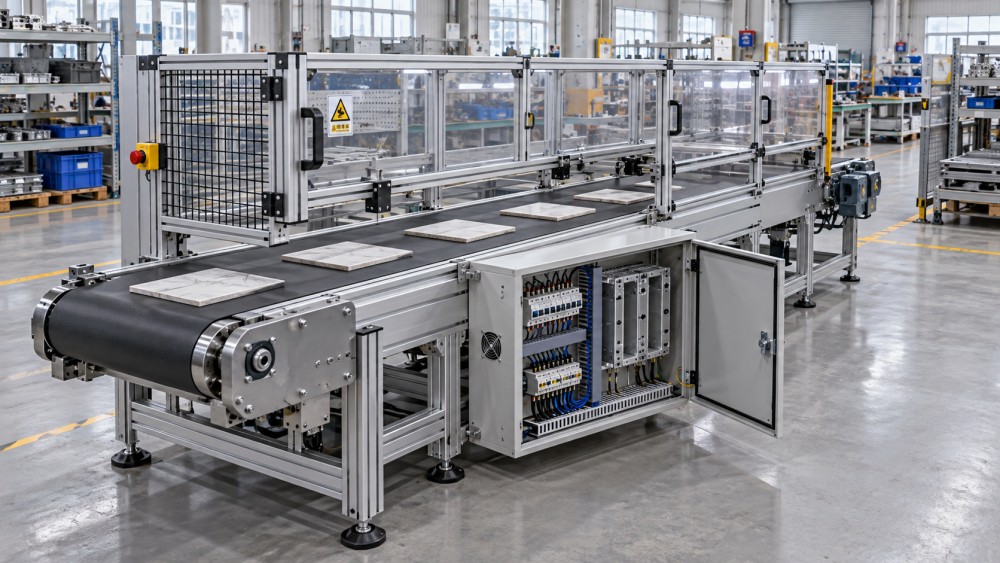
Shipping becomes unpredictable when preparation starts too late
Transport planning should begin while equipment is being engineered, particularly for oversized or heavy assemblies. Packed dimensions, lifting points, transport orientation, preservation requirements, and whether the machine can be split into modules all affect the available options.
Waiting until FAT is complete to obtain freight quotations can expose avoidable constraints. Suitable equipment may not be available, a sailing may be missed, or a route may require permits and surveys. Air freight is not a universal fallback: size, weight, cargo restrictions, and cost may rule it out.
Customs delays often have a separate cause. Inconsistent descriptions, disputed classification, valuation questions, missing origin information, or destination-specific import requirements can hold a shipment even when transport runs smoothly. Requirements vary by equipment and jurisdiction, so the importer and customs broker should review the document package before dispatch.
For businesses following GIAM’s coverage of building materials, sanitary spaces, and smart kitchen and bath systems, this is where market intelligence becomes operational. Changes in tariffs or applicable requirements should prompt a project-specific check of landed cost, documentation, and equipment configuration. A sector update is an early warning—not proof that a particular shipment is ready to clear customs.
The site can delay delivery even when the supplier is on time
Equipment arriving on schedule is of limited value if it cannot be received or installed. Unfinished foundations, restricted access, unavailable cranes, insufficient floor-loading capacity, and incomplete utilities can prevent unloading or force temporary storage.
These are not always supplier delivery failures, but they affect the same project outcome. Storage may also create preservation obligations for electronics, machined surfaces, and moisture-sensitive components. Responsibility for inspection, protection, insurance, and any warranty implications should be clarified before equipment is redirected to a warehouse.
Use a site-readiness review tied to the actual machine layout and installation method. “The building is ready” is too broad. Confirm access dimensions, unloading arrangements, anchor locations, utility conditions, and responsibility for connections. Bring the installation contractor into that review rather than relying entirely on purchasing and the supplier.
How to recover a slipping delivery date without creating another problem
When a date slips, start with the earliest unfinished activity that controls shipment. Asking only for a revised delivery date tends to produce another estimate. Ask instead what must happen next, who owns it, what evidence will confirm completion, and which downstream activities depend on it.
A useful recovery plan makes the constraint visible:
- Engineering hold: close the specific approval or interface question, with a named decision-maker.
- Component shortage: verify the sub-supplier commitment and assess an approved alternative or resequenced work.
- Capacity bottleneck: identify the constrained operation and whether qualified additional capacity is genuinely available.
- Test failure: define the correction, retest method, and acceptance evidence.
- Transport constraint: compare feasible routes and modes using confirmed packed dimensions and cargo requirements.
Partial shipment deserves particular caution. It can help when independent modules allow useful installation work to begin. It can hurt when missing parts prevent alignment, incomplete documentation complicates import clearance, or repeated mobilization increases site costs. Evaluate the installation sequence before accepting it.
For future orders, build schedule allowance around identifiable risks rather than adding an unexplained buffer to the final date. Track drawing approval, critical component availability, assembly completion, FAT, shipping release, and site readiness separately. Each needs an owner and evidence of completion.
The most useful question is not simply, “Will the equipment arrive on time?” It is, “What could still prevent the next committed milestone?” If the answer remains vague, the delivery date should be treated as uncertain—however confidently it appears in the progress report.
Industry Briefing
Get the top 5 industry headlines delivered to your inbox every morning.