Energy-Saving Building Standards Are Raising Retrofit Costs
As energy-saving building standards become stricter across major markets, retrofit budgets are rising for reasons that go far beyond insulation or equipment upgrades. For financial approvers, the real issue is not whether standards matter, but how to fund compliance without eroding project returns. In most cases, tighter rules increase upfront capital needs, extend design and procurement timelines, and add integration risk. At the same time, they can improve asset resilience, lower operating costs, and protect long-term value if the retrofit is scoped and sequenced correctly.
The core search intent behind this topic is practical and decision-oriented. Readers want to understand why retrofit costs are increasing, which cost drivers are structural rather than temporary, and how to judge whether a higher-cost upgrade still makes financial sense. For a finance-led audience, the most important questions are clear: What is pushing capex up? Which spending is mandatory versus discretionary? How should return on investment be measured when regulation, energy volatility, and asset value are all changing?
This is why the conversation should not stay at the level of general sustainability claims. Financial decision-makers need a framework for approval. They need to know where standards affect material choices, mechanical systems, labor, documentation, certification, and commissioning. They also need to distinguish between retrofits that simply satisfy compliance and those that create measurable commercial advantage through lower lifecycle cost, better tenant appeal, reduced carbon exposure, and stronger competitive positioning.
Why retrofit costs are rising under tighter energy-saving building standards
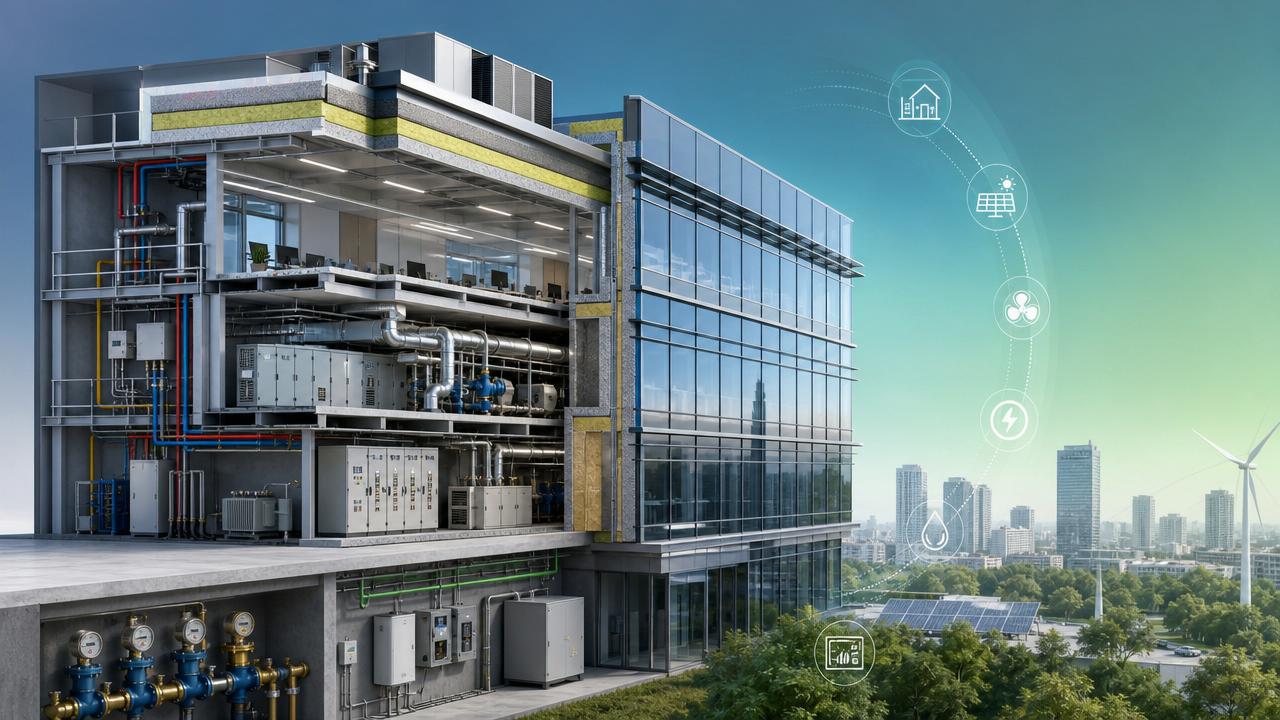
The first reason costs are rising is that modern standards rarely target a single building component. Earlier retrofit programs often focused on one visible efficiency measure, such as lighting replacement or boiler upgrades. Today, many energy-saving building standards assess whole-building performance. That means envelope, HVAC, controls, ventilation, water systems, metering, and sometimes embodied carbon are evaluated together. Once compliance shifts from component-level improvement to system-level performance, project complexity and cost naturally increase.
The second driver is the growing performance gap between existing buildings and new compliance thresholds. In aging assets, original façades, pipework, air distribution systems, and plant rooms were not designed for current efficiency expectations. When standards tighten, owners often discover that one upgrade triggers another. A more efficient heat pump may require electrical capacity expansion. Better airtightness may require ventilation redesign. Smart controls may require sensor networks, software integration, and specialist commissioning. The result is cascading scope growth.
Third, materials and product specifications are moving upward. Higher thermal-performance glazing, low-carbon insulation, water-saving sanitary systems, smart valves, premium pumps, and connected kitchen or bath components typically carry higher purchase prices than legacy alternatives. In some regions, trade tariffs, logistics volatility, and local-content rules can add another layer of cost pressure. Even where unit prices moderate over time, approved products that meet both efficiency and safety requirements may remain limited, narrowing procurement flexibility.
Labor and expertise are another major factor. Retrofits in occupied buildings require staged installation, temporary services, after-hours work, safety controls, and coordination across multiple disciplines. Compliance-driven projects also need more modeling, documentation, testing, balancing, and commissioning. In many markets, there is a shortage of professionals who can execute deep energy retrofits well. Scarce specialist labor increases both direct cost and schedule risk.
What financial approvers should focus on before saying yes or no
For a finance audience, the key mistake is reviewing these projects as standard maintenance requests. A retrofit shaped by energy-saving building standards is not only a cost event. It is a capital allocation decision influenced by regulation, asset strategy, and market competitiveness. The right question is not “Why is this more expensive than expected?” but “Which parts of this investment are unavoidable, which create optional upside, and which can be phased?”
Start by separating the budget into four categories: mandatory compliance items, risk-reduction items, operating-cost reduction items, and value-enhancement items. Mandatory compliance covers measures required by code, municipal regulation, lender conditions, or certification-linked obligations. Risk reduction includes upgrades that lower the probability of future penalties, tenant complaints, equipment failure, or carbon-related obsolescence. Operating-cost reduction includes measures with measurable savings in energy, water, and maintenance. Value-enhancement items support rent resilience, occupancy, brand positioning, or premium sale potential.
This breakdown helps approvers avoid two extremes. One is over-approving every “green” feature without discipline. The other is rejecting strategic upgrades because the first-pass payback looks too long. Some retrofit measures have modest direct savings but strong compliance value. Others may not be legally required today but become cheaper to install when bundled into the same construction window. Finance teams should evaluate interdependence, not just isolated line items.
Approvers should also request a base case and a scenario case. The base case shows the minimum scope needed to satisfy near-term requirements. The scenario case tests whether broader upgrades deliver stronger value over five to fifteen years under different assumptions for energy prices, carbon costs, occupancy, and maintenance. This makes the approval process more resilient than relying on a single, optimistic ROI figure.
The hidden cost drivers that often surprise project budgets
Many retrofit budgets fail not because headline equipment costs were wrong, but because enabling works were underestimated. Electrical upgrades are a common example. When heating is electrified or smart systems are added, panel capacity, cabling, backup arrangements, and utility coordination may all need expansion. These are not always visible in early-stage estimates, yet they can significantly alter total project cost.
Building envelope work also creates hidden spending. Improving thermal performance may reveal moisture issues, structural repairs, outdated fire-stopping, or façade access challenges. Once the wall or roof is opened, deferred maintenance often becomes impossible to ignore. From a financial perspective, this is frustrating but not irrational. It reflects the reality that stricter standards expose legacy weaknesses that had been tolerated under older operating assumptions.
Digital integration is another underestimated category. Current energy-saving building standards increasingly rely on verifiable performance, not just equipment installation. That means metering, submetering, building management system upgrades, analytics platforms, and commissioning records matter more than before. Smart kitchen, bath, water, and sanitary systems may improve efficiency and user experience, but they also require protocol compatibility, cybersecurity review, and ongoing service capability. Technology value is real, but integration cost must be priced honestly.
Finally, project delay has a financial cost that is often ignored in sustainability discussions. A retrofit that extends downtime, disrupts tenants, or misses seasonal construction windows can weaken returns quickly. Time risk should be treated as a budget variable, not an operational afterthought.
How to judge whether higher retrofit costs still make economic sense
The simplest way to make a poor decision is to rely only on simple payback. While payback is useful, it does not capture the full economics of compliance-driven retrofits. Financial approvers should assess at least five dimensions: upfront capex, annual utility savings, avoided future compliance costs, maintenance and replacement effects, and asset value impact. In some sectors, tenant retention and financing access should be added as well.
Lifecycle costing is especially important. A cheaper product that meets today’s minimum requirement may create higher operating, repair, or replacement cost over the next decade. By contrast, a better-performing system may look expensive in procurement but prove more economical once downtime, labor, and utility volatility are included. This is particularly relevant in sanitary spaces, water systems, and smart kitchen and bath infrastructure, where inefficient components can generate recurring waste and service issues.
It is also useful to compare the retrofit against a “do minimum” pathway. Many owners assume deferral preserves cash. In reality, deferral can simply postpone and enlarge the bill. If standards tighten again, energy prices remain unstable, or occupancy expectations change, a delayed retrofit may cost more later while exposing the asset to reputational and leasing risk in the meantime. For finance teams, the economic question is often whether to invest now in a coordinated package or pay more later through fragmented, reactive upgrades.
Where possible, use internal rate of return and net present value analysis with multiple scenarios. Include sensitivity testing for energy inflation, occupancy changes, interest rates, and carbon policy. If a project remains acceptable across conservative assumptions, the approval case is much stronger than one dependent on ideal conditions.
Supplier and specification choices now have a bigger financial impact
As standards become more demanding, supplier selection becomes a capital protection issue. Product failure, delayed delivery, weak documentation, or poor interoperability can destroy the economics of a retrofit even when the original design intent was sound. Financial approvers should be wary of evaluating suppliers purely on bid price. In standards-driven projects, the ability to document compliance, support commissioning, and provide durable performance is part of the financial value.
This is particularly relevant in categories such as insulation, glazing, sanitary equipment, water-saving fixtures, pumps, smart locks, controllers, and connected kitchen and bath systems. Products in these areas increasingly influence both efficiency outcomes and user satisfaction. A low-cost option that underperforms can create warranty disputes, rework, tenant complaints, or a failure to achieve target performance after occupancy. Those outcomes have direct financial consequences.
Approvers should ask procurement teams whether the specification supports future compatibility. Can controls integrate with broader building systems? Are spare parts available locally? Is maintenance support realistic? Will the product still meet likely future standards? In volatile global markets, these questions are essential. Tariffs, certification differences, and fragmented supply chains can turn a narrowly optimized purchase into a costly long-term mistake.
How to reduce cost pressure without undermining compliance
Rising retrofit cost does not mean every project is financially unattractive. It means projects need smarter structuring. The first strategy is phasing. Not every upgrade must happen at once, but phasing should be deliberate. Bundle measures that share scaffolding, shutdowns, design effort, or contractor mobilization. Separate items only when deferral does not create rework or future non-compliance risk.
The second strategy is scope discipline. Teams often include desirable but weakly justified features under the umbrella of sustainability. Finance approvers should request a decision matrix showing which measures are required for code, which are required for performance targets, and which are optional enhancements. This protects the project from budget inflation while preserving the business case for high-value measures.
Third, use performance-based procurement where appropriate. Rather than prescribing every product, define measurable outcomes for energy, water, durability, and system compatibility. This can increase supplier accountability and encourage innovation. However, it only works when the owner has strong technical review capability.
Fourth, invest in early diagnostics. Energy audits, envelope assessments, water system reviews, and digital infrastructure checks may seem like extra preconstruction expense, but they are often cheaper than discovering fatal constraints mid-project. For financial approvers, good diagnostics reduce uncertainty premiums and improve capital planning accuracy.
What this means for long-term asset strategy
The broader implication is that energy-saving building standards are changing the economics of building ownership, not just retrofit projects. Assets that cannot efficiently absorb stricter requirements may face recurring capex shocks, weaker leasing performance, and lower strategic appeal. By contrast, buildings upgraded with durable materials, efficient water and energy systems, and intelligent controls may command better resilience in a market where regulation and user expectations continue to rise.
This matters across residential, commercial, hospitality, healthcare, and mixed-use sectors. Occupants increasingly notice indoor comfort, water efficiency, hygiene performance, digital convenience, and environmental credibility. Standards are not the only force shaping retrofit demand, but they accelerate the transition toward buildings that are measurable, efficient, and easier to operate intelligently.
For finance leaders, the practical takeaway is to treat these retrofits as strategic filters. Some assets deserve deep investment because they can preserve or expand long-term value. Others may justify only minimum compliance spending if their market position or holding horizon is limited. The goal is not to approve every green upgrade. It is to direct capital toward the buildings and measures that create the strongest combination of compliance security, operational savings, and asset durability.
Conclusion: higher costs are real, but so is the cost of underreacting
Yes, tighter energy-saving building standards are raising retrofit costs. The increase is being driven by broader performance requirements, more complex system integration, stronger material specifications, labor constraints, digital verification needs, and hidden enabling works. For financial approvers, these are not temporary inconveniences. They are structural features of the low-carbon building transition.
But higher cost alone is not the right basis for rejection. The better test is whether the project clearly distinguishes mandatory compliance from strategic value, uses realistic lifecycle analysis, manages supplier and integration risk, and aligns spending with long-term asset goals. When those conditions are in place, a more expensive retrofit can still be the financially prudent choice. In many cases, the greater risk is not overspending on compliance, but underinvesting in buildings that will soon be judged by stricter standards, higher performance expectations, and sharper market competition.
Industry Briefing
Get the top 5 industry headlines delivered to your inbox every morning.