How carbon reduction construction materials cut lifetime costs
For finance approvers, carbon reduction construction materials are no longer a symbolic environmental upgrade. They are a measurable cost-control tool across design, construction, operation, maintenance, and end-of-life stages.
When evaluated through lifecycle costing, these materials often lower utility bills, reduce repair frequency, improve durability, and support compliance with stricter building standards.
That combination can protect cash flow, reduce risk premiums, and strengthen asset performance over decades. In today’s building economy, the financial logic is becoming as important as the carbon logic.
What carbon reduction construction materials mean in practical terms
Carbon reduction construction materials are products designed to lower greenhouse gas emissions across sourcing, manufacturing, transport, installation, use, and disposal.
This category includes low-carbon cement blends, recycled steel, engineered timber, high-performance insulation, low-emission glass, durable finishes, water-saving sanitary systems, and smart interior components.
The best choices do more than reduce embodied carbon. They also improve thermal efficiency, moisture control, hygiene, service life, and adaptability in residential and commercial spaces.
That is why GIAM tracks these materials through both material science and market intelligence. Carbon performance matters, but lifetime economics determine whether adoption scales across projects.
Key cost dimensions linked to low-carbon materials
- Lower operational energy demand
- Reduced water consumption
- Longer replacement cycles
- Lower maintenance labor and downtime
- Better resistance to corrosion, mold, and wear
- Improved compliance with codes, certifications, and disclosure rules
Why the industry is paying closer attention now
Several market forces are pushing carbon reduction construction materials from optional preference to strategic baseline. The shift is happening across public projects, commercial developments, hospitality, housing, and infrastructure.
In this context, carbon reduction construction materials help bridge sustainability targets with investment discipline. They support both operational resilience and audit-ready decision making.
How carbon reduction construction materials cut lifetime costs
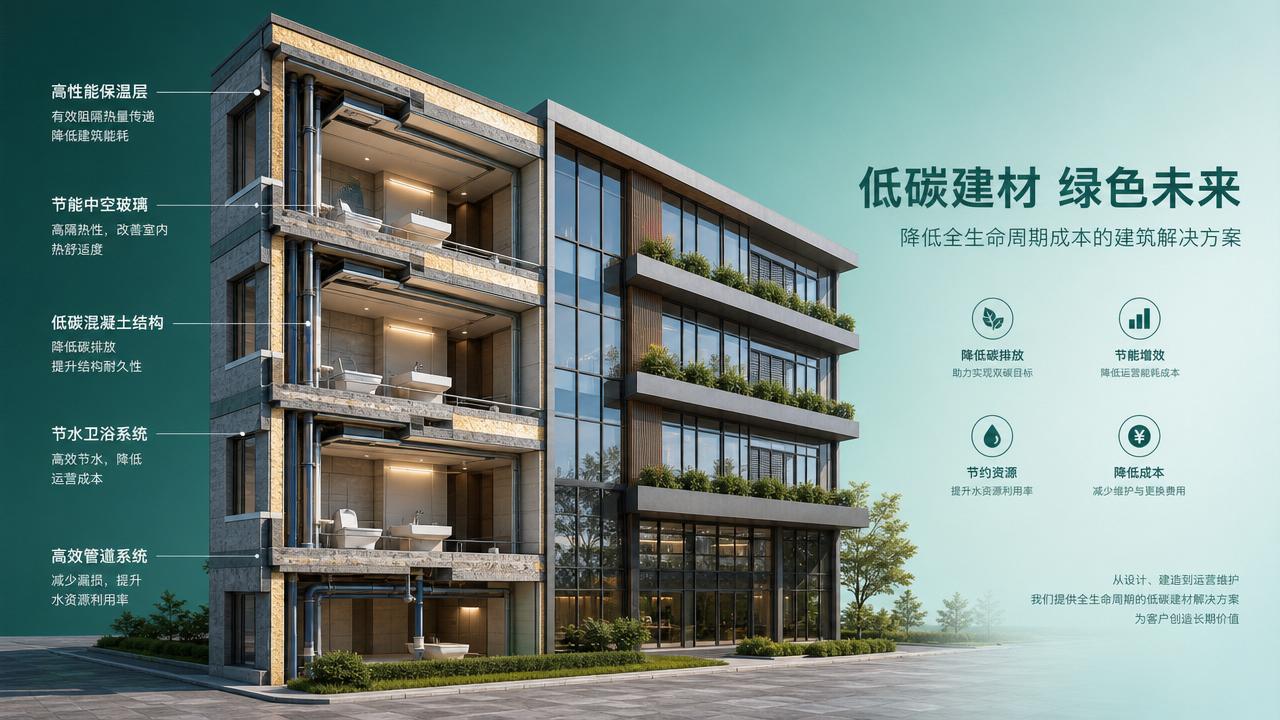
The main savings rarely come from one source. They usually come from stacked benefits that compound over time. This is where carbon reduction construction materials create durable financial advantages.
1. Reduced energy consumption
High-performance insulation, low-emissivity glazing, airtight membranes, and reflective roofing reduce heating and cooling loads. Lower demand means smaller utility bills year after year.
In many projects, these savings continue long after initial capex concerns fade. They also improve comfort stability, which can support occupancy quality and space usability.
2. Lower maintenance and replacement costs
Durable low-carbon flooring, corrosion-resistant metal systems, advanced coatings, and moisture-stable boards can extend service intervals and reduce unplanned repair events.
Even modest durability gains matter when labor, shutdowns, tenant disruption, and material waste are included in whole-life cost calculations.
3. Water and sanitation efficiency
Water-saving fixtures, efficient sanitary systems, and anti-bacterial surfaces lower operating costs while supporting hygiene goals. This is especially relevant in hospitality, healthcare-adjacent, education, and high-traffic environments.
Reduced water use also lowers associated pumping and heating demand, creating an additional indirect savings layer.
4. Better regulatory alignment
Carbon reduction construction materials can simplify compliance with green codes, performance standards, and building certification frameworks. Early alignment lowers the chance of costly late-stage substitutions.
It also reduces exposure to future retrofit pressure as governments tighten energy and carbon disclosure rules for buildings.
5. Stronger residual asset value
Buildings with efficient envelopes, healthier materials, and smarter resource systems are often more attractive during leasing, refinancing, repositioning, or sale.
That future value is not always visible in basic procurement pricing, but it becomes significant during the full asset lifecycle.
Typical material categories and their business impact
Common scenarios where savings become visible
The value of carbon reduction construction materials appears differently depending on building type, usage intensity, climate, and replacement cycles.
- Residential projects benefit from lower utility bills, quieter interiors, and longer-lasting finishes.
- Office buildings gain from better energy performance, wellness outcomes, and easier compliance reporting.
- Hotels and mixed-use assets see value from water efficiency, durable surfaces, and lower refurbishment frequency.
- Retail and public spaces benefit from resilient materials that reduce downtime and preserve appearance under heavy traffic.
- Institutional environments gain from hygiene, safety, and predictable long-term operating expenditure.
Across these scenarios, the strongest results come from combining material selection with design coordination, not from isolated product swaps.
Practical evaluation points before approval
To judge carbon reduction construction materials effectively, initial purchase price should be only one part of the review framework.
- Compare capex with expected operating savings over realistic service periods.
- Check durability data, warranty terms, and maintenance requirements.
- Review environmental product declarations and performance certifications.
- Assess local climate fit, installation quality needs, and replacement complexity.
- Include water, energy, labor, downtime, and disposal in total cost analysis.
- Prioritize systems that align with future building standards and digital monitoring.
This disciplined approach helps separate genuine lifecycle value from claims based only on low embodied carbon headlines.
A more informed next step for long-term building value
Carbon reduction construction materials can cut lifetime costs when they improve efficiency, durability, compliance readiness, and asset resilience at the same time.
The most effective decisions connect technical material data with real project economics. That is where better intelligence changes outcomes.
GIAM supports this process by tracking material innovation, sanitary systems, and smart kitchen and bath developments through a market and performance lens.
Use that perspective to compare options early, model whole-life impact, and build projects that are lower in carbon and stronger in financial return.
Industry Briefing
Get the top 5 industry headlines delivered to your inbox every morning.