
Industrial Economics in Smart Spaces Is Efficiency Enough
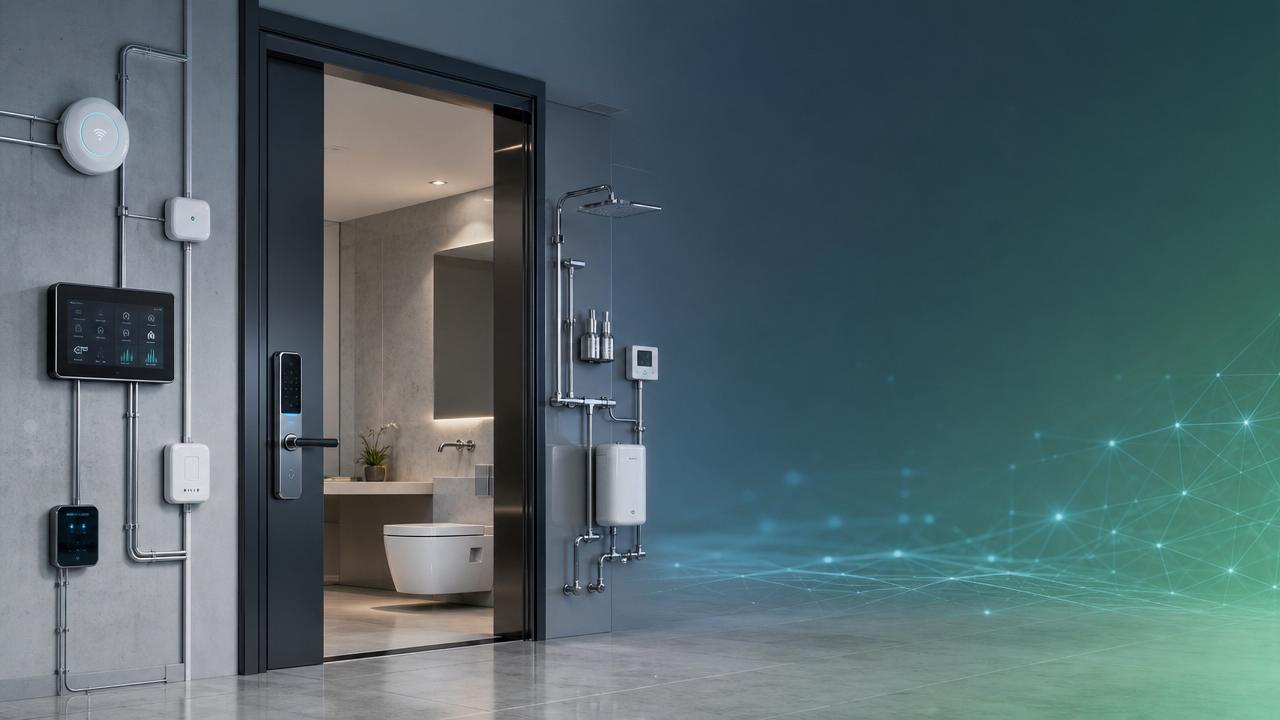
As connected buildings redefine value creation, industrial economics in smart spaces has become a critical lens for business leaders weighing performance, cost, and long-term competitiveness.
But efficiency alone is not enough. For enterprise decision-makers, the real question is whether smart space investments create durable business value across operations, resilience, compliance, user experience, and market differentiation.
In practice, industrial economics in smart spaces is about understanding how materials, systems, data, and design choices interact across the asset lifecycle.
It helps leaders decide where automation improves returns, where intelligence reduces risk, and where premium features support pricing power or strategic positioning.
This article examines how to evaluate smart spaces beyond narrow efficiency metrics, with a focus on investment logic, practical decision criteria, and long-term competitiveness.
What decision-makers are really asking: is efficiency enough to justify smart space investment?
Most executives are not searching for a theory of smart buildings. They want to know whether investment in connected interiors and intelligent systems will pay back in measurable business terms.
The short answer is no: efficiency matters, but it rarely provides a complete investment case on its own.
Energy savings, labor optimization, and predictive maintenance remain important, especially in large property portfolios, hospitality projects, healthcare environments, offices, and mixed-use developments.
However, smart spaces also affect revenue protection, occupant retention, asset valuation, compliance readiness, brand perception, and flexibility for future upgrades.
If a company evaluates smart systems only through immediate utility reduction, it may underinvest in capabilities that matter more over five to ten years.
That is why industrial economics in smart spaces should be framed as a lifecycle strategy, not a short-term cost-control exercise.
Why industrial economics in smart spaces is broader than building efficiency
Traditional efficiency analysis often focuses on inputs and outputs: lower energy use, less downtime, faster cleaning cycles, reduced water consumption, or optimized staffing.
Those metrics are useful, but they describe only one layer of economic value.
Industrial economics in smart spaces examines how physical products and digital systems shape the economics of construction, operations, upgrades, and user interaction at scale.
For example, a water-saving sanitary system is not just a utility-saving product. It can also support ESG reporting, strengthen project qualification, and improve competitiveness in regulated markets.
Likewise, antibacterial surfaces or touchless fixtures may reduce maintenance burdens while also supporting health positioning in commercial and institutional environments.
Smart locks, sensors, and interoperable controls can decrease friction in daily use, but their economic relevance expands when they improve security, data visibility, and adaptability.
Seen through this lens, smart spaces are not simply efficient spaces. They are economically responsive environments that can evolve with business needs.
Which value drivers matter most to enterprise leaders?
For business leaders, the most useful evaluation framework separates smart space value into five categories: operating efficiency, risk reduction, revenue support, strategic flexibility, and sustainability alignment.
Operating efficiency includes energy management, water savings, maintenance optimization, cleaning productivity, and reduced manual intervention.
Risk reduction covers cybersecurity, system redundancy, compliance performance, safety, hygiene outcomes, and vulnerability to supply or service disruption.
Revenue support may be less obvious, but it is often decisive. Better occupant experience can improve tenant retention, premium pricing, repeat business, and brand trust.
Strategic flexibility refers to modularity, interoperability, and the ability to update systems without major structural replacement.
Sustainability alignment includes emissions reduction, resource efficiency, certification support, and preparation for tightening reporting standards across global markets.
When industrial economics in smart spaces is mapped across these five drivers, investment discussions become more realistic and less reactive.
Where efficiency still matters most
Although efficiency is not enough by itself, it remains the clearest starting point for many projects because it is easier to quantify and communicate internally.
In smart kitchens, bathrooms, and broader interior systems, the strongest efficiency cases usually involve energy, water, maintenance, labor, and space utilization.
Connected fixtures can track usage patterns and identify waste. Smart valves and flow management systems can reduce water loss while supporting operational visibility.
Predictive maintenance reduces unplanned failure and extends equipment life, particularly in high-traffic commercial spaces where service disruption is costly.
Occupancy-based controls can lower lighting and HVAC loads, while intelligent inventory monitoring improves replenishment planning and reduces operational friction.
For manufacturers and developers, efficiency also extends upstream into standardization, procurement timing, and installation speed.
Still, if a project team stops at these savings, it may miss the economic value created by resilience, compliance, and market differentiation.
Why resilience is becoming a core economic metric
In volatile markets, resilience has moved from a technical concern to a financial one.
Smart spaces depend on connected devices, software layers, component supply chains, and service ecosystems. That creates new dependencies alongside new advantages.
Executives therefore need to ask not only how a smart environment performs in ideal conditions, but how it performs under disruption.
Can systems continue operating during outages? Are critical functions manually overridable? Can spare parts be sourced regionally? How often do vendors update firmware and security protocols?
These questions influence total cost of ownership as much as energy efficiency does.
In industrial economics in smart spaces, resilience protects continuity of service, safeguards reputation, and reduces the probability of expensive operational surprises.
For sectors such as healthcare, hospitality, public infrastructure, and premium residential development, resilience is often worth more than marginal efficiency gains.
How user experience turns smart spaces into commercial advantage
One of the most underestimated aspects of smart space economics is user experience.
Decision-makers often treat comfort, convenience, and interface quality as secondary benefits, yet these factors strongly influence adoption, satisfaction, and commercial outcomes.
A building can be technically efficient while still frustrating users through poor controls, unreliable automation, or fragmented digital experiences.
When that happens, promised value erodes quickly. Occupants bypass systems, service teams receive more complaints, and managers lose confidence in future upgrades.
By contrast, intuitive smart environments improve perceived quality and support stronger brand positioning.
In hospitality, better guest control can increase loyalty. In offices, healthier and more responsive environments can support retention and productivity goals.
In residential and mixed-use projects, seamless smart features can justify price premiums and improve sales conversion.
That is why industrial economics in smart spaces should incorporate adoption quality, not just technical functionality.
What makes a smart space investment financially credible?
For enterprise leaders, credibility comes from disciplined evaluation rather than enthusiasm for technology.
A financially credible smart space proposal should define the business problem first, then match technology choices to the operational or strategic outcome required.
That means avoiding oversized systems with weak utilization logic or premium features that create complexity without clear commercial relevance.
Leaders should assess capital cost, integration cost, maintenance burden, software dependency, training needs, replacement cycles, and data governance requirements.
They should also distinguish between direct savings and indirect value. Direct savings may include utilities or labor. Indirect value may include certification support, lower vacancy risk, or stronger project eligibility.
A sound business case typically uses scenario modeling: baseline, conservative improvement, and strategic upside.
This approach helps stakeholders understand where the return is dependable, where it is conditional, and where assumptions need stronger evidence.
How to evaluate total cost of ownership in smart interiors and systems
Total cost of ownership is often where smart space decisions succeed or fail.
Low upfront pricing can be misleading if systems require frequent updates, proprietary servicing, or costly integration work across multiple vendors.
Conversely, premium products may appear expensive at procurement stage but perform better over time through durability, service stability, lower failure rates, and easier upgrades.
In sanitary systems, kitchen equipment, access systems, and intelligent materials, decision-makers should compare lifecycle cost rather than purchase price alone.
Useful categories include installation complexity, energy and water use, downtime impact, consumables, maintenance frequency, software licensing, and end-of-life replacement exposure.
Interoperability deserves special attention. Closed ecosystems can lock organizations into future costs and reduce bargaining power.
Within industrial economics in smart spaces, the best-performing solutions are often those that balance robust hardware, manageable digital architecture, and scalable support models.
Why sustainability now strengthens the economic case
Sustainability is no longer separate from economic logic in the built environment.
Regulators, investors, procurement teams, and end users increasingly expect buildings and interior systems to demonstrate measurable resource performance and lower environmental impact.
That shifts green features from optional branding tools to commercial requirements in many markets.
Water-efficient fixtures, low-emission materials, durable surfaces, and energy-aware controls can improve both operational performance and compliance readiness.
For suppliers and manufacturers, sustainability-linked smart products can open access to higher-value projects and support stronger brand authority.
For developers and operators, sustainability data can improve reporting quality, asset attractiveness, and long-term financing conversations.
In this context, industrial economics in smart spaces connects carbon reduction, material intelligence, and business competitiveness rather than treating them as separate agendas.
Common mistakes companies make when investing in smart spaces
The first mistake is buying technology before defining the business objective.
The second is focusing only on hardware while underestimating software integration, training, and change management.
A third common mistake is measuring return too narrowly, usually through utility savings alone.
Another is failing to account for user behavior. If systems are confusing or unreliable, performance assumptions collapse.
Some organizations also ignore governance issues such as data ownership, cybersecurity responsibilities, or vendor dependence.
Finally, many teams do not plan upgrade pathways. Smart spaces should not become stranded assets because one platform becomes obsolete or one supplier exits the market.
These errors are avoidable when leaders approach industrial economics in smart spaces as a cross-functional investment discipline rather than a technology procurement task.
A practical framework for deciding where smart investments belong
For executives comparing options, a simple framework can improve decision quality.
First, identify the core outcome: cost reduction, resilience, premium positioning, compliance support, or user experience improvement.
Second, rank spaces by economic sensitivity. High-traffic, high-service, high-risk, or high-visibility environments usually offer stronger returns from intelligent upgrades.
Third, select technologies with clear interoperability and measurable performance indicators.
Fourth, test lifecycle economics using realistic assumptions about maintenance, adoption, and vendor support.
Fifth, define governance early: who owns the data, who manages updates, and how success will be reviewed.
Finally, phase deployment where possible. Pilot programs reduce uncertainty and create internal evidence before larger capital commitments.
This structured approach helps convert industrial economics in smart spaces from a broad concept into a practical boardroom tool.
Conclusion: efficiency is essential, but strategic value decides the winners
Efficiency remains a necessary foundation in smart space investment, but it is not a sufficient strategy for long-term competitiveness.
The strongest decisions are made when leaders evaluate smart spaces through a broader economic lens that includes resilience, user experience, sustainability, flexibility, and market positioning.
For enterprise decision-makers, the goal is not to install more technology. It is to create spaces that perform better as business assets.
That is the real promise of industrial economics in smart spaces: not merely doing more with less, but building environments that adapt, protect value, and strengthen competitive advantage over time.
Companies that understand this distinction will be better prepared to invest wisely, differentiate credibly, and lead in the next phase of spatial intelligence.
Industry Briefing
Get the top 5 industry headlines delivered to your inbox every morning.