
Why industrial economics impact on construction still matters
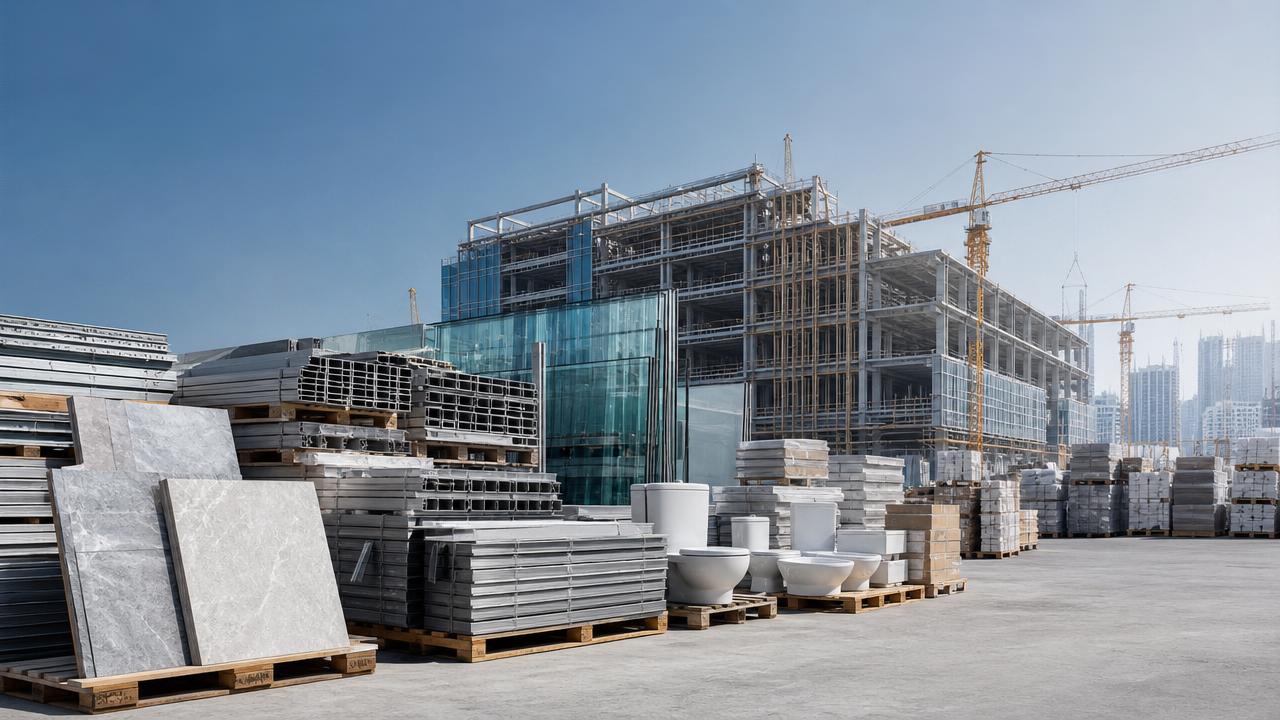
Why does the industrial economics impact on construction still matter in today’s fast-changing market? For researchers tracking building materials, policy shifts, and smart space demand, it remains a critical lens for understanding cost structures, supply chains, innovation cycles, and project competitiveness. This article explores how industrial economics continues to shape construction decisions, market value, and long-term spatial development worldwide.
Why the industrial economics impact on construction still shapes decision-making
The industrial economics impact on construction is not a narrow academic topic. It directly influences how markets price cement, ceramics, sanitary systems, hardware, glass, panels, water-saving fixtures, and smart kitchen and bath equipment.
For information researchers, the value of this perspective lies in connection. It links raw material volatility, energy costs, trade tariffs, labor productivity, logistics risk, and regulatory changes to real project outcomes.
Construction is highly exposed to industrial structure. When upstream production concentrates in a few regions, procurement risk rises. When transport costs surge, specification decisions shift. When standards tighten, replacement cycles accelerate.
- Material cost changes affect bid strategy, contract margins, and feasibility studies.
- Industrial capacity distribution affects delivery reliability and regional sourcing choices.
- Technology adoption changes the value equation for smart and sustainable building systems.
- Policy and tariff shifts alter import competitiveness and product substitution logic.
This is why the industrial economics impact on construction still matters. It helps researchers move beyond isolated product data and evaluate how entire value chains affect built space performance.
What has changed, and what has not
Digital procurement tools, green standards, and smart building demand have changed the speed of decisions. Yet the fundamentals remain familiar: scarce inputs, cost pressure, capacity cycles, and uneven market power continue to shape construction economics.
What has changed most is the number of variables researchers must track at once. A tile specification today may involve carbon concerns, anti-bacterial performance, shipping risk, and design-led premium positioning.
Which market forces explain the industrial economics impact on construction best?
The clearest way to understand the industrial economics impact on construction is to map the forces that repeatedly move project value. Researchers often need a framework that turns scattered news into structured judgment.
The table below summarizes core economic drivers and their practical effects across building materials and smart space systems.
A useful reading of this table is that no single cost metric explains construction pressure. The industrial economics impact on construction comes from interactions between production, regulation, and demand timing.
Why upstream economics matters more in interiors and sanitary spaces
Interior and architectural products are often specification-sensitive. Developers and contractors can change brands, but they cannot easily ignore delivery windows, hygiene requirements, water efficiency targets, or finish consistency.
That is especially true in sanitary spaces and smart kitchen and bath systems, where hydraulic performance, installation compatibility, and compliance expectations can limit substitution options.
How does this affect procurement, specification, and project competitiveness?
For research-driven buyers, the industrial economics impact on construction becomes most visible during procurement. A product that appears cheaper on a list may create hidden cost through delayed lead times, weak documentation, or poor replacement availability.
Procurement teams now compare more than unit price. They compare installation risk, lifecycle cost, regional availability, and how well products align with energy-saving or hygiene-focused project goals.
- Check whether the supply base is diversified or dependent on one region.
- Review how standards or public procurement rules may affect accepted specifications.
- Estimate landed cost, not only factory cost, especially for bulky or fragile materials.
- Compare maintenance burden and replacement cycle for smart versus conventional systems.
This broader method helps information researchers support more realistic decisions. It also explains why competitive advantage in construction often comes from coordination quality, not only material price.
A practical selection view for researchers
The next table offers a procurement-oriented comparison that reflects common project evaluation needs in building materials and smart space categories.
This comparison shows that the industrial economics impact on construction is not only about cost inflation. It also shapes what buyers consider acceptable risk, workable lead time, and durable value.
Which application scenarios reveal the strongest impact?
Some project types reveal economic pressure earlier than others. Researchers looking across sectors can often spot structural signals by comparing residential, hospitality, office, healthcare, and mixed-use demand patterns.
Residential upgrades and urban renovation
In residential retrofits, budget sensitivity is high, but end-user expectations are rising. Water-saving fixtures, anti-bacterial surfaces, easy-clean materials, and compact smart appliances gain relevance when cities promote better living standards in limited space.
Commercial space repositioning
Hotels, serviced apartments, and premium retail environments focus on experience and operating efficiency. Here, the industrial economics impact on construction includes brand-driven finish choices, maintenance intervals, and the cost of downtime during refurbishment.
Public and institutional projects
Schools, healthcare buildings, and civic facilities face stronger documentation demands. Researchers in these segments must consider hygiene performance, water management, durability, and procurement transparency together.
- Residential projects often prioritize affordability, install speed, and aesthetic flexibility.
- Commercial projects often reward lifecycle efficiency and premium user perception.
- Institutional projects often require stronger evidence on safety, hygiene, and compliance alignment.
What role do standards, sustainability, and smart systems now play?
The industrial economics impact on construction has become more visible because technical compliance and market economics increasingly move together. A regulation change can trigger material substitution, redesign, or accelerated procurement before enforcement deadlines.
For sectors linked to GIAM’s coverage, this is especially important in green materials, sanitary systems, and smart kitchen and bath solutions. Water efficiency, low-emission expectations, anti-bacterial performance, and intelligent access control are no longer niche upgrades.
Standards-related checkpoints researchers should track
- Environmental product declarations or similar documentation when projects emphasize carbon awareness.
- Water-saving requirements relevant to fittings, sanitary ware, and hydraulic design choices.
- Fire, slip resistance, hygiene, or durability criteria depending on building use and occupancy profile.
- Interoperability expectations for smart locks, sensors, and connected kitchen or bath hardware.
Researchers do not always need final certification data at the earliest stage. But they do need a shortlist of probable compliance checkpoints, because these influence supplier viability and replacement options later.
How GIAM helps researchers turn market noise into usable construction intelligence
Many information researchers face the same problem: too much fragmented data and too little context. Price headlines, product launches, and policy notices are easy to find. What is difficult is understanding how they connect.
GIAM addresses this gap through an intelligence model built around core building materials, sanitary spaces, and smart kitchen and bath systems. Its Strategic Intelligence Center combines market scanning with technical interpretation and industrial economics analysis.
Why this matters for high-value research tasks
- Latest sector news helps researchers track shifts in energy-saving building standards and trade tariffs without losing focus on project implications.
- Evolutionary trend reports connect material science, hydraulic design, and smart integration to future architecture demand patterns.
- Commercial insights reveal where premium building materials and smart appliances are gaining structural demand in urbanization-driven markets.
- Cross-disciplinary intelligence helps evaluate whether a short-term cost increase may still support long-term project competitiveness.
This approach is useful when the industrial economics impact on construction must be translated into sourcing strategy, product positioning, or investment judgment rather than left as abstract commentary.
Common misconceptions researchers should avoid
“Lower unit cost always means better construction economics”
Not necessarily. Fragility, maintenance frequency, weak compatibility, and uncertain replenishment can offset a lower purchase price. Total installed value matters more than invoice price alone.
“Smart systems are only design upgrades”
In many cases, smart locks, efficient appliances, and monitored water systems affect labor, security, energy use, and user experience. Their economics should be judged on operating value as well as upfront cost.
“Policy shifts matter only to importers”
Even domestic projects can be affected when imported components sit upstream in machinery, additives, hardware, electronics, or logistics flows. The industrial economics impact on construction often travels indirectly.
FAQ: key questions about the industrial economics impact on construction
How should researchers evaluate construction materials when prices change quickly?
Use a multi-factor view: base price, freight, installation complexity, compliance readiness, lead time stability, and replacement risk. Rapid price movement can hide larger downstream cost if schedule disruption occurs.
Which categories are most sensitive to industrial economics impact on construction?
Energy-intensive materials, imported hardware, sanitary systems, and smart kitchen and bath products are often sensitive because they combine manufacturing input exposure with technical specification requirements.
What procurement signals usually indicate elevated risk?
Watch for repeated lead time revisions, abrupt changes in origin mix, missing technical documentation, unusual minimum order requirements, and supplier dependence on one transport corridor or one upstream component source.
How can market intelligence improve project competitiveness?
It helps teams anticipate substitutions, negotiate from a more informed position, align product choices with standards, and identify where premium materials or smart systems can create stronger long-term value.
Why choosing the right intelligence partner matters now
The industrial economics impact on construction still matters because construction decisions are now shaped by more variables, tighter margins, and faster market shifts. Researchers need more than raw data. They need structured interpretation across materials, policy, cost, and demand.
GIAM supports that need by linking industrial foundations with spatial intelligence. Its coverage is especially relevant if your work involves premium building materials, sanitary spaces, green products, or smart kitchen and bath systems across global markets.
If you are assessing the industrial economics impact on construction for sourcing, investment research, or product positioning, you can consult GIAM on specific issues such as parameter confirmation, product selection logic, delivery cycle assessment, customized market intelligence, likely compliance checkpoints, sample support expectations, and quotation communication context for target regions.
That kind of focused consultation is often the difference between collecting information and making a decision with confidence.
- building materials
- sanitary spaces
- bath systems
- commercial space
- energy-saving building standards
- trade tariffs
- smart locks
- premium building materials
- green materials
- industrial foundations
- spatial intelligence
- material science
- hydraulic design
- industrial economics
- sector news
- commercial insights
- construction intelligence
- industrial economics impact on construction
- construction economics
Industry Briefing
Get the top 5 industry headlines delivered to your inbox every morning.