Why residential material trends are shifting in 2026
Residential material trends are shifting in 2026 as stricter sustainability rules, cost volatility, and smarter living expectations reshape project priorities. For enterprise decision-makers, understanding which materials gain long-term value is no longer optional—it is strategic. This article explores how innovation in green building products, hygienic surfaces, and integrated smart systems is redefining residential development, procurement, and competitive positioning across global markets.
For business leaders, the key question is not simply which materials are becoming popular. It is which choices will protect margins, support compliance, reduce lifecycle risk, and strengthen market positioning over the next investment cycle.
The short answer is clear: residential material trends in 2026 are shifting because regulations, occupant expectations, supply chain realities, and digital integration are converging. Materials are now being evaluated as strategic assets rather than isolated product inputs.
What is really driving residential material trends in 2026?
At the center of the shift is a new decision framework. Developers, manufacturers, architects, and procurement leaders are no longer selecting materials mainly by upfront cost, appearance, or legacy specification habits.
Instead, they are balancing carbon performance, hygiene, resilience, maintenance burden, price volatility, and compatibility with smart living systems. This broader evaluation standard is changing demand across nearly every residential category.
Regulation is one of the strongest drivers. In many markets, tighter building energy standards, embodied carbon disclosures, water efficiency rules, and chemical safety expectations are making older material choices less attractive or less viable.
At the same time, consumers expect homes to do more. They want healthier surfaces, lower utility bills, better moisture control, quieter interiors, and integrated digital convenience across kitchens, bathrooms, entry systems, and storage zones.
Supply chain instability also matters. Recent years taught buyers that material strategy must include regional sourcing flexibility, tariff awareness, lead-time visibility, and substitution planning. A product that looks economical on paper may become risky in execution.
That is why residential material trends are shifting in 2026 toward products that combine compliance readiness, performance consistency, and easier system integration. The strongest materials are no longer just functional; they are operationally dependable.
Which material categories are gaining the most strategic value?
Several categories stand out because they align with both market demand and enterprise-level priorities. These include low-carbon structural and surface materials, hygienic finishes, water-saving sanitary systems, and smart-ready kitchen and bath components.
Low-carbon materials are moving from optional branding tools to procurement priorities. Products with verified environmental declarations, recycled content, lower embodied energy, or circularity advantages are gaining preference in residential development pipelines.
This does not mean every project will immediately prioritize premium green inputs. But materials that can clearly demonstrate lifecycle efficiency and regulatory alignment will increasingly outperform products that compete only on initial purchase price.
Hygienic and anti-bacterial surfaces are also gaining ground, especially in bathrooms, kitchens, utility areas, and multi-generational housing environments. Buyers are looking for finishes that reduce maintenance complexity while supporting perceived health and cleanliness.
Water-saving technologies are another major growth area. Efficient faucets, shower systems, concealed cisterns, pressure-balanced controls, and leak-monitoring components are being specified not only for sustainability but also for cost management and asset protection.
Smart-compatible materials and systems are advancing quickly as well. Surfaces, fixtures, and assemblies that accommodate sensors, smart locks, touchless controls, or connected appliances fit the growing demand for integrated residential intelligence.
Importantly, material value is becoming more interconnected. A moisture-resistant panel, an easy-clean surface, and a water-monitoring valve may together create stronger lifecycle economics than any one standalone product improvement.
Why are kitchen and bath materials becoming central to residential strategy?
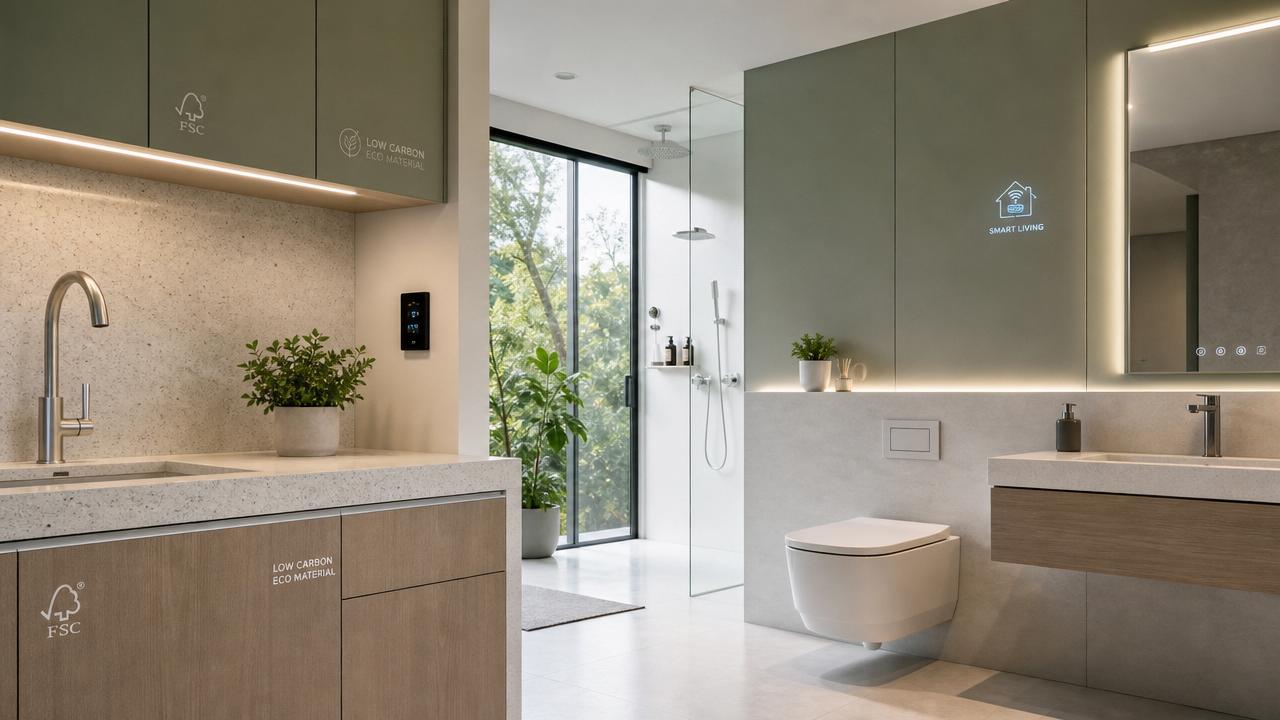
In 2026, kitchens and bathrooms are no longer secondary specification zones. They have become high-impact decision areas because they combine hygiene, water use, energy performance, user experience, and visible design differentiation.
For enterprise decision-makers, this matters because kitchen and bath choices influence both commercial value and operational risk. These spaces are where maintenance costs, warranty issues, and customer satisfaction often become most visible.
Materials used in sanitary spaces now need to deliver moisture resistance, stain resistance, microbial management, cleaning efficiency, and visual durability. These traits affect not only occupant experience but also long-term brand reputation for developers and suppliers.
Smart kitchen and bath systems are pushing the category further. Connected faucets, leak alerts, touchless fixtures, occupancy-responsive lighting, and integrated ventilation controls are increasing the importance of material-system compatibility from the start.
As a result, leading companies are no longer sourcing components in isolation. They are assessing how countertops, cabinetry substrates, wall panels, sealants, fixtures, and controls perform together under real residential use conditions.
This systems view creates competitive advantage. Companies that can deliver coordinated material packages with aesthetic consistency, regulatory alignment, and lower service risk are better positioned in both premium and mainstream housing segments.
How should enterprise buyers evaluate materials beyond upfront cost?
One of the biggest mistakes in residential procurement is treating materials as line-item expenses instead of long-term performance decisions. In 2026, that approach creates higher exposure to compliance, maintenance, and replacement risk.
A stronger evaluation model starts with total lifecycle value. This includes purchase cost, installation complexity, maintenance frequency, replacement cycle, energy or water savings, user satisfaction, and the cost of failure or warranty claims.
For example, a lower-cost finish may seem attractive during tendering. But if it stains easily, requires aggressive cleaning chemicals, or degrades quickly in humid conditions, the long-term cost can far exceed the initial savings.
Enterprise teams should also evaluate specification resilience. Can the material remain compliant if standards tighten? Can it be sourced reliably across multiple markets? Does it support substitution without compromising performance or appearance?
Another important lens is integration readiness. Materials increasingly need to work with prefabrication methods, modular installation, digital monitoring systems, and coordinated interior assemblies. Products that reduce friction across stakeholders hold greater strategic value.
Decision-makers should ask suppliers for proof, not promises. Useful evidence includes environmental product declarations, water-efficiency certifications, hygiene testing, durability benchmarks, digital compatibility specifications, and project case performance data.
When residential material trends are shifting this quickly, the most successful buyers are building scoring frameworks that combine technical, regulatory, operational, and commercial criteria rather than relying on historic habits or isolated unit pricing.
What risks should companies watch as these trends accelerate?
Trend adoption creates opportunity, but it also creates risk if companies move without a clear framework. One common problem is over-specifying fashionable materials that look innovative but lack supply stability or proven field performance.
Another risk is green ambiguity. As sustainability becomes a stronger purchase driver, some materials are marketed with broad environmental claims that do not hold up under technical review, certification scrutiny, or cross-market compliance requirements.
Decision-makers should also watch for hidden compatibility issues. A smart fixture may be attractive, but if the surrounding materials cannot support wiring access, moisture management, or maintenance procedures, the system may underperform.
Regional regulation risk is equally important. A material that performs well commercially in one geography may face barriers elsewhere due to water standards, fire codes, emissions restrictions, chemical disclosures, or import tariff changes.
There is also a margin risk in waiting too long. Enterprises that delay adaptation may find themselves locked into outdated specifications, weaker supplier relationships, and less favorable positions in projects where green and smart credentials influence selection.
The practical lesson is balance. Companies should neither chase every new product nor defend every old standard. They need a disciplined process for identifying which material shifts reflect lasting structural demand rather than temporary market noise.
How can companies turn 2026 material shifts into competitive advantage?
The companies that benefit most from changing residential material trends will be those that treat intelligence as part of procurement strategy. Winning in 2026 requires visibility across regulation, market demand, technical performance, and pricing movement.
First, segment material decisions by business impact. Not every category requires the same level of innovation. Focus highest attention on areas with strong influence on compliance, user experience, maintenance cost, and brand differentiation.
Second, strengthen supplier collaboration. Strategic suppliers should be able to provide not only products but also documentation, performance data, substitution pathways, and insights into how standards and market demand are evolving.
Third, align commercial teams and technical teams earlier. Sales, design, sourcing, and operations should work from shared criteria so that material decisions support both bid competitiveness and long-term project outcomes.
Fourth, build regional flexibility into the specification process. Residential portfolios increasingly span different regulatory and tariff environments, so material strategies should anticipate localized adaptation without losing core performance goals.
Fifth, use pilot projects intelligently. Testing new hygienic surfaces, low-carbon assemblies, or smart-compatible components in controlled project environments can reduce organizational hesitation and generate internal proof for broader rollout.
Finally, communicate value in business terms. Material innovation is easier to scale when leaders can connect it to lower service costs, stronger compliance readiness, premium positioning, faster approvals, or improved investor and customer confidence.
What should decision-makers prioritize now?
If 2026 is the year of transition, the current priority is not to predict every future product winner. It is to build a decision structure that helps your organization distinguish strategic materials from commodity assumptions.
Start by reviewing categories where regulation, hygiene, water efficiency, and smart integration intersect. In most residential portfolios, these areas will include sanitary spaces, kitchen systems, interior surfaces, access hardware, and moisture-prone assemblies.
Then identify where your current specifications create exposure. Common warning signs include products with unstable lead times, limited compliance documentation, poor maintenance outcomes, weak sustainability evidence, or low integration flexibility.
Next, quantify value in a way senior leadership can support. Show how upgraded materials may reduce lifecycle cost, improve project marketability, strengthen ESG positioning, or reduce delays related to approvals and performance disputes.
Residential material trends are shifting in 2026 because the definition of value has changed. Materials are increasingly expected to serve environmental, operational, digital, and human-centered goals at the same time.
For enterprise decision-makers, that means material strategy is now a boardroom issue as much as a design or procurement issue. The companies that respond early and intelligently will be better prepared for regulation, demand shifts, and competitive pressure.
In practical terms, the winners will be those that choose materials not only for what they cost today, but for what they enable tomorrow: lower risk, stronger performance, smarter living, and more resilient growth in global residential markets.
Industry Briefing
Get the top 5 industry headlines delivered to your inbox every morning.