
Why smart spaces technology projects fail after rollout
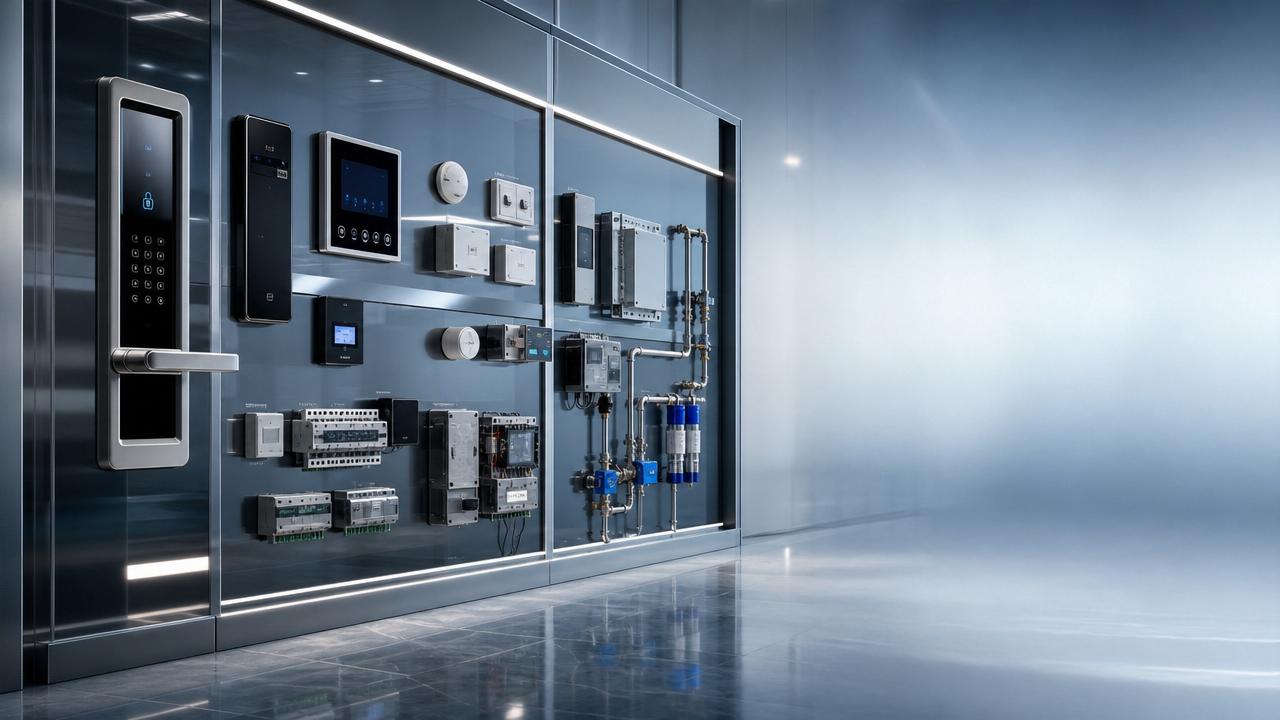
Why do so many smart spaces technology projects disappoint after a promising launch? For project managers and engineering leads, failure rarely starts at rollout—it begins with fragmented planning, weak integration, unclear ownership, and poor lifecycle support. Understanding these hidden risks is essential to protecting budgets, performance, and long-term value in increasingly complex built environments.
In commercial buildings, hospitality projects, mixed-use developments, healthcare environments, and high-end residential portfolios, smart spaces technology is often sold as a fast path to efficiency, user comfort, and asset intelligence. Yet within 6 to 18 months after go-live, many deployments underperform because the project team optimized installation instead of long-term operations.
For decision-makers working across building materials, sanitary spaces, access systems, kitchen and bath equipment, and connected infrastructure, the core issue is not whether smart spaces technology works. The issue is whether the solution was planned as a coordinated building ecosystem with clear technical, commercial, and maintenance logic from day 1 through year 5.
Where smart spaces technology projects usually break down
Most failures follow a predictable pattern. The platform may launch on schedule, dashboards may look impressive during commissioning, and stakeholders may initially report success. However, within the first 90 to 180 days, unresolved integration gaps begin to appear between devices, controls, network layers, and facilities workflows.
In GIAM-observed built environment projects, the weak point is rarely one isolated device. More often, smart spaces technology fails because the project was delivered as 4 to 7 disconnected packages: access control, lighting, HVAC interfaces, water management, occupancy sensing, sanitary systems, and analytics. Each package may function individually, but the total environment behaves inconsistently.
1. Fragmented planning before procurement
Many project teams define procurement lots too early and integration requirements too late. When specifications are written by trade rather than by operational outcome, suppliers meet their own scope but no party is fully accountable for cross-system performance. This creates a serious handover problem after rollout.
A typical example is a project that specifies smart locks, water-saving controls, occupancy-based lighting, and touchless sanitary fixtures, yet never defines the 3 key data relationships among them: trigger logic, alarm routing, and reporting ownership. The result is a live site with devices installed but workflows unresolved.
2. Weak integration architecture
Integration failure is one of the most common reasons smart spaces technology loses value after rollout. A building may contain 20 to 200 smart endpoints per floor, but if protocols, gateways, APIs, and control priorities are not mapped during design, operational friction rises fast. Even a 2-second delay in response between occupancy data and HVAC adjustment can affect user trust.
The challenge increases when legacy systems remain in place. In retrofit projects, engineering teams often work with 2 generations of controls, mixed communication standards, and different vendor documentation quality. Without interface testing at each stage, site teams end up solving architecture problems during commissioning, when schedules are already compressed.
Common integration blind spots
- No single source of truth for device naming, floor zoning, and equipment IDs
- Control logic created by separate vendors with conflicting override rules
- Cybersecurity review performed after hardware installation rather than before network design
- No acceptance criteria for latency, data completeness, and alarm accuracy
3. Unclear ownership after handover
A rollout is not the end of a smart spaces technology project. It is the start of a service environment that requires governance, updates, periodic tuning, and user support. When ownership is divided across IT, facilities, MEP contractors, and external vendors, issues remain open too long. A 24-hour fault can turn into a 3-week disruption if escalation paths are undefined.
Project managers should ask one practical question before final acceptance: who owns performance on day 30, day 180, and day 720? If the answer changes by system and no governance matrix exists, the probability of post-rollout decline increases sharply.
The table below shows the most frequent failure points and how they typically surface in live building operations.
The key pattern is that post-rollout failure is rarely sudden. It usually develops in stages: first inconvenience, then manual overrides, then trust erosion. Once users stop relying on the system, the business case for smart spaces technology weakens even if the hardware itself remains functional.
Why building-sector complexity makes rollout risk higher
Smart spaces technology operates inside a physical environment shaped by materials, water systems, power distribution, ventilation, sanitation, finishes, and occupant behavior. Unlike a standalone software deployment, building projects must align digital control with construction tolerances, installation sequencing, and multi-trade coordination. That complexity increases the risk profile.
In sectors such as smart kitchens, premium bathrooms, and integrated access-controlled interiors, project teams often underestimate the interaction between aesthetics and serviceability. A sensor hidden behind decorative finishes may look clean on opening day, but if calibration takes 2 hours instead of 20 minutes because access panels were omitted, maintenance costs rise over the asset lifecycle.
Digital ambition often exceeds site readiness
Owners may request advanced monitoring, predictive alerts, space-use analytics, and remote control across 5 or more subsystems. But if the site lacks stable network segmentation, complete as-built documentation, or trained local operators, the digital layer cannot sustain its intended value. High ambition without operational readiness is one of the clearest warning signs.
This is especially relevant in projects where sanitary spaces, water-saving fixtures, smart locks, occupancy sensors, and environmental controls share one user journey. The user does not care which vendor owns which subsystem. They only notice whether the experience works reliably every day.
Commercial pressure compresses testing time
In many fit-out and renovation projects, the last 10% of the schedule carries 40% of the integration pressure. As deadlines approach, teams prioritize opening dates, partial functionality, and visible interfaces. Deep testing of alarms, fail-safe modes, water event logic, user permissions, and exception handling may be shortened from 2 weeks to 2 days.
When that happens, smart spaces technology can pass basic commissioning while still failing real-world scenarios such as network interruption, sensor drift, power reset, or simultaneous occupancy peaks. These are not edge cases. In live buildings, they are normal operating conditions.
Signs a project is heading toward post-rollout trouble
- The O&M team joins only during final commissioning.
- Device lists, network lists, and asset registers do not match.
- No one can explain system behavior during a fault in under 5 minutes.
- Training covers dashboards but not troubleshooting steps.
How project managers can reduce failure before rollout
The best way to protect smart spaces technology performance is to move risk control upstream. Project managers do not need to solve every technical detail personally, but they do need a delivery framework that forces alignment across design, procurement, commissioning, and operations. In practice, that means defining outcomes, interfaces, ownership, and service expectations before equipment reaches site.
Set 4 non-negotiable planning documents
Before procurement release, every smart spaces technology project should have at least 4 baseline documents: an integration matrix, a control responsibility matrix, a data point schedule, and a lifecycle support plan. These documents reduce ambiguity and prevent the common argument that a missing function was “not in scope.”
- Integration matrix: defines every system-to-system connection and signal direction.
- Responsibility matrix: assigns who supplies, configures, tests, and supports each function.
- Data point schedule: lists naming logic, units, alarms, thresholds, and retention needs.
- Lifecycle plan: sets maintenance frequency, patching windows, and support response times.
Use stage-gate testing instead of one final test
A single end-stage test is not enough for smart spaces technology. Use a 5-step validation sequence: factory review, pre-install verification, subsystem testing, integrated scenario testing, and post-occupancy review at 30 to 60 days. This reduces the chance that hidden faults appear only after the building is occupied.
For example, touchless sanitary systems and smart water controls should be checked not just for activation, but also for response time, false trigger rate, shutoff logic, and alert routing. A response target of under 1 second may be acceptable for user interaction, while leak-alert routing may require escalation within 5 to 15 minutes depending on asset criticality.
The following framework helps project teams evaluate whether smart spaces technology is being prepared for operations rather than only for launch.
The practical lesson is simple: if support, testing, and data governance are not funded and scheduled, they will not happen reliably later. Smart spaces technology succeeds when operations planning is treated as a core deliverable, not an optional afterthought.
Build a realistic training and support model
Training should not be a single 2-hour session at handover. For most facilities, a stronger model includes role-based training for 3 groups: operators, helpdesk or frontline staff, and management users. Refresher sessions at 30 days and 90 days are also valuable because many issues only become visible during live occupancy.
Support should also match building criticality. A flagship commercial site or hospitality asset may need response windows of 4 hours for high-impact failures, while lower-risk spaces may operate on next-business-day support. What matters is that the service model is defined, costed, and contractually understood before launch.
What to ask vendors and integrators before signing off
Project managers can prevent many smart spaces technology failures by asking better questions during vendor evaluation and final acceptance. The right questions move the discussion away from feature lists and toward reliability, interoperability, maintainability, and lifecycle transparency.
Technical and operational questions that matter
- Which functions depend on third-party gateways, and what happens if one gateway fails?
- How many firmware or software updates are normally expected per year?
- What data points are critical for alarms, reports, and compliance records?
- Can replacement parts or compatible devices be sourced within 7 to 30 days?
- What manual fallback process exists if automation is temporarily unavailable?
Commercial questions that protect long-term value
It is equally important to examine licensing, support boundaries, and data ownership. Some smart spaces technology deployments look affordable during capex approval but become expensive through annual software charges, mandatory vendor service visits, or restricted access to system data. These costs can reshape total ownership over 3 to 5 years.
Teams working across smart kitchens, sanitary spaces, and integrated commercial interiors should also confirm whether maintenance can be coordinated through one service channel or will require multiple specialist visits. Every additional service interface adds friction, delay, and management overhead.
Turning rollout into durable performance
The difference between a successful launch and a successful asset is discipline after occupancy. Smart spaces technology must be reviewed, tuned, and governed using real operating data. A 60-day post-occupancy review should examine alarms, energy exceptions, water events, user complaints, and manual overrides. A second review at 6 months can identify drift, training gaps, or underused functions.
For organizations managing evolving building portfolios, this approach does more than reduce failures. It creates a reusable delivery model across future projects, helping procurement teams, engineering leaders, and operators standardize requirements and avoid repeating the same rollout mistakes.
If your smart spaces technology strategy touches building materials, sanitary environments, smart kitchen and bath systems, or digitally managed commercial interiors, the project must be designed around lifecycle performance rather than launch-day visibility. GIAM supports project leaders with market intelligence, sector trend analysis, and practical insight into how spatial systems, materials, and operational requirements converge in real projects. To reduce delivery risk and build stronger long-term outcomes, contact us to discuss your project priorities, request a tailored solution view, or learn more about smarter rollout planning.
Industry Briefing
Get the top 5 industry headlines delivered to your inbox every morning.