
Vietnam Requires PFAS Warning Labels on Tech Textiles
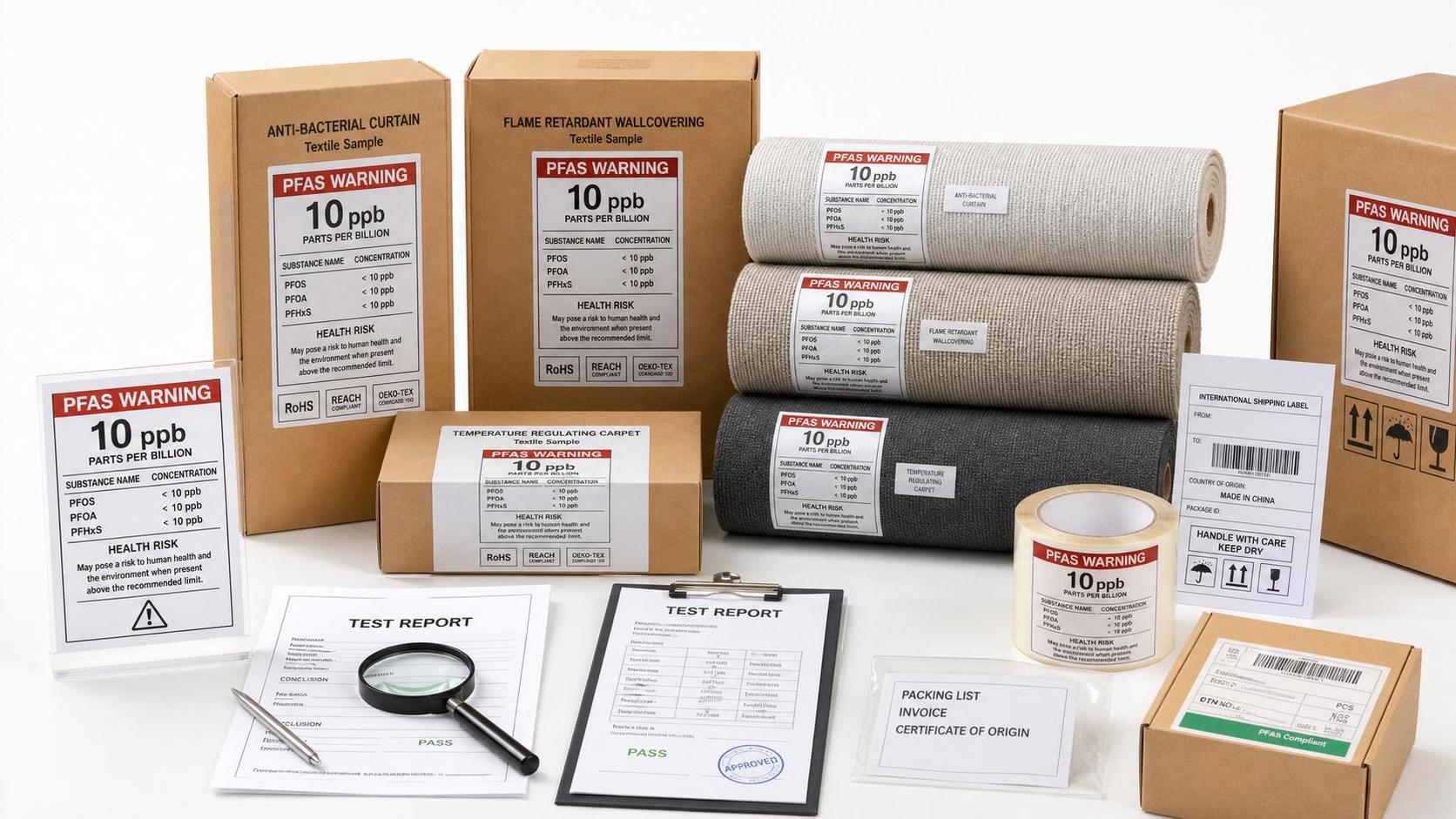
On July 2, 2026, Vietnam’s General Department of Customs (GDT) issued a joint circular to major Chinese ports stating that, from August 1, 2026, technology textiles exported to Vietnam must carry a Vietnamese-language PFAS warning label on the outer packaging when PFAS substances are detected at or above 10 ppb. The notice matters directly to exporters, manufacturers, sourcing teams, packaging operations, and cross-border logistics providers because the requirement links product testing results to shipment labeling compliance, with penalties and return of goods for non-compliant batches.
What the notice confirms
According to the information provided, the GDT issued Joint Circular No. 187/GSQL-QLTT on July 2, 2026, to major Chinese ports. The requirement takes effect on August 1, 2026.
The notice applies to technology textiles exported to Vietnam, including products such as antimicrobial curtains, flame-retardant wall coverings, and phase-change temperature-regulating carpets.
Where PFAS substances are detected at a level of 10 ppb or higher, the outer packaging must carry a Vietnamese-language warning label. The label must include the substance name, concentration, and a brief description of health risks.
For goods shipped without the required label, the stated consequence is a penalty of $2,500 per batch and return of the shipment.
Where the operational pressure is likely to appear
Export-facing textile suppliers may face a packaging compliance checkpoint
From an industry perspective, suppliers shipping affected textile categories to Vietnam are likely to feel the impact first at the export execution stage. The issue is not only whether PFAS is present, but whether packaging reflects the required Vietnamese-language warning content once the detection threshold is met. That makes testing outcomes, packaging preparation, and shipment release more tightly connected.
Manufacturing and finishing teams may need closer alignment with test results
Analysis shows that manufacturers of functional textiles named in the notice, including antimicrobial, flame-retardant, and temperature-regulating products, should pay attention to how material performance claims intersect with PFAS-related detection. The practical pressure point is likely to sit between production, quality review, and final packing, where product attributes and compliance documentation need to stay consistent.
Traders and sourcing intermediaries may see higher coordination demands
For trading companies and sourcing offices, the likely impact is on order confirmation, supplier coordination, and shipment readiness. What deserves closer attention is whether upstream suppliers can provide timely information that supports labeling decisions before cargo is packed and dispatched.
Logistics and customs service providers may need earlier document and label checks
Observably, service providers involved in export clearance and shipment handling may need to review whether cargo in scope has been assessed for the PFAS threshold and whether outer packaging matches the notice. The risk here is operational: a batch-level penalty and return shipment can disrupt delivery schedules and customer commitments.
What companies should watch before the August 1 start date
Confirm which product lines fall within the notice
Companies dealing in technology textiles exported to Vietnam should first identify whether their product portfolio includes the categories referenced in the notice or similar products sold under technical performance claims. This is a basic but necessary step before deciding how to screen shipments.
Separate testing status from labeling execution
Analysis shows that one practical issue is the distinction between detecting PFAS and executing the packaging requirement. A shipment may have product data available, but the business risk sits in whether the outer packaging carries the required Vietnamese-language warning when the threshold is triggered.
Check packaging workflows and lead times
What deserves closer attention is the timing gap between test confirmation and final packing. Businesses should review whether labeling content, packaging artwork, and batch release processes can be updated in time for shipments scheduled near or after August 1, 2026.
Prepare customer and supplier communication in advance
For teams managing Vietnam-bound orders, communication with suppliers, buyers, and service partners is likely to become more important. The immediate concern is avoiding a mismatch between compliance expectations and actual shipment presentation at the border.
How this should be interpreted at this stage
Observably, this development is more than a routine labeling reminder because it ties a detectable PFAS threshold to a specific language requirement on outer packaging and sets out a clear batch-level penalty and return consequence. At the same time, it should not yet be overstated beyond the facts provided.
It is more appropriate to understand this as a near-term compliance change with broader signaling value. Analysis shows that the immediate effect is operational and shipment-specific, while the longer-term significance lies in how technical textile exporters manage testing, labeling, and market-specific packaging controls together.
From an industry perspective, this is also a development that still warrants continued observation, especially in how the requirement is applied in day-to-day trade handling after the August 1 effective date.
Why the market should keep this on its radar
The core significance of this notice is that Vietnam-bound technology textile shipments with PFAS detected at or above 10 ppb now face a defined packaging obligation in Vietnamese, backed by a stated financial penalty and return risk for non-compliance. That shifts the issue from a general product compliance concern to an immediate export execution matter.
At this point, the most reasonable reading is that the market should treat the notice as an actionable short-term rule change and a compliance signal worth tracking over time. The confirmed facts are limited to the notice itself, but the operational implications are concrete enough for affected businesses to review product scope, test-linked labeling, and shipment readiness now.
Basis of this article and points for follow-up
This article is based on the user-provided news title, event date, and event summary concerning the July 2, 2026 notice from Vietnam’s General Department of Customs (GDT). The specific official source link was not provided in the input, so continued verification remains necessary.
For this type of development, relevant source categories usually include official customs notices, government announcements, company compliance updates, industry association releases, authoritative media coverage, and standard-related documents. Follow-up attention should remain on any further official wording, clarification of implementation in actual shipments, and any updates affecting product scope or labeling execution.
Industry Briefing
Get the top 5 industry headlines delivered to your inbox every morning.