AI Build-Out Raises Cleanroom Material Compliance Focus
The timing of the development was not specified in the source text. Based on Huatai Securities' 2026 mid-year outlook, accelerating global AI server infrastructure is driving stronger demand for cleanroom-specific building materials, while project delivery is increasingly tied to compliance with ISO 14644 cleanliness requirements and UL94 fire certification. This matters not only for material producers, but also for buyers, exporters, EPC contractors, facility managers, testing-related service providers, and specification teams involved in semiconductor plants and data centers, because the change is less about volume alone and more about how procurement and supplier qualification are being judged.
What the research note explicitly points to
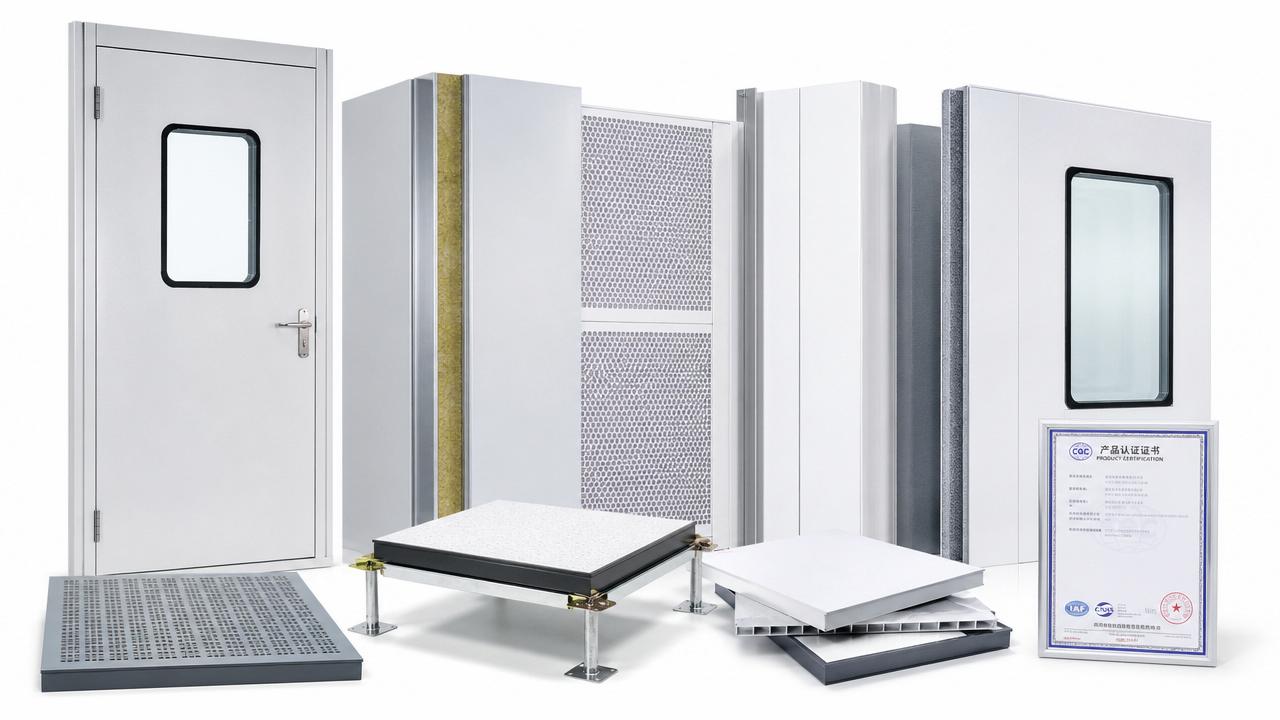
According to the provided summary, Huatai Securities stated in its 2026 mid-year report that the acceleration of global AI server infrastructure is sharply increasing demand for cleanroom-dedicated construction materials, including anti-static flooring, airtight partitions, and HEPA-integrated wall panels. The same summary states that fiberglass electronic cloth and cleanroom-related segments are leading the building materials index.
The source also states that this trend is helping domestic high-end Composite Panel and Wallpapers companies enter high-barrier projects such as semiconductor plants and data centers. At the delivery level, the required standards must simultaneously meet ISO 14644 cleanroom classification requirements and UL94 fire certification. For overseas EPC general contractors and facility management parties, these conditions are becoming a new basis for supply-chain selection.
Why supplier qualification may tighten across the chain
Material and component producers face a higher proof burden
From an industry perspective, producers of fiberglass electronic cloth, cleanroom panels, anti-static flooring systems, airtight partition products, and HEPA-integrated wall assemblies may be affected because demand is being linked to use cases with stricter delivery conditions. The impact is likely to appear in technical specification alignment, bid documentation, product testing files, and certification readiness. What deserves closer attention is whether product dossiers can clearly support ISO 14644-related cleanroom performance claims and UL94 fire-related requirements where relevant to the delivered system.
Project buyers and procurement teams may revise selection logic
Buyers involved in semiconductor facilities, data centers, and comparable controlled environments may be affected because material selection can no longer rely mainly on conventional price and supply criteria. The reported shift suggests that procurement reviews may increasingly weigh compliance documents, test evidence, certification status, and suitability for cleanroom-grade installation scenarios. In practice, purchasing teams may need to check whether technical submissions, quality records, and delivery specifications are consistent with project-level cleanroom and fire-safety requirements.
Overseas EPC contractors and facility managers gain a new screening basis
The summary specifically notes that overseas EPC general contractors and facility management parties are treating these requirements as a new basis for supply-chain selection. This means the effect may appear in vendor prequalification, tender clarification, technical comparison, and handover review. Analysis shows that suppliers seeking access to such projects may need stronger evidence chains around certification, product consistency, and installation-compatible documentation rather than relying only on manufacturing capacity or generic interior-material credentials.
Testing, certification, and compliance support services may see closer involvement
Certification-related businesses and testing support providers may also be affected because projects tied to ISO 14644 cleanliness and UL94 fire performance usually require clearer documentation and more disciplined technical review. Observably, the practical change may show up in requests for test reports, certification references, compliance statements, and traceable technical files used during bidding, procurement approval, or project acceptance.
Operational issues companies should watch now
Check whether product claims match project-grade requirements
Analysis shows that companies targeting semiconductor plants and data centers should first review whether their current product claims are supported by documentation appropriate for cleanroom and fire-related evaluation. The key issue is not to assume that general construction-grade materials will automatically satisfy high-barrier project specifications.
Prepare documentation for tender and delivery review
What deserves closer attention is the completeness of technical data packages. For suppliers, this may include product specifications, test reports, certification materials, quality records, and other files that buyers or EPC teams may request during qualification and delivery review. The source does not provide detailed execution rules, so this should be understood as a compliance preparation point rather than a confirmed universal requirement set.
Track how standards are referenced in procurement documents
Observably, one practical risk area is how ISO 14644 and UL94 are written into tender files, technical annexes, or acceptance conditions. Because the input does not include project-by-project wording, companies should monitor how these standards are being cited in actual procurement and contract language before making broad assumptions about market access thresholds.
Review supply planning for high-barrier projects
From an industry perspective, suppliers entering this segment may need to pay closer attention to delivery sequencing, supplier qualification, and product traceability. Where export or overseas project participation is involved, companies should also be prepared for stricter document checks by EPC contractors or facility management teams. The available information does not confirm a uniform cross-market rule change, but it does point to tighter selection logic in these project categories.
How this signal should be interpreted at this stage
This development is more appropriate to understand as an execution signal emerging from market-facing project requirements rather than as a newly announced law or a standalone regulatory measure described in the input. The notable shift is that standards and certifications already familiar in technical contexts are becoming more central to commercial access, supplier screening, and project delivery in AI-linked cleanroom construction demand.
Analysis shows that the market significance lies in the combination of demand growth and qualification discipline. The source indicates that high-end domestic Composite Panel and Wallpapers suppliers are moving toward higher-barrier applications, but it does not establish how uniformly buyers are applying these requirements, how quickly procurement rules are changing, or whether all projects are adopting the same review threshold. Those points still require observation.
What this means for the market right now
At present, the clearest takeaway is that AI-driven infrastructure demand is reinforcing the role of standards-based delivery in cleanroom-related building materials. For companies across manufacturing, procurement, export support, and project execution, the issue is not simply higher demand, but whether their products and documents can satisfy project-level expectations tied to ISO 14644 and UL94.
A neutral reading is that this is an important market and compliance signal, not a basis for assuming uniform implementation outcomes. It is more appropriate to treat the development as evidence that supplier selection criteria are tightening in certain high-specification projects, while the exact pace and scope of execution still need continued monitoring.
Basis of this article and points requiring further verification
This article is generated from the user-provided news title, the stated event time as not specified in the text, and the provided event summary. For events of this type, source verification would usually involve official announcements, regulator publications, customs or trade authority information, industry association releases, standard-setting organization documents, tender materials, and reporting by established business media. No specific official source link was provided in the input, so further verification remains necessary.
What still needs continued observation includes any later official wording, changes in certification interpretation, updates in tender specifications, project acceptance practice, industry feedback, and how companies actually implement these requirements in supply-chain selection and delivery management.
Industry Briefing
Get the top 5 industry headlines delivered to your inbox every morning.