
US ITC Launches 337 Investigation on Semiconductor Devices Affecting Smart Kitchen Appliances
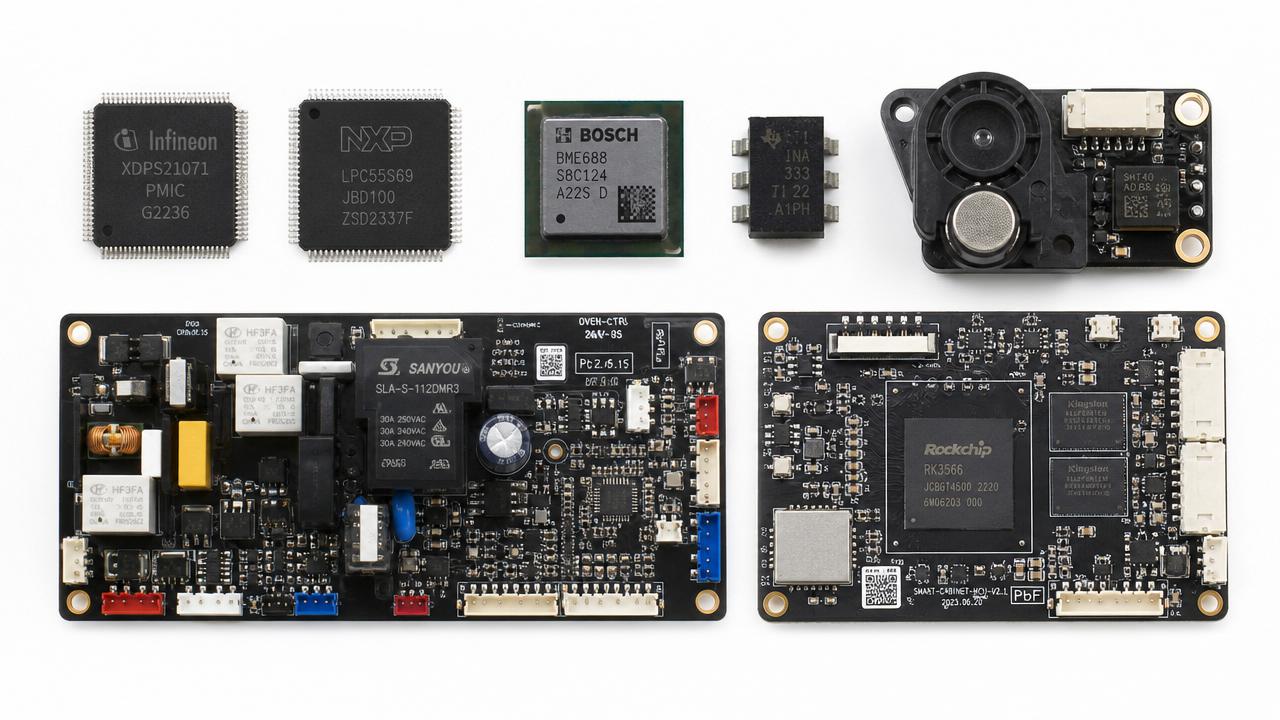
On April 28, 2026, the U.S. International Trade Commission (ITC) initiated a Section 337 investigation (No. 337-TA-1500) targeting certain semiconductor devices and their downstream products and components. The investigation centers on patents covering power management and sensing control technologies—key enablers for smart kitchen appliances exported to the U.S. market.
Factual Summary of the ITC Investigation
The U.S. International Trade Commission formally instituted Section 337 investigation 337-TA-1500 on April 28, 2026. It covers specific semiconductor devices and associated downstream products and components. Patents asserted in the complaint relate to power management and sensing control functionalities. Products implicated include built-in ovens, range hoods, and smart cabinets incorporating such semiconductor components. The investigation may restrict U.S. importation and domestic distribution of these appliances, and importers are advised to verify patent licensing status across their supply chains.
Industry-Wide Impact Across Supply Chain Roles
Export-Oriented Manufacturers
Manufacturers exporting smart kitchen appliances to the U.S. face potential exclusion orders if their products incorporate semiconductor components subject to the asserted patents. Export clearance, customs entry, and shelf placement in U.S. retail channels may be delayed or denied pending resolution of the investigation.
Component Sourcing Entities
Companies procuring semiconductor chips—including power management ICs and sensor controllers—must now assess whether suppliers hold valid licenses under the patents at issue. Unlicensed sourcing carries heightened legal and commercial risk, particularly for components integrated into end products destined for the U.S.
Contract and OEM Producers
OEM and contract manufacturers assembling smart kitchen appliances must review design specifications and bill-of-materials for reliance on contested semiconductor technologies. Design modifications or alternative component qualification may be required to mitigate exposure, affecting time-to-market and production continuity.
Supply Chain Compliance Service Providers
Firms offering regulatory intelligence, patent landscape analysis, or customs compliance support are seeing increased demand for rapid assessment of 337-TA-1500’s scope—including claim chart mapping, freedom-to-operate screening, and supplier audit readiness guidance.
Key Actions for Affected Enterprises
Conduct Immediate Patent Licensing Audit
Importers and exporters should map all semiconductor components used in covered appliances against the asserted patents listed in the ITC complaint. Verification of licensing agreements with upstream suppliers—and documentation of such verification—is now a critical due diligence step.
Review Technical Documentation for Traceability
Technical files, including schematics, firmware logs, and component datasheets, must clearly identify semiconductor part numbers, manufacturers, and functional roles. This supports both internal risk assessment and potential ITC discovery requests.
Assess Alternative Component Qualification Timelines
Where licensed alternatives are unavailable, enterprises should initiate cross-qualification of substitute power management or sensing ICs—factoring in validation cycles, firmware adaptation, and certification retesting (e.g., UL, FCC) that may extend lead times.
Evaluate Distribution Channel Exposure
Distributors and brand owners should proactively engage U.S. retailers and e-commerce platforms regarding inventory positioning, return policies, and labeling transparency—especially where product listings reference specific chipsets or performance claims tied to patented functions.
Strategic Implications for Global Smart Appliance Ecosystems
Analysis shows that this 337 investigation signals a broader shift toward granular intellectual property enforcement at the component level—not just final products. From an industry perspective, it underscores how foundational semiconductor IP is increasingly shaping trade access for high-value consumer electronics. What deserves closer attention is the growing expectation for Tier-2 and Tier-3 suppliers to maintain auditable IP governance practices—not only OEMs. Observably, compliance timelines are compressing: what once allowed for post-market remediation now demands pre-shipment assurance. It is more appropriate to understand this as a structural recalibration of supply chain accountability in regulated export markets.
Forward-Looking Perspective
This investigation does not constitute a blanket restriction but introduces a new layer of technical due diligence for U.S.-bound smart kitchen appliance trade. Its significance lies not in immediate bans, but in reinforcing that component-level IP alignment is now integral to market access strategy—complementing traditional safety, energy, and EMC compliance. Prudent actors will treat patent landscape awareness as core to procurement, design, and channel planning—not as a legal afterthought.
Source Attribution and Monitoring Guidance
This article was generated based solely on the provided title, event date (April 28, 2026), and factual summary. Specific official source links were not provided in the input and should be verified continuously. Stakeholders are advised to monitor updates from the U.S. ITC docket page for 337-TA-1500, Federal Register notices, and statements from the Office of Unfair Import Investigations. Ongoing observation is warranted for procedural developments—including respondent deadlines, initial determination timing, and any supplemental complaints or amendments—as well as evolving industry responses and licensing announcements.
Industry Briefing
Get the top 5 industry headlines delivered to your inbox every morning.