
US CPSC Recalls 3 Chinese Digital Locks Over BLE Vulnerability
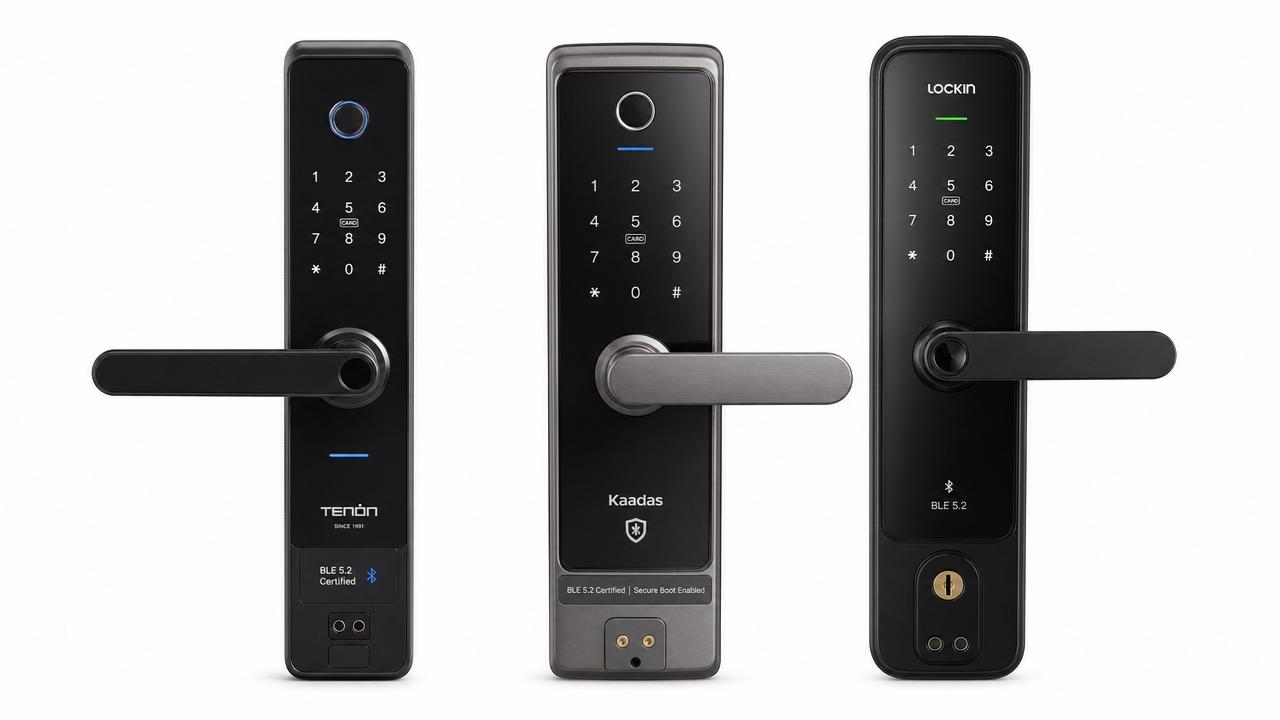
On May 14, 2026, the U.S. Consumer Product Safety Commission (CPSC) issued an urgent recall notice (Recall ID: 26-218) for three China-manufactured digital locks — affecting 12 models across three OEM brands. The recall stems from a critical security flaw in the Bluetooth Low Energy (BLE) 5.2 protocol stack, enabling unauthorized remote command injection and potential remote unlocking without authentication. This incident has immediate implications for smart lock exporters, firmware developers, and cybersecurity compliance service providers serving the North American market.
Event Overview
The U.S. CPSC formally announced Recall ID 26-218 on May 14, 2026. It covers 12 digital lock models produced by three China-based OEM manufacturers. The root cause is confirmed as an unauthenticated remote instruction injection vulnerability in the BLE 5.2 protocol implementation. No injuries or breaches have been reported to date, but CPSC determined the risk of unauthorized access constitutes a substantial product hazard under the Consumer Product Safety Act. Affected units were distributed between Q3 2025 and Q1 2026 and sold primarily through U.S.-based e-commerce platforms and B2B security integrators.
Industries Impacted
Direct Exporters & Trade Enterprises: Companies holding U.S. importer-of-record status for these products face mandatory recall coordination, potential civil penalties, and reputational exposure. Compliance liability now extends beyond physical safety to embedded software integrity — meaning trade firms must verify not only labeling and certification but also third-party penetration test documentation and secure boot mechanisms prior to shipment.
Raw Material & Component Suppliers: Firms supplying BLE SoCs (e.g., Nordic nRF52840, TI CC2652R), secure elements, or cryptographic modules may see revised qualification requirements from lock OEMs. While not directly named in the recall, suppliers will increasingly be asked to provide hardware-level attestation reports and evidence of secure firmware update pathways — shifting some verification burden upstream.
Contract Manufacturers & OEMs: Manufacturing partners responsible for firmware integration and OTA update infrastructure are now subject to heightened due diligence. The recall explicitly cites flaws in protocol stack integration — not chip-level defects — implying responsibility lies with system-level implementation. This elevates demand for in-house cybersecurity engineering capacity and formalized secure development lifecycle (SDL) documentation.
Supply Chain Service Providers: Third-party testing labs, certification consultants, and logistics compliance platforms face new scope requirements. UL 2050 and ANSI/BHMA A156.13 (7th ed.) now mandate inclusion of the newly adopted cybersecurity annex during certification audits. Service providers must upgrade their assessment frameworks to cover BLE message fuzzing, secure key storage validation, and signed firmware distribution chain verification.
Key Focus Areas & Recommended Actions
Validate BLE Stack Implementation Against Updated Standards
Manufacturers must re-audit all BLE 5.x implementations using the updated ANSI/BHMA A156.13 cybersecurity annex as a baseline — particularly around command parsing, session binding, and over-the-air (OTA) update signature enforcement. Static and dynamic analysis tools certified under NIST SP 800-160 Vol. 2 are advised.
Prepare Penetration Test Documentation per CPSC Expectations
Per CPSC guidance accompanying Recall ID 26-218, future submissions require independent penetration test reports covering both application-layer logic and radio-layer message injection. Reports must include full methodology, exploit reproduction steps, and remediation verification — not just pass/fail summaries.
Implement End-to-End Firmware Signing and Secure Boot
CPSC now treats unsigned or weakly signed firmware as a noncompliant condition. OEMs must deploy hardware-rooted secure boot (e.g., ARM TrustZone + verified bootloader) and enforce ECDSA-P384 or RSA-3072 signatures for all OTA updates — with revocation capability via certificate transparency logs.
Editorial Perspective / Industry Observation
Analysis shows this recall marks a structural inflection point: cybersecurity is no longer a ‘value-add’ differentiator for digital locks but a threshold requirement for market access. Observably, CPSC’s enforcement posture has shifted from reactive hazard response to proactive architecture review — evidenced by its direct citation of protocol-level implementation gaps rather than end-user misuse scenarios. From an industry perspective, the accelerated adoption of the ANSI/BHMA cybersecurity annex signals convergence between physical access control standards and IoT software governance frameworks. Current more relevant interpretation is that this event functions less as an isolated product failure and more as a regulatory stress test for embedded systems supply chains.
Conclusion
This recall underscores a broader transition in global smart hardware regulation: functional safety and cybersecurity are now inseparable compliance domains. For manufacturers targeting regulated markets, treating firmware as a ‘component’ subject to traceable design controls — not just a post-production add-on — is no longer optional. Rational observation suggests that firms investing early in secure development practices and cross-functional compliance ownership will gain measurable advantage in time-to-market and audit resilience.
Source Attribution
U.S. CPSC Official Recall Notice (Recall ID: 26-218), published May 14, 2026 — https://www.cpsc.gov/Recalls/2026/Digital-Locks-Recall. UL Standards Update Bulletin UL 2050-2026 Addendum C (Cybersecurity Requirements), effective July 1, 2026. ANSI/BHMA A156.13-2026 Annex D (BLE Security Verification Protocol), pending final publication; stakeholders advised to monitor BHMA Technical Committee minutes for implementation timelines.
Industry Briefing
Get the top 5 industry headlines delivered to your inbox every morning.