
Vietnam Requires Vietnamese Manuals for Digital Locks
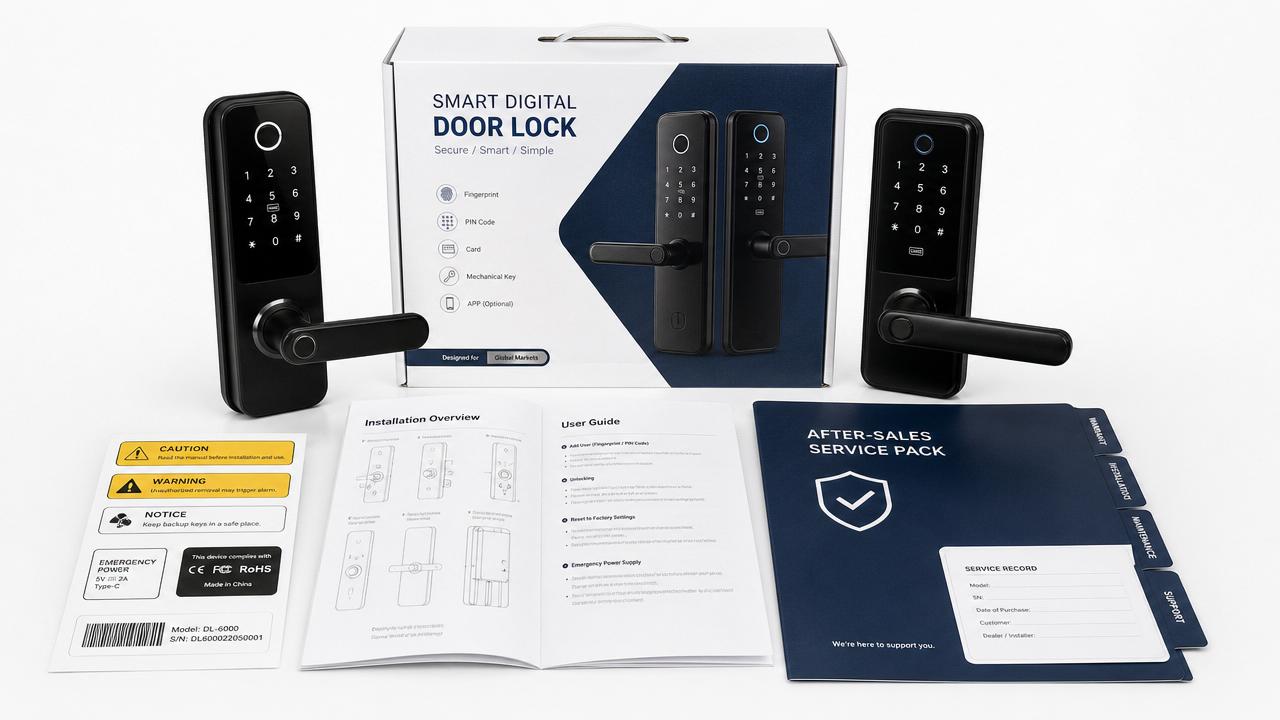
From July 1, 2026, Vietnam will enforce a new compliance requirement for imported digital locks: products must include a complete Vietnamese-language manual, carry safety warning labels, and complete a local after-sales service filing with a designated institution in Vietnam. For exporters, importers, distributors, and service partners involved in biometric, Wi-Fi/Bluetooth-connected, and smart-linked lock products, this is worth close attention because the rule is tied directly to customs clearance and delivery continuity.
What the new requirement covers
According to Circular No. 28/2026/TT-BCT issued by Vietnam’s Ministry of Industry and Trade on June 5, the requirement takes effect on July 1, 2026 and applies to all imported digital locks.
The compliance elements specified in the provided information include three parts: a complete Vietnamese-language instruction manual, safety warning labels, and after-sales service registration with a designated institution in Vietnam.
The scope is not limited to one product subtype. It covers biometric locks, Wi-Fi or Bluetooth-connected locks, and smart-interconnection lock products.
The stated consequence for non-compliant products is also clear: they may be detained by customs or returned.
Where the impact is likely to appear first
Import and export transactions move from product delivery to document readiness
From an industry perspective, trading companies are likely to feel the impact first because the new rule links product compliance not only to the physical lock itself, but also to supporting documentation and service filing. What deserves closer attention is that a shipment can face customs disruption if the manual, warning label, or filing status is not aligned with the new requirement.
Manufacturers may need to adjust packaging and model-level compliance preparation
For manufacturers supplying the Vietnam market, the likely pressure point is at the packaging, labeling, and shipment-preparation stage. Analysis shows that even where core hardware remains unchanged, market-entry readiness may now depend on whether Vietnamese-language materials and safety markings are prepared in step with each product line covered by the rule.
Distributors and channel partners face a delivery and customer-communication issue
Distributors and channel operators may be affected in inventory intake, launch timing, and customer handover. If a product is delayed at customs or returned, the immediate effect is not only logistical disruption but also a need to explain revised delivery schedules and compliance status to downstream buyers.
After-sales service partners become part of market access execution
The requirement for local after-sales service filing means service capability is no longer only a post-sale matter in practical terms. Observably, service partners or locally designated support arrangements may become part of the front-end market access process for imported digital locks entering Vietnam.
What companies should check now
Separate confirmed requirements from operational assumptions
Companies should first work from the confirmed elements in the notice: Vietnamese-language instructions, safety warning labels, and local after-sales service filing. It is more appropriate to understand this as a concrete compliance threshold already stated in the rule, while any wider interpretation about implementation details still requires verification.
Review which lock categories are inside scope
Businesses should not assume the rule applies only to one premium or connected segment. Based on the provided information, biometric, Wi-Fi/Bluetooth-enabled, and smart-linked digital locks are all covered, so product mapping by category should be an immediate internal task.
Check filing, labeling, and shipment timing together
In practical terms, procurement, shipping, and market teams should examine whether manuals, warning labels, and after-sales filing can be completed in sync with customs timelines. The key issue is not only whether materials exist, but whether they are ready in time for import and delivery execution.
Prepare for customer and partner communication
Where supply contracts or ongoing shipments are involved, companies should pay attention to delivery commitments, document handover, and communication with importers or distributors in Vietnam. Analysis shows that the business risk may emerge as much from timing gaps and coordination failures as from the rule text itself.
Why this matters beyond a labeling change
Observation suggests this development should not be viewed as a simple packaging update alone. The combination of language requirements, safety warnings, and local after-sales filing points to a broader compliance expectation around usability, product handling, and service accountability for imported digital locks.
At the same time, it is more appropriate to understand this as a concrete near-term regulatory change rather than a fully exhausted policy story. The rule has a defined effective date and a stated customs consequence, but how market participants adapt operationally remains an area that still deserves monitoring.
How to read the signal at this stage
The most neutral reading of this update is that Vietnam has set a clearer entry-condition threshold for imported digital locks starting July 1, 2026. For the industry, the significance lies less in headline impact and more in execution discipline across manuals, labels, service filing, and shipment planning.
Current attention is best directed toward compliance readiness rather than broad market conclusions. The rule already establishes a practical import barrier for products that are not properly prepared, while its wider commercial effects will depend on how quickly supply-chain participants adapt.
Basis of this article
This article is generated from the user-provided news title, event date, and event summary. The analysis is limited to the confirmed information provided: the title, the July 1, 2026 event timing, and the summary describing Circular No. 28/2026/TT-BCT issued by Vietnam’s Ministry of Industry and Trade on June 5.
For this type of industry update, commonly relevant source categories may include official government notices, company statements, industry association updates, authoritative media coverage, and standards-related documents. A specific official source link was not provided in the input, so further verification remains necessary.
Areas that still merit follow-up include any later official clarification, implementation wording, and how the filing and customs process is applied in actual trade operations.
Industry Briefing
Get the top 5 industry headlines delivered to your inbox every morning.