
Vietnam Tightens Import Rules for Digital Locks
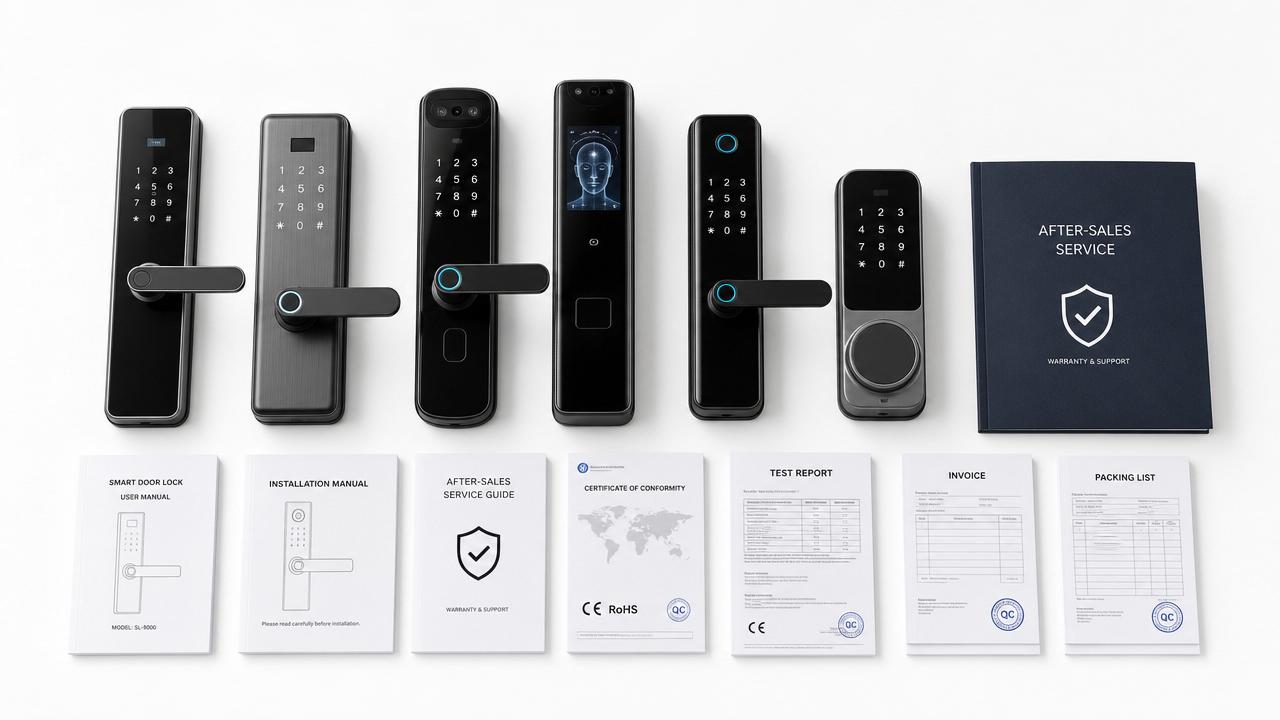
On June 6, 2026, Vietnam’s Ministry of Industry and Trade (MOIT) issued Circular No. 32/2026/TT-BCT, introducing a new import compliance requirement for digital locks effective July 1, 2026. The change is notable because it does not focus on one technology segment alone, but applies across fingerprint, facial recognition, and Bluetooth-enabled products, and it directly affects exporters, importers, distributors, documentation teams, and after-sales service arrangements tied to shipments into Vietnam.
What the new requirement now includes
According to the disclosed information, all imported digital locks must be accompanied by a Vietnamese-language user manual, an installation guide, and proof that a locally authorized after-sales service network has been registered. The rule takes effect on July 1, 2026. Non-compliant imports may face a fine equal to 20% of the cargo value and a six-month suspension of import permission. The measure was issued by MOIT on June 6, 2026, under Circular No. 32/2026/TT-BCT.
Where the pressure is likely to appear in the trade chain
Shipment documentation becomes a frontline issue
From an industry perspective, exporters and import traders are likely to feel the most immediate pressure in shipment preparation. The new requirement adds Vietnamese-language operating and installation materials, as well as local after-sales filing proof, into the practical compliance set surrounding each import. That means documentation completeness is no longer only a commercial or customer-service matter, but also a trade-entry issue.
Product delivery now links more closely to local service readiness
Analysis shows that the rule connects product importation with local service capability more directly than before. For manufacturers, brand owners, and channel partners, the impact is not limited to packaging or translation work. It also touches the readiness of authorized local service points, because after-sales support is referenced as a documented requirement rather than an optional commercial arrangement.
Coverage across all technical routes limits room for product switching
What deserves closer attention is that the measure covers digital locks across fingerprint, facial recognition, and Bluetooth-linked product lines. For suppliers and buyers, this reduces the likelihood of avoiding the requirement by shifting to another mainstream technical route within the digital lock category. Procurement, model selection, and delivery planning therefore need to be reviewed against the same compliance baseline.
What companies should review before July shipments
Check whether document packs are truly market-ready
Analysis shows that companies shipping to Vietnam should first examine whether their user manuals and installation guides are already prepared in Vietnamese and whether those materials are aligned with the goods being shipped. This is especially important where product variants, firmware-linked functions, or installation methods differ across models.
Confirm how local after-sales authorization is evidenced
The current information confirms that proof of filing for locally authorized after-sales service outlets is required, but it does not provide further execution detail in the input. It is therefore more appropriate to treat this as an area requiring close follow-up, particularly on document form, filing expectations, and how the proof may be checked during import handling.
Reassess delivery timing and trade risk exposure
Because the rule becomes effective on July 1, 2026, businesses involved in export scheduling, procurement coordination, and order fulfillment should pay closer attention to whether shipments crossing that date are supported by the required materials. Observably, the stated penalties—a fine based on cargo value and a six-month suspension of import permission—raise the compliance significance of document readiness and service-network preparation.
Watch high-exposure exporters and channel programs
The disclosed summary states that the change directly affects the top 20 Chinese exporters of digital locks to Vietnam. Analysis shows that companies with concentrated Vietnam business, established distributor programs, or active channel replenishment cycles are likely to monitor this rule especially closely, since even a narrow compliance gap may affect continuity of trade and downstream sales support.
Why this reads as an execution signal
Observably, this development is better understood as an implementation-level compliance signal rather than a broad policy discussion. The rule has a named issuing authority, a stated circular number, a defined effective date, specified required materials, and explicit penalties. At the same time, it is still necessary to continue watching for how the requirement is interpreted in practice, especially around the form of after-sales filing proof and any related enforcement wording that may shape customs, trade, or channel-side execution.
How the market may need to interpret it now
At this stage, the update is most appropriately read as a concrete market-entry requirement for imported digital locks into Vietnam, not merely a general advisory. Its immediate importance lies in the way it combines product documentation, local service capability, and import compliance into one operational checkpoint. A cautious reading is still warranted, however, because some execution details are not included in the provided information and may only become clearer through subsequent official clarification or market feedback.
Basis of this article
This article is generated based on the user-provided news title, event date, and event summary. For developments of this kind, relevant source types typically include official notices, releases from regulatory or trade authorities, customs or commerce department information, industry association updates, standards-related documents, and reporting by authoritative trade media. A specific official source link was not provided in the input, so continued verification remains necessary. Areas that still merit follow-up include implementing details, compliance interpretation, documentation expectations, tender or procurement document changes, industry feedback, and how companies execute the new requirement in practice.
Industry Briefing
Get the top 5 industry headlines delivered to your inbox every morning.