
ASTM F3524-26 Tightens Composite Panel Formaldehyde Limit
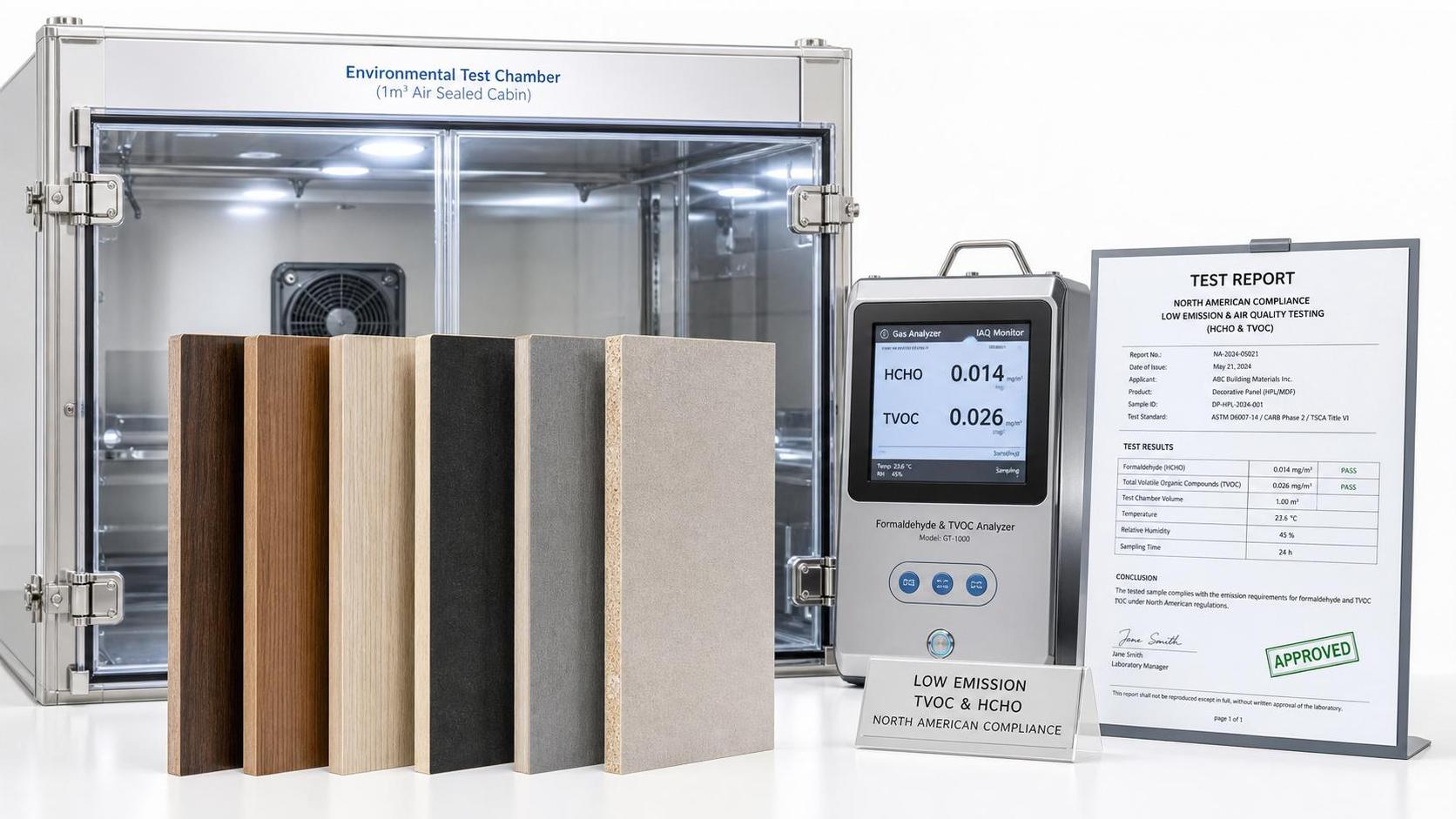
On June 28, 2026, ASTM formally released F3524-26, lowering the chamber-test formaldehyde emission limit for composite panels, including HPL and decorative panels based on MDF substrates, from 0.08 ppm to 0.05 ppm and adding a coordinated TVOC testing item. Because the standard has also been recognized by CARB and the U.S. Department of Housing and Urban Development (HUD), manufacturers, exporters, importers, distributors, and procurement teams serving the U.S. and Canadian markets have reason to pay close attention before it becomes a mainstream inspection benchmark in Q4 2026.
What the New Standard Confirms
According to the provided information, ASTM issued F3524-26 on June 28, 2026. The standard applies to composite panels, including HPL and decorative panels using MDF-based substrates. Under the chamber method, the formaldehyde emission limit has been reduced from 0.08 ppm to 0.05 ppm. At the same time, TVOC has been included as a coordinated testing item. The information provided also states that the standard has been adopted by California CARB and HUD, and that it will become a new mainstream goods-inspection baseline in U.S. and Canadian channels starting in Q4 2026.
Where the Immediate Pressure May Appear
Production and finishing lines tied to composite panels
From an industry perspective, panel manufacturers and processors may be affected first because the change directly concerns emission performance under chamber testing. The most immediate business impact is likely to appear in product compliance review, testing arrangements, and shipment readiness for composite-panel categories already sold into North America. What deserves closer attention is whether existing product specifications and test documentation still align with customer acceptance requirements once the 0.05 ppm threshold becomes the reference point.
Export and channel-facing trade operations
Exporters, importers, and channel suppliers may feel the impact in inspection, order confirmation, and customer communication. Since the provided information says the standard will become a mainstream inspection benchmark in U.S. and Canadian channels from Q4 2026, these parties may need to pay closer attention to how purchase requirements, inspection checkpoints, and delivery documentation are expressed in contracts and transaction workflows.
Procurement and downstream application teams
Buyers and downstream users sourcing composite panels for the U.S. and Canadian markets may also need to reassess how they screen products and suppliers. Analysis shows that the addition of a TVOC-related coordinated testing item may shift attention beyond a single formaldehyde indicator and into broader documentation completeness during sourcing and acceptance.
Testing and supply-chain service providers
Service providers involved in compliance support, inspection coordination, and shipment preparation may see a more operational impact. Observably, the change matters not only because the limit is stricter, but because recognized market channels may increasingly treat the updated requirement as a practical gate in delivery and acceptance processes.
What Companies Should Watch Now
Check product categories already exposed to North American inspection
The first practical priority is to identify which composite-panel products, including HPL and MDF-based decorative panels, are already sold into U.S. or Canadian channels that may adopt this benchmark in Q4 2026. This is a narrower and more useful starting point than treating all product lines the same way.
Review whether current test records match the new acceptance logic
Because the provided information points to both a lower formaldehyde limit and a coordinated TVOC testing item, companies should pay attention to whether existing reports, declarations, and compliance files still match what customers or channel inspections may request. The key issue is not only whether testing has been done, but whether the testing framework matches the new benchmark being recognized.
Separate regulatory signaling from immediate transaction requirements
Analysis shows that recognition by CARB and HUD is an important signal, but day-to-day business execution may still depend on how customers, distributors, and inspection points implement the new requirement in purchase terms and goods acceptance. Companies should therefore watch both official wording and actual channel-side enforcement in parallel.
Prepare for supplier and customer communication before Q4 2026
For teams handling procurement, fulfillment, and account management, the useful near-term step is to confirm supplier readiness, expected documentation, and any possible effect on lead times or shipment scheduling. On the customer side, the focus should be on clarifying which inspection basis will be used for upcoming orders rather than assuming all counterparties will move at the same pace.
Why This Looks Like More Than a Routine Parameter Update
Observably, this development is not just a technical revision in a standard text. The lower formaldehyde threshold, combined with a coordinated TVOC testing item and recognition by CARB and HUD, suggests a more demanding compliance reference for composite panels in North American trade. At the same time, it is more appropriate to understand this as both a confirmed rule change and an unfolding market implementation process: the standard is established, but the exact pace and depth of adoption in specific channel practices still deserve continued attention.
How to Read the Signal at This Stage
At this stage, the most balanced reading is that ASTM F3524-26 represents a concrete tightening of compliance expectations for composite panels headed into the U.S. and Canadian markets, especially where mainstream channel inspection is involved. It should not be treated as a distant policy signal, but neither should every downstream outcome be assumed in advance. The practical meaning today is that affected businesses should align their testing, documentation, and transaction communication with the new benchmark while continuing to monitor how it is applied in real procurement and inspection settings.
Basis of This Article and Ongoing Verification
This article is based on the user-provided news title, event date, and event summary. For this type of industry update, relevant source categories would typically include official announcements, standards organization publications, industry association information, company disclosures, and reporting from authoritative trade media. No specific official source link was provided in the input, so the exact source document link still requires continued verification. The areas that remain worth tracking are any further official wording, channel-side inspection practices in Q4 2026, and how buyers and suppliers translate the new benchmark into operational requirements.
Industry Briefing
Get the top 5 industry headlines delivered to your inbox every morning.