
CPSC Recall Alert Tightens Formaldehyde Scrutiny
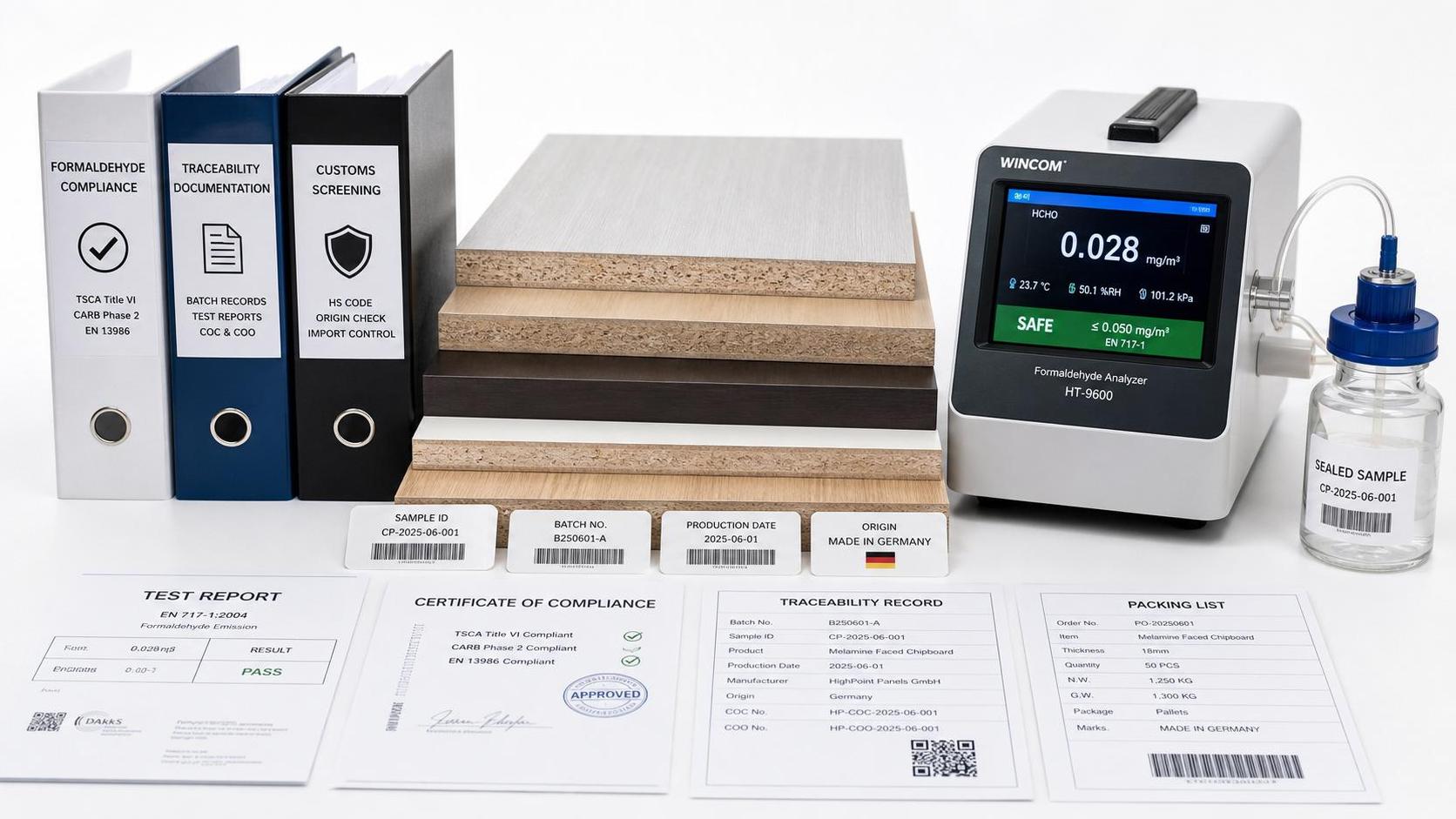
The timing of the underlying incidents was not specified in the provided information, but the regulatory action is clear: on June 29, 2026, the U.S. Consumer Product Safety Commission (CPSC) issued emergency recall alert ID#26-218 covering three batches of imported composite panels tied to indoor respiratory allergies in children and found to be above the ASTM F3524-26 limit of 0.05 ppm. For importers, panel manufacturers, trading companies, and North American channel buyers, this matters not only as a product safety case, but as a sign that compliance checks, customs screening, and supply-chain documentation expectations are tightening at the same time.
What the alert confirms
According to the information provided, the CPSC released an emergency recall alert on June 29, 2026 under ID#26-218. The alert concerned three batches of imported composite panels produced by Southeast Asian contract factories and re-exported through China. The products did not meet the ASTM F3524-26 formaldehyde limit of 0.05 ppm, and the case was associated with three incidents of indoor respiratory allergies in children.
The same action also included two immediate enforcement steps. First, the CPSC notified U.S. customs authorities to strengthen XRF screening. Second, importers were required to submit supply-chain traceability declarations within 72 hours. The information provided also states that this action has already led North American channel buyers to tighten inspection standards for sourcing from China.
Where the pressure is likely to be felt first
Trading flows are facing a documentation test
From an industry perspective, direct trading companies and exporters may be affected first because the CPSC action combines product compliance with traceability expectations. The pressure point is no longer limited to whether a shipment passes a specification threshold; it now extends to whether the importer can explain the supply path quickly and clearly within the required window.
Manufacturing risk is moving upstream
For processors and contract manufacturers, the issue is likely to reach beyond the final shipment stage. Observably, when a standard limit is enforced alongside recall action, production control, material selection, and batch consistency come under closer scrutiny. This is especially relevant where manufacturing takes place in one location and re-export or trading documentation is handled in another.
Channel buyers are tightening practical acceptance criteria
For North American distributors and procurement teams, the reported response is already visible in stricter incoming inspection requirements for China-related sourcing. The operational impact may appear in pre-shipment checks, vendor qualification reviews, acceptance paperwork, and requests for faster proof of origin and process transparency before orders move forward.
Supply-chain service providers may see more verification work
Logistics, compliance, and sourcing support firms may also face heavier demands where customers need traceability statements on short notice. Analysis shows that once customs screening and importer declarations are emphasized together, service providers are more likely to be drawn into document coordination, shipment review, and exception handling.
What companies should watch now
Watch for any follow-up wording from regulators
What deserves closer attention is whether future official communications expand on screening practice, declaration scope, or enforcement expectations linked to ASTM F3524-26. The current information confirms the alert, the limit, the customs screening notice, and the 72-hour traceability requirement, but businesses should distinguish between what is already stated and any later clarification that may affect execution.
Prioritize records that connect factory, route, and batch
In practical terms, the 72-hour declaration requirement puts immediate value on records that can link production site, shipment path, and batch identity without delay. For companies operating through contract manufacturing and re-export structures, the issue is not abstract compliance language; it is whether internal files and supplier documents can support a credible traceability response under time pressure.
Review customer-facing inspection commitments
The reported tightening by North American channel buyers suggests that commercial expectations may now move faster than formal rule changes. Companies selling into these channels should therefore pay close attention to updated inspection clauses, sample retention practices, acceptance thresholds, and communication workflows with buyers who may revise their own risk controls after this alert.
Separate enforcement signal from market-wide conclusion
Analysis shows that firms should avoid treating one recall action as proof of a fully settled market outcome. At the same time, they should not dismiss it as an isolated paperwork issue. The more practical reading is that enforcement intensity has increased around product safety, traceability, and import screening, and these areas are now directly connected in day-to-day business operations.
Why this reads as more than a single recall
Observably, the combination of three elements makes this development notable: a health-related trigger involving children, a specific ASTM limit, and immediate demands on customs screening and importer traceability. That combination suggests the case should be read as an enforcement signal rather than only a product incident.
It is more appropriate to understand this as a near-term regulatory and commercial tightening signal, while still treating the broader market impact as something that requires continued observation. The information provided does not establish how far this will spread across categories or suppliers, but it does show that compliance expectations are becoming more operational and more time-sensitive.
How to read the current signal
At this stage, the clearest industry meaning is not that the entire composite panel trade has been redefined overnight, but that formaldehyde compliance, customs screening, and supply-chain traceability are now being enforced in a more connected way in this case. For companies exposed to North American sales channels, the practical consequence is likely to appear first in verification, documentation speed, and buyer-side inspection demands.
From an industry perspective, this is best understood as an actionable warning with immediate commercial relevance and longer-term regulatory implications still worth monitoring. The confirmed facts are limited, but the direction of scrutiny is already clear enough to affect how firms prepare shipments and manage supplier evidence.
Basis of this article and points for follow-up
This article is based on the user-provided news title, the note that the incident timing was not clearly specified, and the event summary describing the CPSC emergency recall alert dated June 29, 2026, ID#26-218. No specific official source link was provided in the input, so the exact official publication path remains to be continuously verified.
For this type of development, source categories that usually warrant continued checking include official regulator notices, company disclosures, industry association updates, authoritative media reporting, customs-related enforcement notices, and standard-setting documents. Follow-up attention should focus on whether additional official clarification appears regarding screening practice, declaration requirements, or related buyer enforcement standards.
Industry Briefing
Get the top 5 industry headlines delivered to your inbox every morning.