
ASTM F3524-26 Tightens Panel Formaldehyde Limit
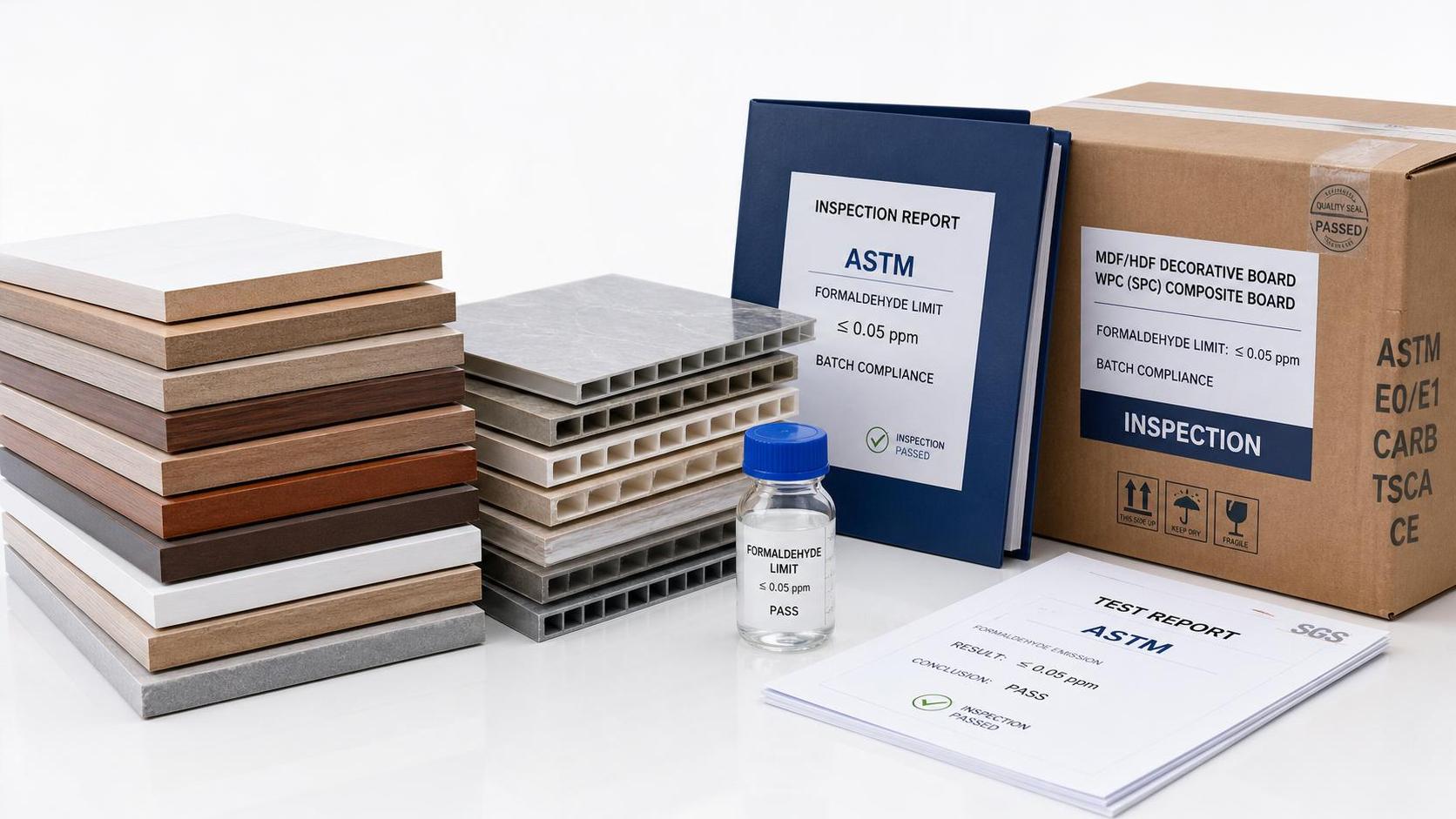
On July 1, 2026, the enforcement of ASTM F3524-26 moved from announcement to immediate compliance pressure for the composite panel trade. The updated standard lowers the formaldehyde emission limit for composite panels, including decorative panels based on HDF/MDF substrates and stone-plastic composite panels, from 0.08 ppm to 0.05 ppm, while also requiring batch-by-batch CARB Phase 2 and ASTM dual certification reports. For exporters, manufacturers, testing-related service providers, distributors, and buyers serving the U.S. market, this is worth close attention because the change affects not only product compliance, but also labeling, shipment readiness, document control, and channel continuity.
What the new enforcement requirement confirms
According to the information provided, ASTM announced on June 30, 2026 that the new ASTM F3524-26 standard is now fully mandatory. The formaldehyde emission limit for composite panels has been reduced from 0.08 ppm to 0.05 ppm. The covered products include composite panels such as decorative panels using HDF/MDF substrates and stone-plastic composite panels. The same notice also requires each batch to be accompanied by CARB Phase 2 and ASTM dual certification reports. The provided summary further states that Chinese exporting companies that fail to update testing and labeling in time may face CPSC shipment detention and channel delisting.
Where the pressure is likely to appear across the supply chain
Export-facing manufacturers will feel the change first in testing and release procedures
From an industry perspective, manufacturers supplying the U.S. market are likely to be affected first because the rule change directly resets the acceptable emission threshold and adds a batch-level documentation requirement. The main impact is likely to appear in pre-shipment compliance review, product release decisions, report preparation, and label alignment. What deserves closer attention is whether existing test files, batch documentation, and product labels still match the new mandatory threshold and dual-certification requirement.
Traders and channel operators face document and listing exposure
For direct trading companies and channel-side operators, the issue is not limited to the product itself. The provided information points to risks of CPSC detention and channel removal if testing and labeling are not updated in time. Analysis shows that this makes document completeness, version control, and consistency between reports and labels a practical trade risk. In business terms, shipment handover, customs-related document readiness, and channel submission materials become sensitive checkpoints under the new standard.
Buyers and procurement teams may need tighter supplier verification
Procurement teams sourcing covered composite panels may also be affected because the new requirement changes what should be considered acceptable supporting documentation. Observably, the key issue is no longer only whether a product was previously qualified, but whether each batch can present CARB Phase 2 and ASTM dual certification reports under the newly mandatory framework. Supplier qualification review, purchase specification checks, and delivery acceptance records therefore become more relevant points of attention.
Testing and certification service providers may see a shift in urgency
Testing-related and certification-related service providers are likely to see greater urgency from clients that need updated evidence for shipments and labeling. Analysis shows that their role becomes more operationally important where exporters need to refresh testing files, confirm report validity, or align batch documentation with customer and channel requirements. The practical focus is on timing, report scope, and whether compliance materials are usable at the point of shipment and sale.
What companies should examine immediately
Check whether current reports match the new threshold
Analysis shows that the first practical task is to verify whether existing compliance files still support a 0.05 ppm limit rather than the previous 0.08 ppm level. For products already prepared for export, the core issue is whether current testing evidence remains usable under ASTM F3524-26 as now enforced.
Review batch-level certification readiness
Because the provided information specifies a requirement for CARB Phase 2 and ASTM dual certification reports for each batch, companies should pay close attention to batch traceability, report availability, and internal document release procedures. It is more appropriate to understand this as a documentation control issue as much as a product compliance issue.
Align labels with updated compliance materials
The summary expressly warns that exporters that do not update testing and labeling in time may face enforcement consequences. Observably, this means labels should be reviewed together with test records and shipment documents, rather than treated as a separate packaging matter. Any mismatch between labels and current compliance evidence may create avoidable trade exposure.
Watch for changes in customer-facing document requests
What deserves closer attention is whether buyers, channels, or downstream counterparties begin adjusting their own submission requirements, technical documents, or delivery conditions in response to the now-mandatory standard. The provided information does not define those downstream practices, so this remains a point for ongoing monitoring rather than a confirmed market-wide outcome.
Why this looks more like an enforcement signal than a distant policy trend
Analysis shows that this development is better understood as an already landed compliance change rather than an early-stage consultation signal. The reason is straightforward: the provided information states that ASTM F3524-26 is now fully mandatory and links non-updated testing and labeling to concrete trade and channel risks. At the same time, it is still necessary to distinguish confirmed facts from market interpretation. Observably, what remains open is not whether the standard has taken effect, but how consistently different market participants will translate that requirement into procurement checks, document reviews, listing controls, and shipment release practices.
How this update should be read for current business decisions
At this stage, the most reasonable reading is that ASTM F3524-26 introduces an immediate compliance threshold change with direct implications for testing, labeling, batch documentation, and export readiness for covered composite panels. It should not be overstated as a complete market reset, but it also should not be treated as a routine standards update with limited operational effect. For businesses exposed to the U.S. market, it is more appropriate to understand this as a rule now in force, with the practical burden falling on proof of compliance and the consistency of supporting materials.
Basis of this article and what still needs verification
This article is based on the user-provided news title, event date, and event summary. For developments of this kind, commonly relevant source types may include official announcements, regulatory releases, customs or trade authority information, industry association notices, standards organization documents, and reporting by authoritative media. No specific official source link was provided in the input, so the official link and any supporting primary documents still need to be continuously verified. Further observation is also needed on detailed implementation language, certification interpretation in practice, changes in tender or procurement documents, market feedback, and how affected companies carry out compliance updates.
Industry Briefing
Get the top 5 industry headlines delivered to your inbox every morning.