Material Science Trends Behind Longer-Lasting Composite Panels
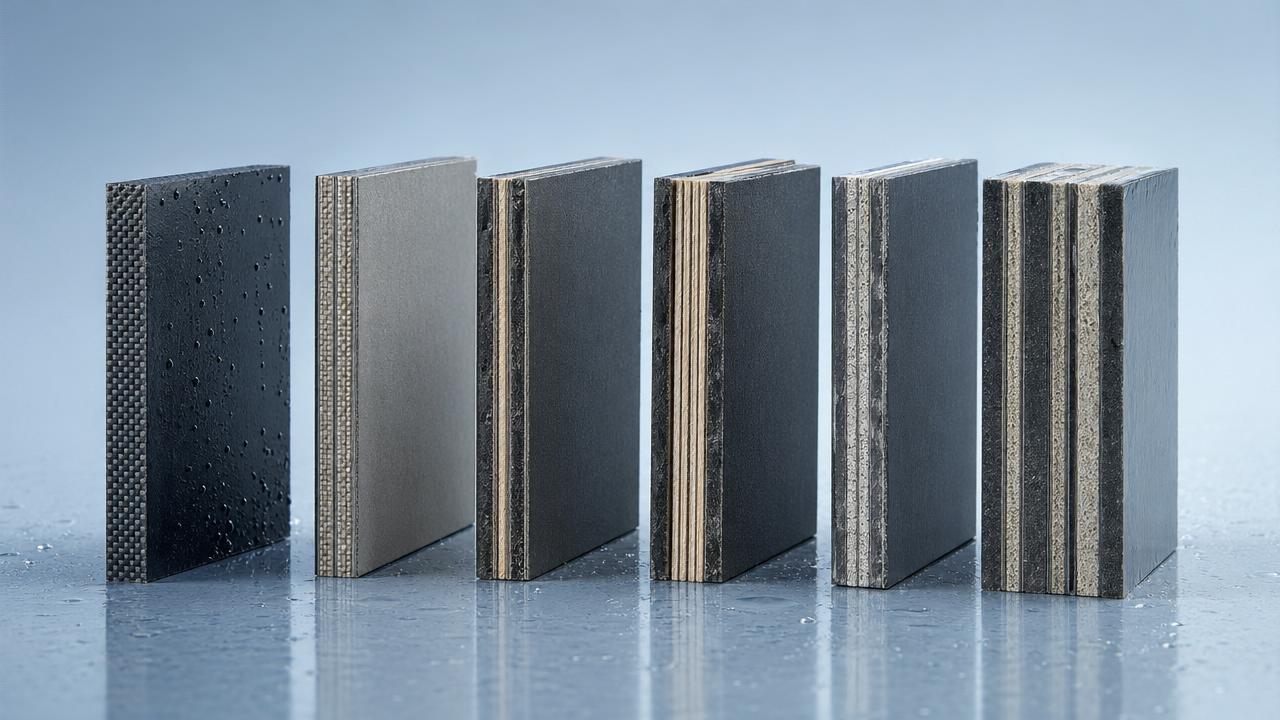
For technical evaluators, the core question behind today’s material science trends is not whether composite panels are improving, but which innovations actually extend service life under real operating conditions. In practice, longer-lasting panels come from better control of resin chemistry, reinforcement architecture, interface bonding, moisture management, surface durability, and manufacturing consistency. The most useful evaluation lens is therefore not a marketing claim about “high performance,” but a structured review of failure modes, test evidence, and lifecycle fit.
That distinction matters because composite panels now serve in more demanding environments than ever before. Interior wall systems, sanitary spaces, kitchen surfaces, light architectural assemblies, and modular construction components are expected to resist humidity, abrasion, thermal cycling, chemical exposure, and aesthetic degradation at the same time. For evaluators, durability is no longer a single property. It is a system outcome shaped by formulation, processing quality, protective layers, and installation context.
This article focuses on what technical evaluators most need to know: which material science developments are making composite panels last longer, how those developments influence measurable performance, and what questions should be asked before approval or specification. Rather than covering every trend equally, the discussion emphasizes the trends that most directly affect service life, maintenance burden, and lifecycle risk.
What actually makes a composite panel last longer?
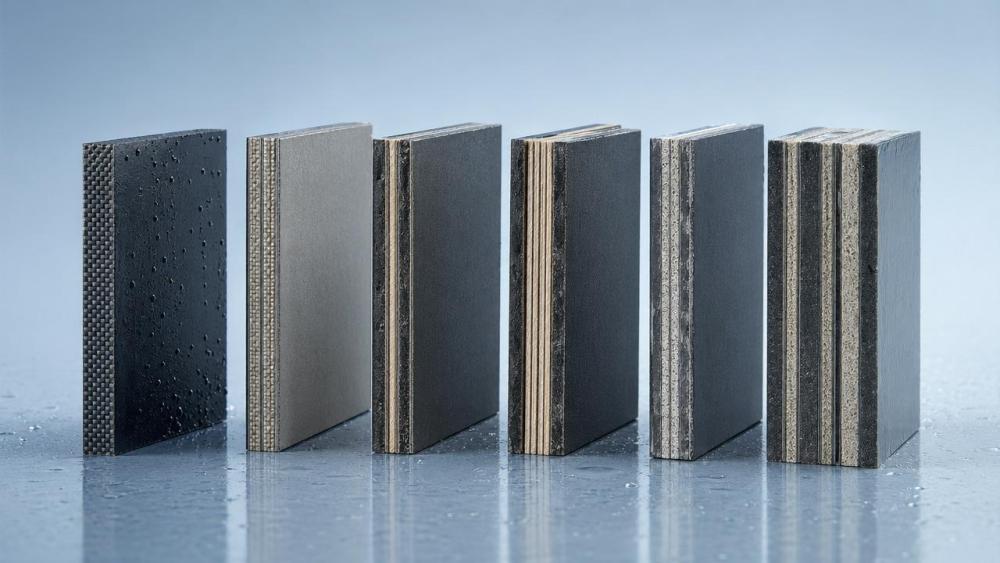
The service life of a composite panel usually depends on how well it resists its dominant degradation mechanisms. In interior and architectural applications, those mechanisms commonly include moisture ingress, swelling, delamination, UV-driven discoloration, surface wear, microcracking from thermal stress, impact damage, and gradual loss of stiffness. A panel lasts longer when its material system is designed to slow these pathways instead of merely posting strong initial lab numbers.
For technical evaluators, this means the most important material science trends are the ones that improve long-term stability at the interface level. A panel may contain excellent fibers or a premium facing layer, but if resin cure is incomplete, fiber wet-out is inconsistent, or the bond between layers is weak, durability will fail where the structure is most vulnerable. Recent advances are therefore increasingly focused on internal cohesion, not just surface appearance or headline mechanical strength.
A useful working framework is to assess composite panels across five durability dimensions: matrix stability, reinforcement efficiency, interfacial adhesion, barrier protection, and process consistency. If a new product demonstrates measurable gains in at least three of these dimensions, it is more likely to deliver a genuine longevity advantage. This framework helps evaluators distinguish meaningful innovation from cosmetic reformulation.
How resin chemistry is changing long-term durability
One of the clearest material science trends is the move toward more application-specific resin systems. Traditional performance tradeoffs often forced panel manufacturers to choose between toughness, moisture resistance, heat tolerance, processing speed, and cost. Newer thermoset and thermoplastic matrices are increasingly engineered to balance these demands more effectively, especially in panels used for wet zones, high-traffic interiors, and prefabricated assemblies.
Improved resin chemistry affects service life in several ways. Better crosslink density can increase chemical resistance and reduce creep, while tougher resin backbones help absorb impact energy and limit brittle cracking. Lower water uptake formulations reduce dimensional instability and slow the loss of adhesion at interfaces. In many panel categories, these gains are more valuable than a modest increase in initial flexural strength because they preserve performance over time rather than only at commissioning.
Evaluators should pay close attention to cure behavior and residual stress. Fast-curing systems may improve productivity, but poor cure uniformity can create internal stress concentrations that later develop into warpage or microcracking. The best-performing panels are often those where resin selection is matched to production control, thickness profile, and expected field environment. Requesting data on post-cure stability, water absorption, and thermal aging can reveal whether the chemistry is durable in practice.
Fiber engineering and reinforcement architecture are becoming more precise
Another major driver of longer-lasting composite panels is the refinement of reinforcement design. Older panel systems often relied on broad assumptions that “more fiber” meant “better performance.” Current approaches are more targeted. Manufacturers are optimizing fiber type, orientation, aspect ratio, layer sequence, and local reinforcement zones to improve toughness, reduce crack propagation, and maintain stiffness where loads are most critical.
Glass fiber remains widely used because it balances strength, corrosion resistance, and cost. However, better sizing treatments and improved compatibility with resin systems are raising the performance ceiling of familiar reinforcement materials. In some advanced products, hybrid architectures combine different fibers or woven and nonwoven structures to improve impact resistance without making panels excessively heavy or difficult to process.
From an evaluation standpoint, reinforcement quality is not only about the nominal fiber content listed on a datasheet. More important is whether the reinforcement is evenly distributed, well impregnated, and aligned with expected service stresses. Voids, resin-rich zones, and poor layer consolidation can undermine even a high-specification reinforcement package. That is why microscopy, destructive section review, and consistency data from batch to batch are often more informative than a single mechanical test result.
Interface science is now central to preventing delamination and fatigue
For many composite panels, failure begins at the interface rather than in the bulk material. Delamination, edge failure, blistering, and progressive fatigue often result from weak bonding between core and facing, fiber and matrix, or protective layer and substrate. A critical material science trend is the increasing use of coupling agents, surface treatments, and adhesion promoters to strengthen these transitions.
This is especially important in architectural and sanitary applications where temperature swings, cleaning chemicals, and repeated moisture exposure create cyclical stress. Even if a panel retains overall shape, weak interfaces can lead to loss of acoustic performance, visual defects, reduced impact resistance, or hidden internal separation. The best new systems are designed so that adjacent layers expand, contract, and transfer loads more compatibly.
Technical evaluators should therefore look for peel strength data, interlaminar shear performance, boil or soak test retention, and edge durability evidence. It is also useful to review how the manufacturer treats surfaces before bonding and whether that preparation is monitored in production. In many cases, a panel’s long-term reliability depends less on the prestige of its ingredients than on how effectively those ingredients are bonded together.
Moisture resistance is moving from a feature to a design principle
In wet interiors, kitchen environments, healthcare spaces, and variable-climate installations, moisture remains one of the most destructive threats to panel longevity. Water can plasticize polymers, swell natural fillers, weaken interfaces, support biological growth, and accelerate dimensional instability. As a result, one of the most important material science trends is the shift toward designing moisture management into the entire panel system rather than adding a superficial water-resistant claim.
This shift includes lower-permeability resin systems, sealed edge designs, hydrophobic additives, more stable core materials, and multilayer barrier constructions. It also includes a better understanding of vapor diffusion and capillary pathways. A panel may appear water resistant on its face but still fail from edge uptake, fastener penetration, or backside condensation. Products that address these weak points systematically are more likely to achieve reliable long-term performance.
For evaluators, the practical question is not simply whether a panel passes a short-term water immersion test. The better question is how the panel behaves after repeated wet-dry cycles, prolonged humidity exposure, and thermal fluctuation. Thickness swell, bond retention, fungal resistance, and changes in surface integrity should all be examined together. In many applications, moisture robustness is the clearest predictor of reduced maintenance and fewer in-service failures.
Surface technology is extending appearance retention and functional life
Durability in architectural interiors is judged visually as well as structurally. A composite panel that remains intact but loses gloss, stains easily, scratches, or discolors under UV exposure may still be considered a failure by the end user. Material innovation is therefore increasingly focused on surface systems that preserve both appearance and function over longer intervals.
Advanced overlays, UV-cured coatings, wear-resistant decorative films, nanoparticle-enhanced top layers, and anti-microbial or anti-fouling finishes are all influencing panel selection. The key value of these technologies is not novelty alone, but their ability to reduce the pace of visible degradation while also protecting the substrate beneath. Better scratch resistance, lower porosity, and improved chemical resistance can significantly extend replacement cycles in kitchens, baths, hospitality interiors, and public-use environments.
Evaluators should test beyond the aesthetic brochure. Surface hardness, Taber abrasion, stain resistance, color stability, cleanability, and coating adhesion after aging all provide a clearer picture of real-world service life. It is also important to verify whether repairability is practical. A highly engineered surface may perform well initially but create operational problems if field damage cannot be refinished economically.
Fire, thermal stability, and low-emission requirements are reshaping formulations
Longer service life is increasingly tied to compliance durability as well as physical durability. Composite panels today must meet stricter expectations around fire behavior, smoke performance, indoor air quality, and thermal stability. This is pushing manufacturers toward new additive packages, halogen-free flame-retardant approaches, lower-emission binders, and more stable formulations that can maintain properties without creating downstream regulatory risk.
These changes are not always straightforward. Some flame-retardant systems can affect toughness, processability, or moisture sensitivity if not well integrated. Likewise, low-VOC or formaldehyde-reduced solutions may improve environmental suitability but require better process control to preserve bond strength and dimensional integrity. The most promising material science trends are those that improve compliance performance without transferring risk into mechanical durability.
For technical evaluators, this means approvals should consider property balance rather than isolated wins. A panel that meets a fire target but becomes brittle, or meets an emissions target but shows edge weakness in humid conditions, may not be a strong long-term specification. Reviewing multi-property datasets helps identify formulations that are truly optimized for durable use in contemporary building environments.
Manufacturing precision now matters as much as formulation
Even excellent materials can underperform if process control is weak. One of the less visible but highly consequential trends behind longer-lasting composite panels is the use of better manufacturing analytics. Inline monitoring of temperature, pressure, resin distribution, cure progression, thickness tolerance, and void formation is helping manufacturers produce panels with more consistent durability profiles.
This matters because lifecycle risk often comes from variability rather than average performance. A panel line that produces occasional under-cured zones, uneven density, or inconsistent edge consolidation may still generate acceptable sample results while creating field failures later. For evaluators, supplier process discipline is therefore a major indicator of expected service life, particularly for large projects where product consistency is critical.
When possible, ask for quality control protocols, statistical consistency data, and traceability information. Third-party certification, accelerated aging correlation, and evidence of process capability are often as important as raw formulation details. In specification decisions, the more durable product is often the one backed by superior production repeatability, not just the one with the most advanced ingredient story.
How technical evaluators should compare composite panel options
To convert these trends into a practical selection method, evaluators should begin with the expected failure environment. Is the panel likely to face humidity, direct cleaning chemicals, frequent impact, thermal cycling, UV exposure, or aesthetic scrutiny? Once the dominant stressors are defined, material claims can be tested against the properties most likely to drive field success. This prevents overvaluing features that do not matter in the intended application.
A useful comparison matrix includes water absorption, thickness swell, retained bond strength after aging, impact resistance, abrasion resistance, thermal dimensional stability, emissions profile, fire performance, and batch consistency. It should also include edge behavior, since many panel failures originate there. Where possible, ask for performance retention data rather than initial values alone, because retained performance is a better indicator of service life.
Finally, evaluators should weigh lifecycle economics, not purchase price alone. A panel that costs more but reduces replacement frequency, call-backs, coating failures, or moisture-related remediation may deliver superior value. In this sense, the most important material science trends are those that lower uncertainty. Better materials are not just stronger; they are more predictable over time, and that predictability is often the real basis for sound specification.
Conclusion: the most valuable durability trend is integrated performance
The main takeaway for technical evaluators is clear: longer-lasting composite panels are being enabled by a combination of smarter resin systems, better reinforcement design, stronger interfaces, more robust moisture protection, advanced surface technologies, compliance-aware formulation, and tighter manufacturing control. No single breakthrough guarantees durability on its own. The products with the strongest long-term outlook are those where these elements work together as an integrated system.
That is why evaluating current material science trends requires more than reading a product brochure or comparing a few headline properties. The better approach is to ask how the panel is expected to fail, what material innovations are slowing that failure pathway, and whether the manufacturer can prove stable performance after aging and exposure. Panels that answer those questions well are the ones most likely to deliver real lifecycle advantage.
For GIAM’s technical audience, the strategic implication is equally important. As building materials increasingly serve high-expectation interior and architectural environments, durability assessment must become more evidence-based, more application-specific, and more focused on retained performance. In the next generation of composite panels, longevity will belong not to the products with the loudest claims, but to those with the most credible material science behind them.
Industry Briefing
Get the top 5 industry headlines delivered to your inbox every morning.