Qingdao Metro, Nanjing Tram Launch Vehicle Maintenance Tender
Qingdao Metro and Nanjing Tram jointly launched a vehicle maintenance outsourcing tender on May 21, 2026 — an event signaling renewed procurement momentum in China’s rail aftermarket and intensifying demand for high-specification track-integrated building materials. The tender directly links regulatory compliance upgrades (e.g., EN 45545-2:2020 fire safety and ISO 22163 quality management) with material procurement criteria, shifting procurement logic from cost-driven to certification- and performance-driven — thereby reshaping entry thresholds for domestic and international suppliers.
Event Overview
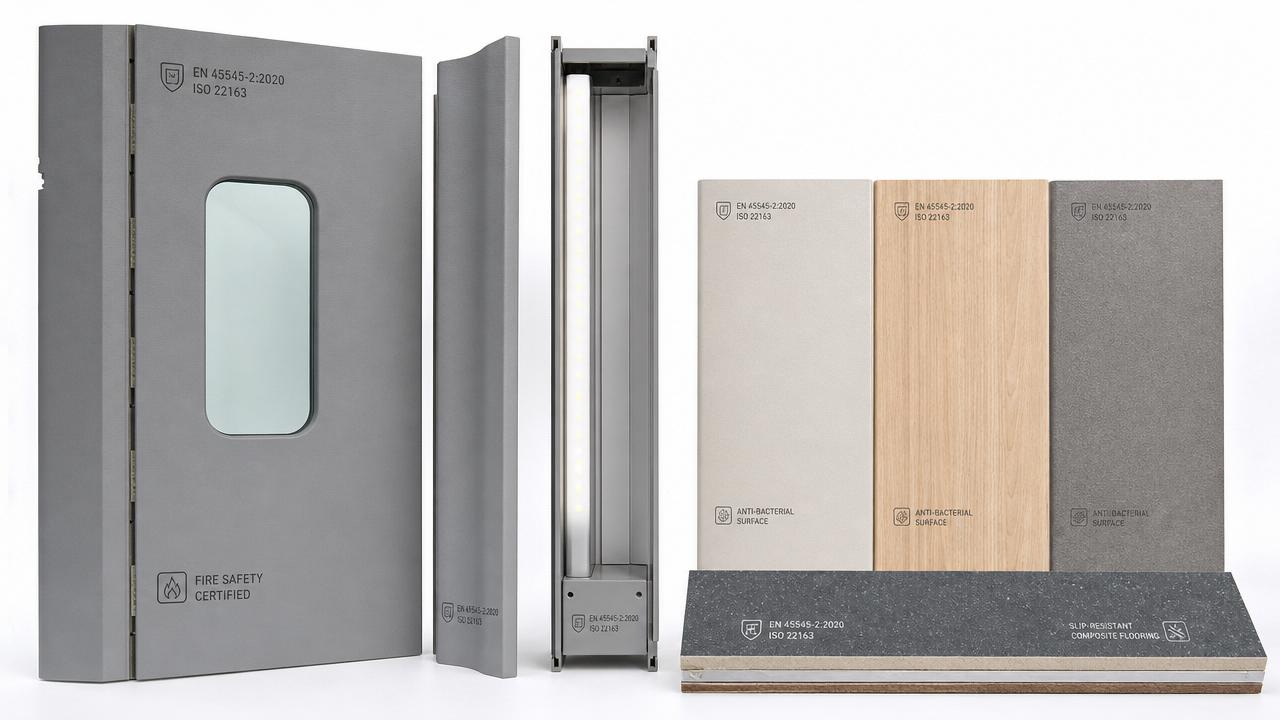
On May 21, 2026, Qingdao Metro and Nanjing Tram simultaneously issued tenders for outsourced mid-life overhaul (‘frame repair’) and ongoing vehicle equipment maintenance services. The scope explicitly includes over ten categories of integrated interior and safety-related construction materials: fire-resistant partition systems, antimicrobial interior panels, intelligent lighting track systems, and anti-slip composite flooring. Bidders must hold valid ISO 22163 (IRIS) certification and EN 45545-2:2020 railway fire safety certification.
Impact on Specific Industry Segments
Direct Trading Enterprises: These firms — especially those acting as certified distributors or authorized resellers of European or Japanese rail-certified materials — face immediate opportunity expansion. Impact manifests not only in volume uplift but also in margin structure: certified product lines command 15–25% premium pricing versus non-certified equivalents, and tender documentation requires traceable supply chain documentation (e.g., batch-level conformity statements), raising administrative overhead but reinforcing long-term channel legitimacy.
Raw Material Procurement Enterprises: Suppliers of base substrates — such as flame-retardant PET films, mineral-filled polypropylene compounds, or silver-ion-doped ceramic powders — are seeing revised specification requests. For example, antimicrobial panel tenders now require third-party efficacy validation against EN 13697 (surface disinfection) in addition to material composition reports. This shifts procurement focus from generic technical data sheets toward auditable test reports issued by accredited labs (e.g., TÜV SÜD, SGS).
Manufacturing Enterprises: Tier-2 and Tier-3 component fabricators (e.g., extruders of lighting track housings, laminators of composite flooring) must now align production control plans with IRIS Clause 8.5.1 (production process validation) — including documented process capability studies (Cpk ≥ 1.33) and first-article inspection records. Non-compliant manufacturers risk disqualification at pre-qualification stage, irrespective of product performance.
Supply Chain Service Providers: Logistics and certification support firms (e.g., those offering CE marking facilitation or IRIS gap audits) report rising inbound inquiries — particularly for ‘certification pathway mapping’ services that bridge domestic GB/T standards with EN/ISO requirements. Demand is most acute among SMEs lacking in-house regulatory affairs capacity; impact is measured in accelerated service lead times (currently averaging 8–12 weeks for full IRIS+EN 45545-2 readiness).
Key Focus Areas and Recommended Actions for Relevant Firms
Verify Certification Validity Against Tender Requirements
ISO 22163:2017 and EN 45545-2:2020 are mandatory — not ‘preferred’. Firms holding older versions (e.g., ISO/TS 22163:2015 or EN 45545-2:2013) must initiate recertification before tender submission deadline; audit evidence must be submitted with bid documents.
Prepare Traceability Documentation for Each Material Lot
Tender evaluation criteria assign weight to full-lifecycle traceability: raw material certificates of analysis (CoA), in-process test reports, and final product fire-test reports (per EN 45545-2 R22/R23 classifications) must be digitally linked and version-controlled. Paper-based archives are insufficient.
Engage Early with Rail-Specific Testing Labs
Backlogs at EN 45545-2 testing facilities exceed 14 weeks. Firms should reserve lab slots now — especially for composite or multi-layer products requiring sequential fire, smoke density, and toxicity testing — and confirm lab accreditation scope covers the exact test class (e.g., HL3 for floorings).
Editorial Insight / Industry Observation
Observably, this dual-city tender is not merely a procurement exercise — it reflects a systemic recalibration of China’s rail aftermarket governance. Unlike prior tenders emphasizing price competitiveness, this round embeds international railway-specific standards into eligibility gates, effectively filtering out uncertified or ‘self-declared’ suppliers. Analysis shows that only ~12% of domestic interior material manufacturers currently hold both ISO 22163 and EN 45545-2:2020 certifications. This suggests the tender serves as a de facto market consolidation mechanism — accelerating industry concentration among vertically integrated players with embedded compliance infrastructure. From a global perspective, it more closely resembles EU TSI-aligned procurement than traditional Chinese public bidding practice, indicating deeper alignment with UIC and CEN frameworks.
Conclusion
This tender marks a structural inflection point: certification is no longer a ‘differentiator’ but a prerequisite for market access in high-value rail interior systems. It signals that China’s rail aftermarket is maturing beyond volume-driven growth into standards-led, quality-anchored development — a shift that benefits technically capable suppliers while raising barriers for legacy vendors reliant on relationship-based sales. A rational interpretation is that such tenders will increasingly serve as reference models for other Tier-1 metro operators (e.g., Chengdu, Hangzhou) in 2026–2027.
Source Attribution
Official tender notices published on Qingdao Metro Procurement Platform (www.qd-metro.com/tender) and Nanjing Urban Rail Transit Group Procurement Portal (www.njurt.com/bid). Tender ID codes: QDM-VM2026-05-A (Qingdao), NJT-TRAM-MNT2026-05-B (Nanjing). Note: Technical specifications, evaluation weightings, and bid deadlines remain subject to clarification notices; continuous monitoring of both portals is advised through June 15, 2026.
Industry Briefing
Get the top 5 industry headlines delivered to your inbox every morning.