How architectural material innovations change build quality
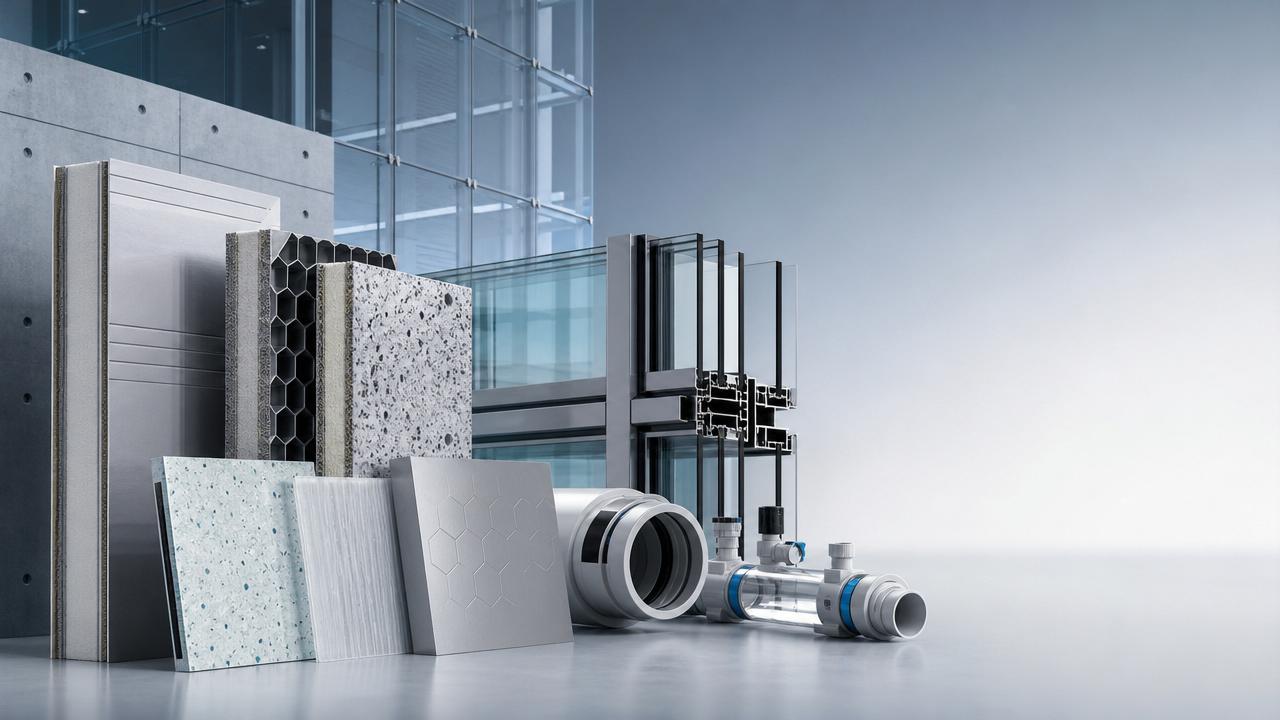
For technical evaluators, architectural material innovations now define build quality more than ever. They influence compliance, durability, safety, maintenance cycles, and long-term asset value across residential and commercial projects.
From anti-bacterial finishes to low-carbon composites, architectural material innovations change how buildings perform in real use. They also reshape how teams judge quality, risk, and return across the full project lifecycle.
This shift matters across the broader construction ecosystem. GIAM tracks these transitions because material selection now connects engineering discipline, user comfort, regulatory pressure, and spatial intelligence in one decision chain.
Build quality is no longer measured only by strength
Traditional quality reviews focused on compressive strength, finish consistency, and installation accuracy. Those metrics still matter, but they no longer capture the full impact of architectural material innovations.
Today, build quality also includes hygiene performance, water efficiency, fire behavior, thermal stability, carbon footprint, and digital compatibility. Modern materials are judged by how they perform under operational stress.
A wall panel, tile, sealant, or plumbing component may appear compliant on delivery. Yet its real quality depends on moisture resistance, VOC emissions, cleanability, repair frequency, and interface with smart systems.
This broader definition explains why architectural material innovations have moved from optional upgrades to strategic quality variables. The material itself becomes a performance platform, not just a physical input.
The strongest trend signals are coming from standards, health, and lifecycle economics
Several market signals show why architectural material innovations are accelerating. These signals are visible across public infrastructure, housing, hospitality, healthcare, offices, and mixed-use commercial development.
- Tighter energy and carbon standards are raising performance expectations for envelopes, insulation, glazing, and structural systems.
- Health-focused design increases demand for anti-bacterial surfaces, low-emission materials, and easy-clean sanitary solutions.
- Water scarcity drives adoption of water-saving fixtures, efficient piping materials, and leak-detection integration.
- Labor shortages favor materials that install faster, reduce errors, and simplify prefabrication workflows.
- Owners increasingly compare total lifecycle cost instead of lowest upfront purchase price.
- Smart building adoption requires compatible substrates, hardware, and embedded sensor pathways.
Together, these signals make architectural material innovations central to quality assurance. The project that ignores them may meet a short-term budget while failing long-term performance expectations.
Why architectural material innovations are advancing so quickly
The pace of change is not random. It is driven by converging technical, commercial, and regulatory forces that reward measurable performance and punish hidden quality weaknesses.
This is where GIAM’s intelligence model becomes useful. It links sector news, evolutionary trends, and commercial insights so material decisions can reflect both technical evidence and market direction.
The most important quality gains are happening in specific material categories
Anti-bacterial and hygienic surface systems
In sanitary spaces, healthcare environments, and dense commercial interiors, anti-bacterial materials reduce contamination risk and cleaning burden. They support better user outcomes when performance claims are tested and maintained correctly.
Water-saving and leak-resistant plumbing materials
Advanced valves, piping compounds, and smart water systems improve build quality by lowering waste and preventing concealed damage. Water control is now a quality issue, not only a utility concern.
Low-carbon and lightweight composites
These architectural material innovations can reduce transport load, simplify installation, and support sustainability targets. However, quality depends on validated structural behavior, fire ratings, and long-term weathering resistance.
Smart-ready hardware and integrated systems
Smart locks, responsive fixtures, and sensor-compatible assemblies improve control and user experience. Their contribution to build quality depends on stable interfaces, power planning, cybersecurity awareness, and maintenance access.
How these shifts affect quality across project stages
Architectural material innovations influence every stage of a project. The impact is not isolated to procurement or specification. It changes coordination, testing, installation, commissioning, and operations.
- Design stage: teams must evaluate compatibility, codes, and expected service conditions earlier.
- Tender stage: performance-based criteria become more important than simple material descriptions.
- Construction stage: installers need clearer handling rules, tolerances, and sequencing guidance.
- Commissioning stage: functional testing must include hygiene, water, thermal, and smart responses.
- Operation stage: maintenance data reveals whether the selected innovation truly improved build quality.
This stage-by-stage influence explains why architectural material innovations should be reviewed as system choices. A strong material can still fail if its installation method or adjacent assembly is weak.
What deserves closer attention before any specification decision
Not every new material improves outcomes equally. Some innovations create value only in the right operating context. Quality evaluation should focus on evidence, fit, and downstream consequences.
- Verify test standards, certification scope, and environmental declarations.
- Check compatibility with adhesives, substrates, fixtures, and digital systems.
- Review resistance to moisture, abrasion, chemicals, and thermal fluctuation.
- Estimate maintenance frequency, replacement complexity, and spare-part availability.
- Assess real installation skill requirements and quality control checkpoints.
- Compare lifecycle cost against service life, not against purchase price alone.
These checks make architectural material innovations easier to evaluate objectively. They reduce the risk of selecting fashionable materials that create hidden performance or compliance problems later.
A practical way to judge future-fit material choices
Using this framework helps separate real architectural material innovations from marketing noise. It keeps build quality tied to measurable performance, not broad claims.
The next move is to connect intelligence with specification discipline
Architectural material innovations will keep changing quality benchmarks in buildings. The winners will be projects that combine material science awareness, code tracking, and lifecycle thinking from the earliest design decisions.
A practical next step is to review current specifications against performance gaps in hygiene, water efficiency, carbon reduction, and smart integration. Then compare each gap with proven materials and documented installation requirements.
GIAM supports this process by connecting strategic intelligence, trend analysis, and commercial insight across core building materials, sanitary systems, and smart kitchen and bath solutions. Better information leads to better build quality.
Industry Briefing
Get the top 5 industry headlines delivered to your inbox every morning.