
Tighter West Coast Capacity Delays Building Materials
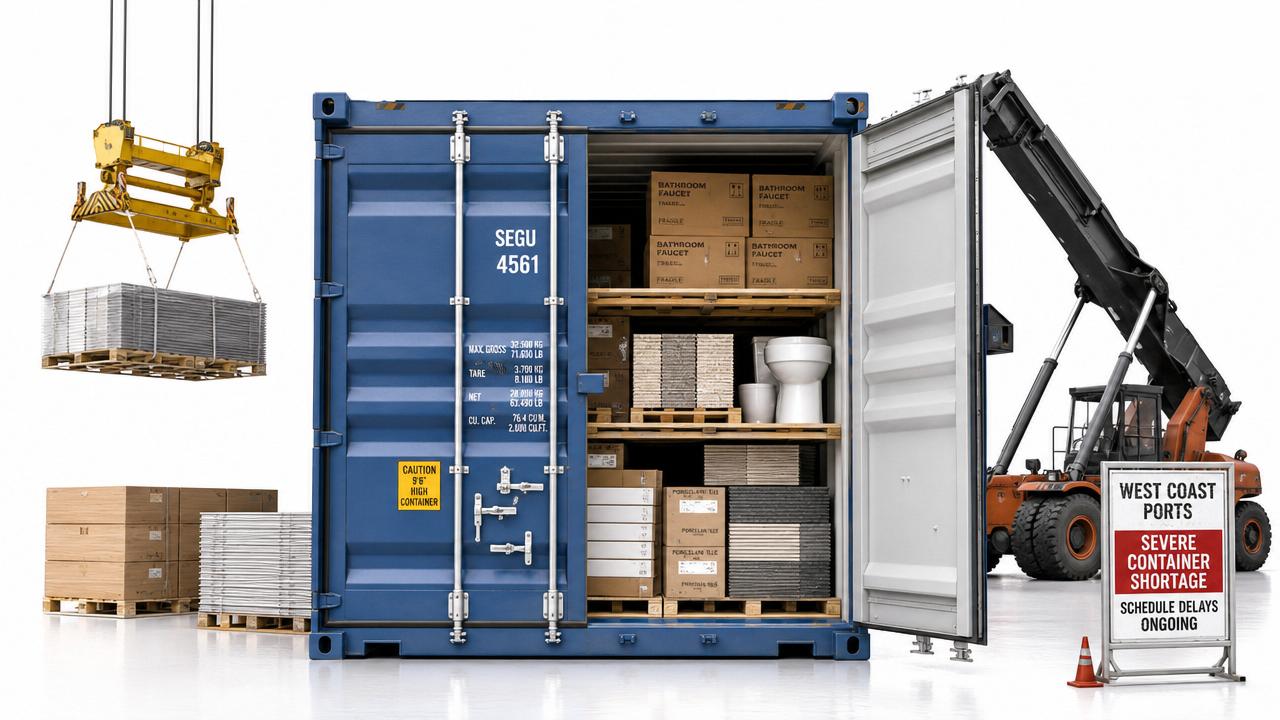
On June 10, 2026, tightening container availability at the Los Angeles and Long Beach ports became a practical trade and delivery issue for the building materials sector rather than a routine logistics fluctuation. The development matters because changes in terminal shift arrangements and weaker empty-container repositioning are already affecting booking access, shipment timing, and demurrage exposure, with exporters, buyers, distributors, and supply-chain service providers all needing to reassess delivery commitments and document timing.
What the June congestion signal confirms
According to the provided event summary, container availability at the Los Angeles and Long Beach ports fell to 58% in early June due to shift adjustments for dock workers and poor empty-container return flows. For full-container building materials shipments, the average waiting time to load extended to 9.3 days. High volume-to-value products such as tiles, composite panels, and sanitary hardware were identified as the most affected categories. The same information also states that some Chinese exporters have already seen order delivery dates pushed back by 10 to 14 days, while average demurrage at the Port of Los Angeles rose to $4,200 per TEU.
Where the pressure is likely to appear in day-to-day trade execution
Export scheduling is becoming more difficult for bulky cargo
For exporters of tiles, composite panels, sanitary hardware, and similar building materials, the main exposure is not only slower loading but also lower predictability in vessel planning. Because these products occupy more container space relative to shipment value, a decline in container availability can directly affect booking confirmation, packing schedules, and promised shipment windows. From an industry perspective, these companies need to pay closer attention to shipping documents, booking cut-off coordination, and whether delivery commitments in sales contracts still match current port conditions.
Buyers and distributors may face contract and inventory timing pressure
Import-side buyers, project distributors, and channel operators may be affected through delayed receipt of full-container orders. The most immediate business impact is likely to appear in replenishment plans, warehouse intake scheduling, and customer delivery promises. Analysis shows that the practical issue is less about a product standard change and more about whether procurement timelines, delivery clauses, and receiving arrangements remain workable under slower export execution.
Supply-chain service providers are exposed to cost and coordination risk
Freight forwarders, booking agents, and other supply-chain service providers may face tighter coordination requirements as average demurrage at the Port of Los Angeles has reached $4,200 per TEU. In operational terms, this raises the importance of tracking container allocation, monitoring waiting time at origin, and updating customers on revised loading expectations. What deserves closer attention is whether logistics service documentation, notice timing, and handover arrangements are aligned with the longer waiting period already reflected in the provided facts.
What companies should review now
Recheck shipment promises against current loading reality
Analysis shows that companies handling affected building materials should first compare their committed delivery dates with the reported 9.3-day average waiting time and the already observed 10 to 14 day order delays for some exporters. This is especially relevant where contracts, purchase orders, or project schedules rely on tightly sequenced arrivals.
Watch document timing and cargo handover milestones
Where shipment timing is becoming less stable, exporters and logistics teams should pay closer attention to the sequencing of booking documents, packing completion, and cargo handover milestones. The provided information does not establish a new formal compliance rule, but it does indicate that execution risk is rising in routine trade procedures that depend on timely container access.
Focus on high-cube, low-value-density product lines first
Observably, the most exposed categories in the provided summary are high volume-to-value goods. Companies with mixed product portfolios may therefore need to review whether these cargoes require separate scheduling attention, revised dispatch prioritization, or more conservative delivery communication with customers and distributors.
Keep monitoring whether operational language hardens into trade practice
It is more appropriate to understand this stage as an operational signal with trade implications, not yet as a fully defined new rule set. Even so, businesses should watch for any later changes in carrier practice, port handling language, procurement terms, or customer tender documents that could convert temporary congestion into a more formal execution constraint.
Why this matters beyond a short-term delay
From an industry perspective, this development is important because it shows how port-side operating adjustments and container circulation problems can quickly translate into commercial pressure for sectors that depend on full-container export flows. Analysis shows that the significance lies less in a new published regulation and more in the way practical operating conditions begin to shape trade behavior, delivery expectations, and cost allocation across the supply chain. For now, it is more appropriate to read this as an execution signal that deserves continued monitoring rather than as a settled long-term rule change.
How the market may need to interpret the current signal
The current information supports a cautious, neutral conclusion: tighter capacity at major West Coast gateways is already affecting the delivery rhythm of building materials shipments, especially for bulky cargo categories. What deserves closer attention is whether this remains a short-cycle operational bottleneck or starts to influence routine contracting, procurement planning, and shipment coordination more broadly. At this stage, the event is best understood as a landed market signal with real delivery consequences, while the durability of its impact still requires observation.
Basis of this article and what still needs verification
This article is generated from the user-provided news title, event date, and event summary. For events of this kind, commonly relevant source categories may include official port notices, regulatory or trade authority updates, customs or trade administration information, industry association releases, standards-related documents, and reporting by authoritative media. No specific official source link was provided in the input, so the precise official basis still needs continued verification. Follow-up attention should remain on any later operational notices, execution language, tender document changes, industry feedback, and how companies adjust delivery and supply-chain arrangements in practice.
Industry Briefing
Get the top 5 industry headlines delivered to your inbox every morning.