
Global Building Materials Index Rises 2.1% in May
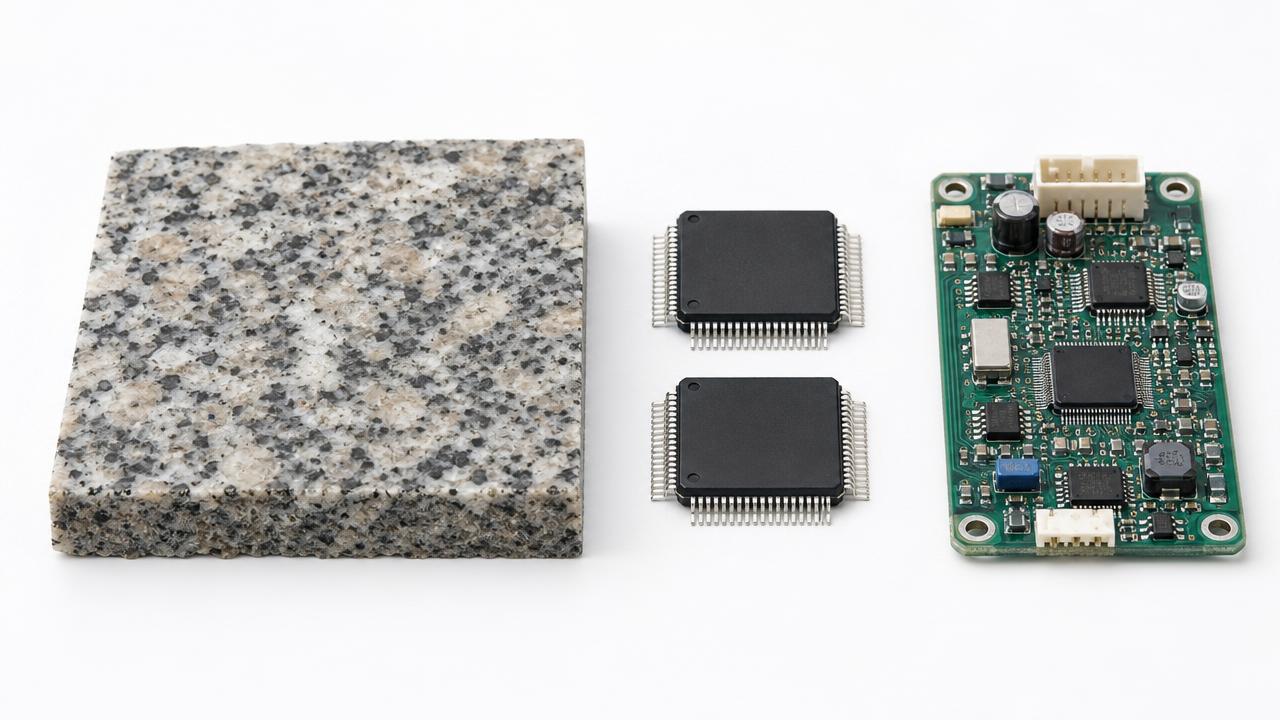
Global Building Materials Index (GBPI) rose 2.1% month-on-month on May 16, 2026 — the largest single-month increase since the start of 2026. This shift reflects tightening supply conditions across two critical input streams: natural stone exports from Southeast Asia and microcontroller units (MCUs) for smart bathroom systems in Europe. The move signals immediate cost pressure across upstream procurement, midstream manufacturing, and downstream project delivery in the global construction materials and smart fixtures sectors.
Event Overview
The Global Building Materials Index (GBPI), released on May 16, 2026, recorded a 2.1% month-on-month increase. The rise is attributed to two confirmed developments: (1) Indonesia and Vietnam implemented quarterly export quotas on granite and marble rough slabs effective May 2026, reducing allowable volumes by 15–20%; and (2) European smart bathroom manufacturers reported extended lead times — up to 36 weeks — for MCUs supplied by STMicroelectronics and NXP Semiconductors. These constraints are already feeding into higher component costs and delayed order fulfillment for smart toilets and digital locks.
Industries Affected
Direct trading enterprises: Export-oriented stone traders based in Jakarta, Ho Chi Minh City, and Guangdong face reduced shipment volumes and increased administrative overhead due to quota allocation processes. Pricing transparency has declined, and forward contract negotiation windows have shortened as buyers rush to secure allocations ahead of quarterly resets.
Raw material procurement enterprises: Importers sourcing natural stone slabs for fabrication hubs in Italy, Turkey, and India report rising landed costs and longer documentation cycles. For semiconductor-dependent procurement teams, MCU scarcity is triggering dual-sourcing evaluations and pre-emptive inventory builds — both increasing working capital requirements and complicating demand forecasting.
Manufacturing enterprises: Fabricators of premium bathroom suites and architectural stone cladding face margin compression as input cost increases outpace price adjustment cycles. Smart fixture OEMs are revising bill-of-materials (BOM) strategies — delaying new product launches and revalidating alternative MCU platforms — which may extend time-to-market by 8–12 weeks for Q3 2026 releases.
Supply chain service enterprises: Customs brokers and logistics providers handling stone shipments report higher query volumes related to quota certification and origin verification. Meanwhile, electronics logistics specialists note increased requests for air-freight contingency planning and bonded warehouse staging — indicating growing operational friction in cross-border component distribution.
Key Focus Areas and Recommended Actions
Review and rebalance regional sourcing portfolios
Enterprises reliant on Southeast Asian stone should assess exposure to Indonesian and Vietnamese quotas and explore complementary sources in Brazil, Egypt, or Namibia — where export frameworks remain unchanged. Due diligence on quarry certifications and transport infrastructure capacity is advised before shifting volume.
Accelerate MCU platform diversification
Smart fixture manufacturers should prioritize qualification of alternative MCU suppliers (e.g., Renesas, Infineon) or consider architecture-level adaptations enabling software-defined functionality with fewer hardware dependencies. Engineering resource allocation toward such efforts warrants near-term review.
Adjust pricing and lead-time communication with end clients
Contractors and specification consultants must update tender documents and client proposals to reflect realistic delivery timelines and potential surcharges — especially for projects specifying natural stone finishes or integrated smart sanitation systems. Proactive disclosure mitigates contractual risk and supports value-based negotiations.
Editorial Perspective / Industry Observation
Analysis shows this GBPI spike is not merely cyclical but structural: it reflects converging policy-driven supply constraints (export quotas) and technology-constrained supply chains (semiconductor bottlenecks). Observably, the dual pressure points originate in distinct regulatory and industrial ecosystems — one rooted in national resource governance, the other in global semiconductor capacity planning. From an industry perspective, this divergence suggests that resilience strategies must now operate across parallel domains: geopolitical sourcing agility and technical supply chain modularity. Current more-than-temporary volatility favors firms with diversified input baselines and embedded engineering flexibility — not just scale.
Conclusion
This 2.1% GBPI increase serves as a signal that cost dynamics in building materials are increasingly shaped by non-traditional levers — export policy and component-level tech availability — rather than macroeconomic or commodity-cycle factors alone. A rational interpretation is that procurement and product development functions must now co-evolve as interdependent disciplines, with shared KPIs around input stability and design adaptability.
Source Attribution
Data sourced from the official Global Building Materials Index (GBPI) release, published May 16, 2026. Quota implementation details confirmed via Indonesia’s Ministry of Trade Regulation No. 17/2026 and Vietnam’s Circular 12/2026/TT-BCT. MCU lead-time data verified through direct supplier advisories from STMicroelectronics and NXP Semiconductors (Q2 2026 Field Updates). Continued monitoring is recommended for: (1) potential extension of stone export quotas beyond Q2; (2) EU-level discussions on semiconductor supply chain resilience under the European Chips Act implementation timeline.
Industry Briefing
Get the top 5 industry headlines delivered to your inbox every morning.