
China Ceramic Expo Opens With Flexible Smart Manufacturing Focus
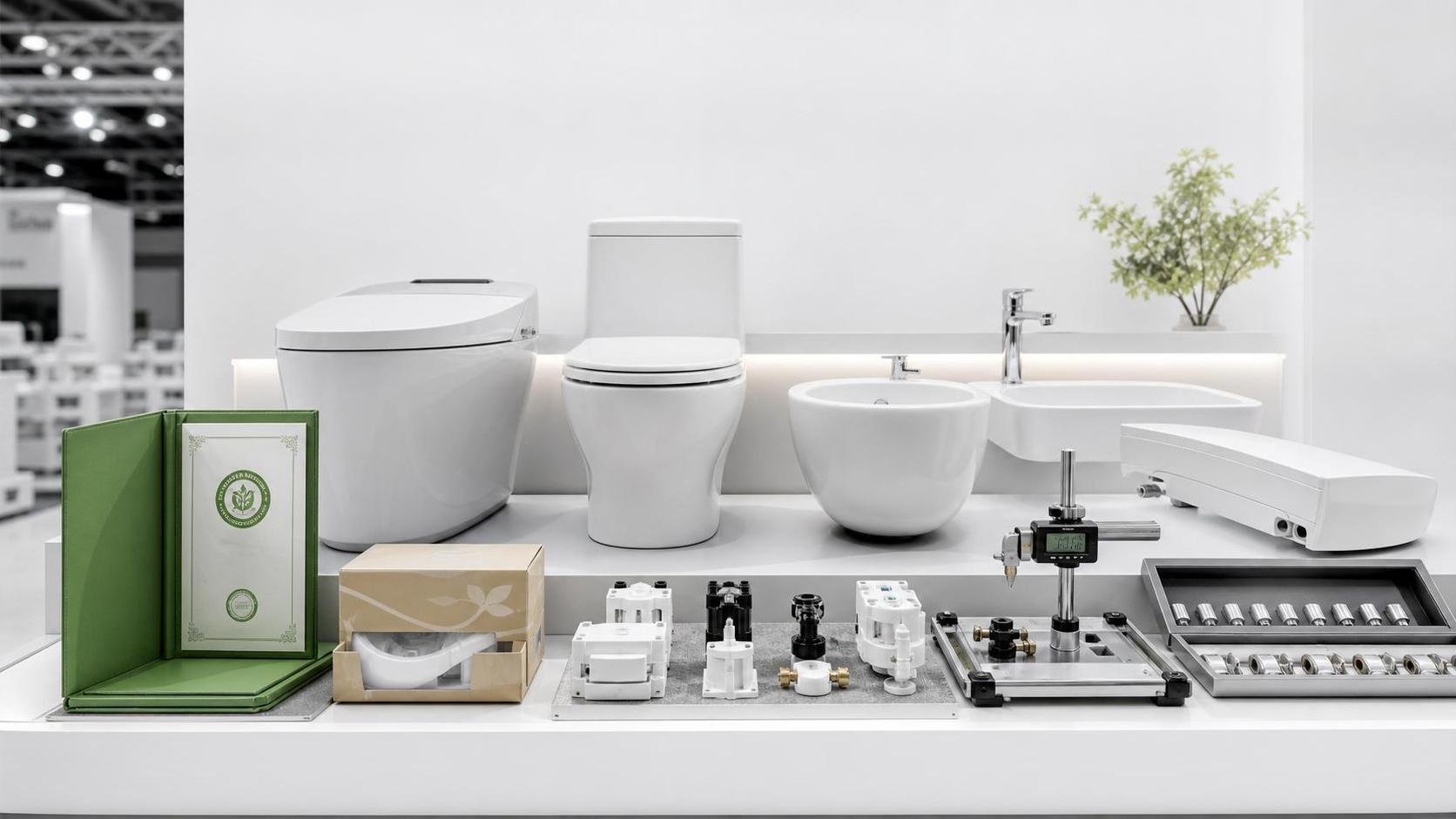
On June 24, 2026, the 40th China International Ceramic Industry Exhibition opened in Guangzhou with a clear focus on the shift toward flexible smart manufacturing. For ceramic makers, smart sanitaryware suppliers, overseas buyers, and OEM/ODM factories, the development is worth watching because it links production flexibility, certification visibility, and sourcing access more directly within one trade-show setting.
What the exhibition is formally presenting
The event opened in Guangzhou on June 24, 2026 as the 40th edition of the China International Ceramic Industry Exhibition. Its stated focus is the transition toward flexible smart manufacturing.
A new feature at this edition is a Green Ceramic Supply Chain Certification Corridor. According to the provided event summary, the corridor showcases leading ceramic and smart sanitaryware manufacturers from Chaozhou and Foshan that hold certifications including GRS, BSCI, SEDEX, and EU EPD.
The same summary states that overseas buyers at the venue can connect directly with OEM/ODM factories that offer small-batch, multi-category sampling capabilities, with samples available within 72 hours.
Why different business roles may pay attention
For overseas sourcing teams, supplier screening may become more front-loaded
Analysis shows that buyers are likely to pay attention because the exhibition format puts certified suppliers and rapid sampling capacity in the same decision process. The practical impact is most visible in supplier shortlisting, initial compliance review, and early product-development discussions. What deserves closer attention is whether buyers begin to treat certification visibility and sampling speed as linked requirements rather than separate checkpoints.
For OEM and ODM factories, responsiveness is becoming part of market access
From an industry perspective, the mention of 72-hour sampling highlights speed and production flexibility as a business capability that can affect how factories are approached by international customers. The influence is likely to be felt in quoting, sampling coordination, and the organization of small-batch orders across multiple categories. Manufacturers should watch whether buyers increasingly test a factory's response discipline before discussing larger production volumes.
For certified manufacturers, compliance is being displayed as a commercial interface
Observably, the creation of a certification corridor does more than group documents together; it presents certifications as part of how suppliers are introduced to the market. This may affect customer communication, trade-show presentation, and the way export-oriented manufacturers prepare qualification materials. The key change to monitor is whether recognized certifications become a more visible entry condition in buyer conversations at earlier stages.
For supply chain service providers, coordination demands may become more compressed
Analysis shows that where sampling speed, multiple product categories, and cross-border buyer connections come together, service providers around documentation, coordination, and delivery timing may face tighter execution windows. The main effect would likely appear in sample handling, information transfer, and alignment between factory readiness and buyer expectations. What deserves closer attention is whether faster sampling cycles create pressure on support services to match that pace.
What companies should watch next
How certification language is used in actual transactions
Companies should distinguish between exhibition visibility and transaction requirements. The current information confirms that GRS, BSCI, SEDEX, and EU EPD-certified manufacturers were showcased, but businesses still need to track how buyers refer to these certifications in inquiries, supplier onboarding, and document requests.
Whether rapid sampling becomes a routine buyer expectation
The 72-hour sample capability is a concrete operational detail in the event summary. For factories and trading teams, the practical question is not only whether fast sampling can be offered once, but whether internal workflows, category coordination, and client communication can support repeated small-batch requests without confusion.
How flexible manufacturing is translated into order management
Flexible smart manufacturing is the central theme of the event, but the business test lies in how that theme is converted into quoting, proofing, and delivery coordination. Companies should pay attention to whether customer discussions shift toward mixed-category development, shorter confirmation cycles, or more frequent sample revisions.
What official follow-up signals may clarify
Because the current input provides an event title, date, and summary, companies should continue watching for later official statements, exhibitor materials, or formal event releases that may clarify how the certification corridor and factory matching mechanisms will be carried forward beyond the show floor.
How this signal should be interpreted now
Analysis shows that this development is better understood as a market signal than as a completed industry outcome. The event connects three themes in one place: flexible manufacturing, visible supply-chain certification, and direct buyer access to fast-sampling OEM/ODM factories.
Observably, that combination suggests that parts of the ceramic and smart sanitaryware business are being presented to global buyers through a new sourcing logic: flexibility, compliance presentation, and sampling speed appear increasingly interconnected. At the same time, it would be premature to treat this as proof of a market-wide standard until follow-up behavior from buyers and suppliers becomes clearer.
What this means for the sector at this stage
At this stage, the exhibition news points to a practical shift in how export-facing ceramic and smart sanitaryware supply may be organized and evaluated. The immediate significance is not simply that a trade event opened, but that certified supply-chain presentation and fast small-batch development were placed at the center of buyer-factory matching.
It is more appropriate to understand this as an important directional signal with near-term operational relevance, especially for sourcing, sampling, qualification, and supplier communication, while still leaving room for continued observation before drawing broader conclusions about long-term market adoption.
Basis of this article
This article is based on the user-provided news title, event date, and event summary. Specific official source links were not provided in the input, so further verification remains necessary.
For this type of industry update, relevant source categories would usually include official event releases, company statements, industry association updates, authoritative media coverage, and certification or standards-related documents. The main follow-up areas to watch are whether later official materials provide more detail on the certification corridor, buyer-factory matching arrangements, and how flexible smart manufacturing is defined in business practice.
Industry Briefing
Get the top 5 industry headlines delivered to your inbox every morning.