
Hormuz Eases, Ceramic Capacity Still Lags
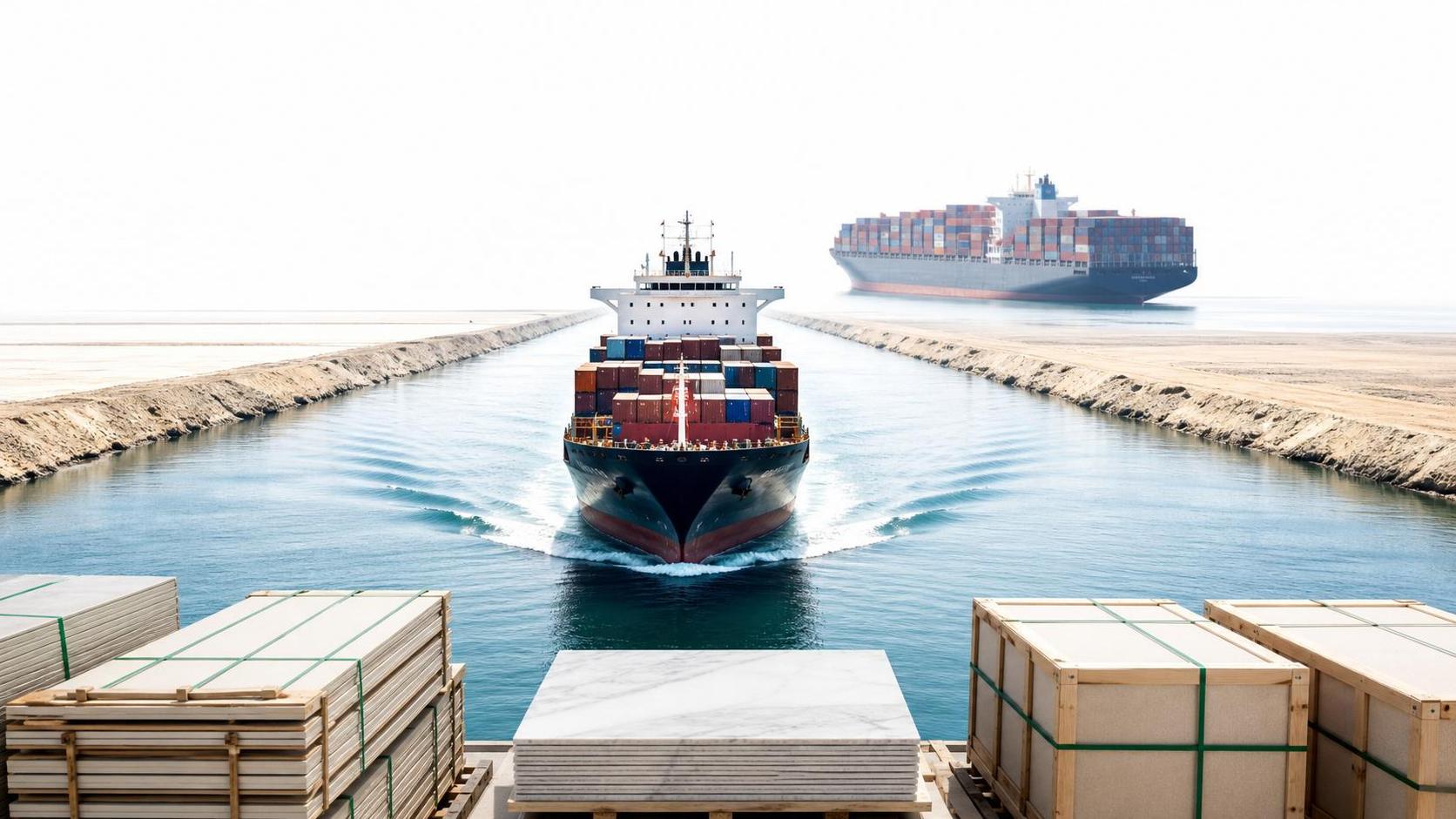
The timing of the event is not clearly specified in the source input, but the latest disclosed monitoring point is June 25. For the Europe-Asia ceramic and composite panel container trade, the key takeaway is that a geopolitical easing signal has not yet translated into a meaningful recovery in usable shipping capacity. This matters to exporters, importers, manufacturers, buyers, and logistics providers because route access alone is proving insufficient when vessel suitability and insurance costs still constrain actual cargo movement.
What the latest shipping data actually shows
According to the provided information, the US and Iran reached a 60-day agreement allowing free passage for merchant vessels, and a temporary north-south channel in Oman has been put into use. However, IMO shipping monitoring indicates that, as of June 25, the channel was carrying only 12% of the pre-crisis volume for containers tied to ceramics and composite boards on the Asia-Europe trade.
The stated reasons are operational rather than purely diplomatic. Vessel compatibility remains limited because of draft and width restrictions, while insurance premiums are still 37% higher. As a result, most liner companies continue to keep vessels on the Cape of Good Hope route instead of shifting back through the new temporary passage.
Why the impact extends beyond the route itself
Export-facing manufacturers and traders are dealing with a capacity gap, not just a policy update
From an industry perspective, ceramic and composite board exporters may be affected because the reopening signal does not yet restore practical transport options at scale. The main pressure points are shipment planning, booking reliability, and delivery scheduling. What deserves closer attention is whether transport arrangements advertised as available are supported by vessels that can actually use the temporary channel.
Importers and buyers need to watch execution risk in delivery timelines
For overseas buyers and sourcing teams, the issue is not only transit geography but whether carriers maintain diversions around the Cape of Good Hope. Analysis shows that continued use of longer alternative routes can affect order timing, replenishment coordination, and shipment predictability for ceramic and panel-related cargoes. Buyers should therefore monitor carrier routing behavior rather than relying only on the headline that passage conditions have improved.
Logistics and supply chain service providers face a mismatch between access and deployable capacity
Freight forwarders and other supply chain service providers may be affected because the route has opened in principle, but deployable capacity remains constrained by ship dimensions and elevated insurance costs. In practice, this means service commitments, quotations, and routing advice may need to account for continued carrier caution and uneven lane recovery.
What businesses should focus on now
Separate diplomatic easing from operational recovery
What deserves closer attention is the difference between a navigation agreement and actual capacity restoration. The current information suggests that the route environment has improved in policy terms, but vessel suitability and insurance pricing are still preventing broad normalization.
Track carrier routing decisions on relevant cargo categories
Companies involved in ceramic and composite board shipments should focus on whether liners serving their trade lanes are maintaining Cape routings or selectively adjusting services. This distinction matters more than the existence of the temporary Oman channel alone.
Review contract timing, shipment promises, and customer communication
Observably, when most liner companies keep alternative routings in place, delivery planning and external communication become more sensitive. Businesses should pay close attention to fulfillment cycles, booking confirmation terms, and how shipment expectations are communicated to customers and counterparties.
Keep documentation and service coordination aligned with changing conditions
Where logistics execution depends on insurer acceptance, vessel characteristics, and route choice, firms should stay alert to any further official wording, carrier notices, or operational updates affecting cargo acceptance. This is especially relevant for shipments that may be sensitive to handover timing and routing certainty.
Why this is still a watch point, not a reset
Analysis shows that this development is better understood as a partial easing signal rather than a confirmed recovery in freight capacity. The available facts do not show a broad return to pre-crisis shipping patterns for ceramic and composite board containers. Instead, they suggest that political de-escalation and transport normalization are moving at different speeds.
It is more appropriate to understand this as an industry development that still requires observation. The gap between route availability and actual cargo throughput is currently the most important signal for the market to watch.
How to read the signal at this stage
At this stage, the industry significance lies in the mismatch between improved passage conditions and still-limited cargo execution. For affected supply chain participants, the practical question is not whether the crisis has eased in headline terms, but whether real capacity, insurability, and vessel fit are recovering enough to change routing behavior.
A neutral reading is that the situation has improved, but not to the point of restoring normal transport conditions for the relevant cargo segments. Current developments are best treated as a short-term operational watch point with possible wider implications if capacity recovery remains slow.
Basis of this article and what still needs verification
This article is generated based on the user-provided news title, unspecified event timing, and the supplied event summary. The specific official source link was not provided in the input, so the underlying details still require ongoing verification against the types of sources typically used for this kind of update, such as official notices, carrier announcements, industry association information, authoritative media reporting, and documents from relevant international organizations.
Further monitoring should focus on whether the temporary Oman channel supports a higher share of ceramic and composite board container flows, whether vessel compatibility constraints change, and whether insurance premiums remain at levels that discourage liner operators from resuming more direct routing.
Industry Briefing
Get the top 5 industry headlines delivered to your inbox every morning.