
China-Laos Railway Speeds Building Materials Trade
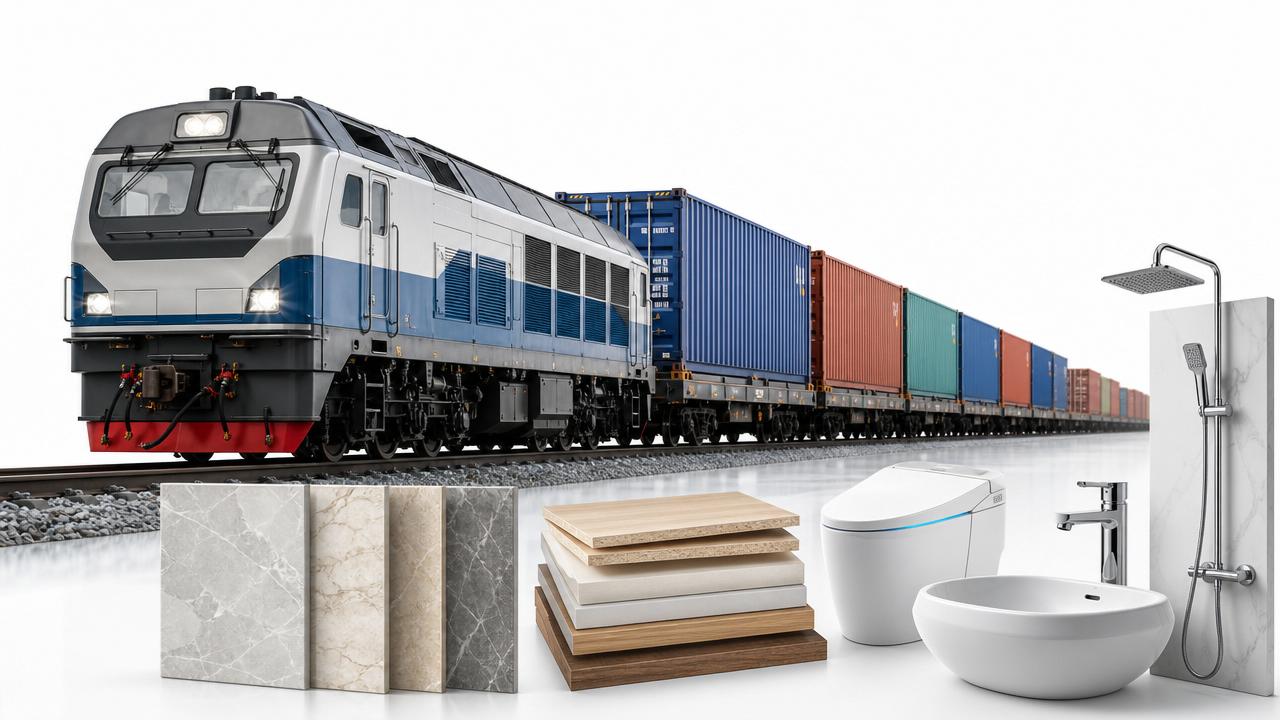
On May 29, 2026, the China-Laos Railway recorded cumulative imported fruit shipments exceeding 100,000 tonnes, highlighting improved capacity and customs stability on a green logistics corridor between China and ASEAN. Beyond agricultural imports, the route has also become relevant to cross-border building materials trade, particularly for buyers and operators involved in ceramic tiles, composite panels, smart bathroom products, containerized logistics, and regional distribution.
Event Overview
According to the available information, on May 29, 2026, cumulative imported fruit transported via the China-Laos Railway surpassed 100,000 tonnes. The milestone reflects the route’s role as a backbone green logistics channel between China and ASEAN, with improved transport capacity and stable customs clearance.
The same route has been regularly carrying high-value containerized building materials. The disclosed information states that average door-to-door delivery time has been shortened to 12 to 14 days, about 35 days faster than sea freight, while the carbon footprint is reduced by 42%.
For buyers in Southeast Asia and South Asia, product categories such as ceramic tiles, composite panels, and smart bathroom products are being imported through this corridor in a model characterized by smaller batches, more frequent shipments, and lower-carbon logistics.
Impacts on Specific Industry Segments
Cross-Border Building Materials Traders
Cross-border trading companies are directly affected because the railway route has already become a regular channel for high-value containerized building materials. The impact is mainly reflected in delivery planning, order frequency, and inventory turnover.
From an industry perspective, the 12 to 14 day average door-to-door cycle may allow traders to manage smaller and more frequent orders for categories such as ceramic tiles, composite panels, and smart bathroom products. However, this should be assessed against actual customs, container availability, destination delivery conditions, and contract requirements.
Procurement Companies in Southeast Asia and South Asia
Buyers in Southeast Asia and South Asia are among the most relevant market participants mentioned in the available information. They may be affected because shorter cross-border delivery times can change how procurement schedules are arranged.
Analysis shows that procurement teams may need to compare railway-based delivery with sea freight not only on transit time, but also on batch size, delivery frequency, carbon footprint, and the stability of customs procedures. The reported 42% carbon footprint reduction may also become relevant for buyers with low-carbon supply chain requirements.
Manufacturers and Export-Oriented Suppliers
Manufacturers of ceramic tiles, composite panels, smart bathroom products, and other higher-value building materials may be affected through changes in shipping rhythm and customer expectations. If buyers adopt more frequent purchasing cycles, suppliers may need to coordinate production, packaging, and container loading with greater precision.
Observably, the railway corridor is not only a transport option but also a factor that may influence how suppliers organize order fulfillment. This does not mean all building materials categories will shift to rail, but it does suggest that time-sensitive, higher-value, or batch-based shipments deserve closer evaluation.
Distribution and Channel Operators
Regional distributors and channel operators may experience changes in inventory deployment. A shorter delivery cycle can support more flexible replenishment, especially where demand is fragmented or project schedules require more predictable arrival windows.
What deserves closer attention now is whether distributors can align warehouse receiving, local delivery, and customer communication with a 12 to 14 day cross-border cycle. If internal processes remain based on longer sea freight schedules, the advantage of faster rail transport may not be fully realized.
Supply Chain and Logistics Service Providers
Supply chain service providers are affected because the route combines cross-border rail transport, customs clearance, container management, and door-to-door delivery. The disclosed milestone in fruit imports also indicates stable handling of time-sensitive goods, which is relevant when evaluating logistics reliability.
From an industry perspective, logistics providers may need to build more detailed service capabilities around rail-based building materials shipments, including shipment consolidation, customs documentation coordination, delivery scheduling, and carbon footprint communication. These points should be based on confirmed service conditions rather than assumed capacity.
Key Points to Watch and Practical Responses
Track Official Updates on Capacity and Customs Stability
Companies should continue monitoring official or publicly confirmed updates related to railway capacity, customs clearance arrangements, and cross-border service stability. The fruit shipment milestone is a useful signal, but building materials operators still need to verify the specific procedures and requirements for their own product categories.
It is more appropriate to understand this as a logistics channel that is showing stronger operational relevance, rather than assuming that all cargo can immediately use the same model under identical conditions.
Evaluate Priority Product Categories and Shipment Models
Enterprises dealing with ceramic tiles, composite panels, and smart bathroom products should assess whether their products match the railway corridor’s apparent strengths: higher-value containerized cargo, smaller batch sizes, and more frequent replenishment.
Analysis shows that companies should compare rail and sea freight by shipment urgency, order size, packaging requirements, delivery destination, and customer lead-time expectations. A route that is faster on average may still require product-level and market-level verification before being built into standard contracts.
Distinguish Logistics Signals from Business Implementation
The reported delivery cycle and carbon footprint reduction are important indicators, but companies should avoid treating them as automatic outcomes for every shipment. Actual performance may depend on booking, loading, customs coordination, destination transfer, and last-mile delivery arrangements.
What deserves closer attention now is the gap between a promising logistics signal and repeatable business execution. Traders and procurement teams should request clear delivery schedules, documentation requirements, and responsibility boundaries before changing procurement cycles.
Prepare Procurement, Inventory, and Communication Plans
Companies considering this corridor should prepare practical plans for smaller and more frequent imports. This includes adjusting inventory safety levels, confirming packaging standards for rail transport, aligning payment and documentation timelines, and informing downstream customers about realistic delivery windows.
From an industry perspective, the most useful response is not to replace existing logistics routes immediately, but to test suitable categories and shipment sizes while building contingency plans for timing, customs, and local delivery coordination.
Editorial View / Industry Observation
Observably, the 100,000-tonne imported fruit milestone is important not only for agricultural trade, but also as a reference point for evaluating the China-Laos Railway’s operational stability in cross-border logistics. For the building materials sector, the disclosed information suggests that rail-based container transport is becoming more relevant for time-sensitive and higher-value product categories.
Analysis shows that the development is better understood as both an achieved result and a market signal. The achieved result is the confirmed volume of imported fruit and the disclosed use of the route for high-value building materials. The signal is that procurement and distribution models in Southeast Asia and South Asia may place more emphasis on faster replenishment, smaller batches, and lower-carbon logistics.
From an industry perspective, continued attention is necessary because the practical value of this route will depend on whether stable transport capacity, customs efficiency, and door-to-door coordination can be maintained across repeated shipments and multiple product categories.
Conclusion
The China-Laos Railway’s imported fruit volume exceeding 100,000 tonnes on May 29, 2026, underscores the growing role of the corridor in China-ASEAN green logistics. For building materials trade, the more significant point is the disclosed improvement in cross-border delivery time and lower carbon footprint for selected containerized categories.
It is more appropriate to understand this development as a logistics efficiency signal with practical implications for traders, buyers, manufacturers, distributors, and supply chain service providers. Companies should respond with careful route evaluation, product-specific testing, and realistic delivery planning rather than broad assumptions.
Information Source Statement
- Main source: Provided industry event information dated May 29, 2026, concerning the China-Laos Railway, imported fruit shipments, and cross-border building materials logistics.
- Items requiring continued observation: future official statements on route capacity, customs clearance stability, applicable product categories, door-to-door delivery performance, and carbon footprint measurement for repeated shipments.
Industry Briefing
Get the top 5 industry headlines delivered to your inbox every morning.