EU REACH Update Hits Antimicrobial Ceramic Exports
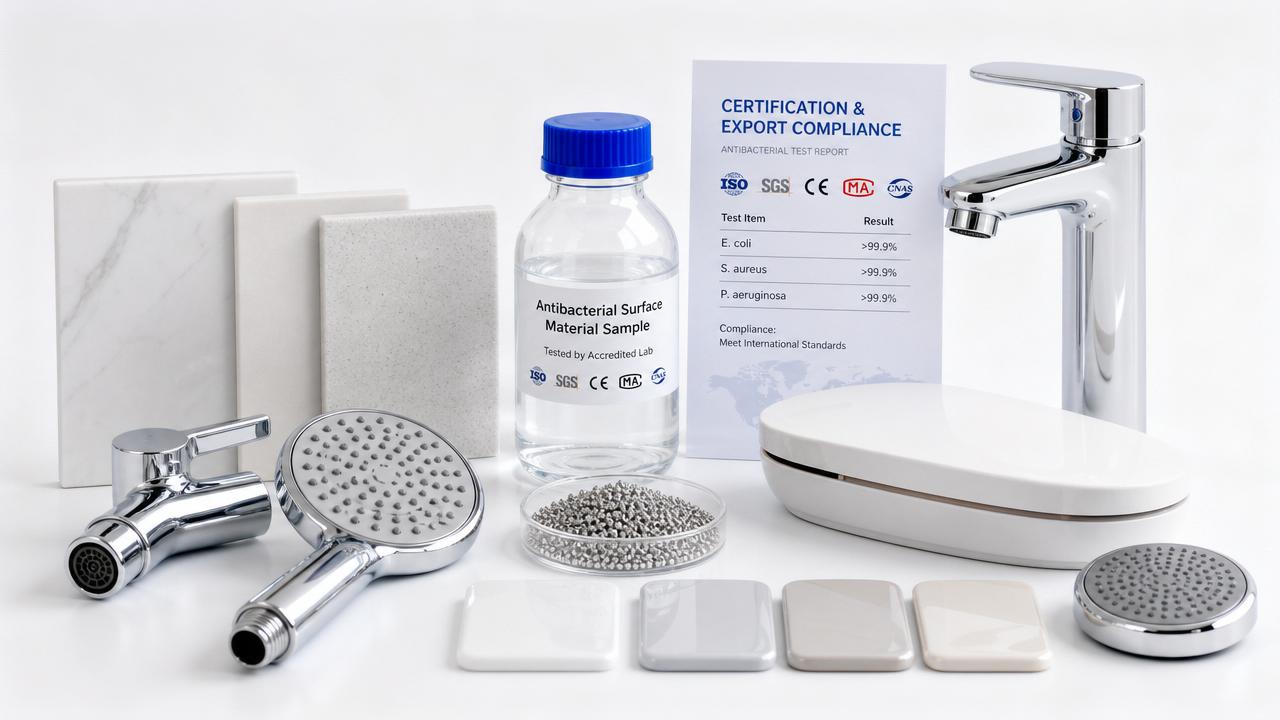
On 30 May 2026, the European Union updated the REACH restriction list by adding limits on silver nanoparticles, or AgNPs, and certain quaternary ammonium antimicrobial agents, creating direct compliance implications for antimicrobial ceramic tile glazes, smart toilet surface coatings, and electroplated layers used on faucets and showers.
Image Placement Plan
No image placeholders are planned for this article because the required placeholder count is zero.
What Has Been Confirmed in the REACH Update
The confirmed event date is 30 May 2026. On that date, the European Union updated the REACH restriction list and introduced new restrictions covering products or materials containing AgNPs and specified quaternary ammonium antimicrobial agents.
The affected product areas identified in the provided information include antimicrobial surface applications in ceramic tile glazes, smart toilet coatings, and electroplated layers for faucets and showers.
Exporting companies are required to complete SVHC notification and validate alternative solutions before November 2026. This requirement is directly relevant to exporters whose products rely on antimicrobial additives or treated surface layers covered by the updated restriction scope.
How the Rule Change May Affect Industry Roles
Exporters handling finished bathroom and ceramic products
From an industry perspective, direct export businesses are likely to feel the most immediate pressure because the affected products are tied to cross-border compliance checks. The impact may appear in product declarations, technical documentation, order review, customs-facing compliance preparation, and customer communication for antimicrobial claims.
Exporters should pay close attention to whether ceramic tiles, smart toilets, faucets, and shower products use restricted antimicrobial substances in glazes, surface coatings, or electroplated layers. They may also need to confirm whether SVHC notification and alternative validation can be completed before the November 2026 deadline.
Raw material and additive procurement teams
Companies responsible for purchasing antimicrobial agents, glaze ingredients, coating materials, or electroplating-related inputs may be affected because the new restrictions focus on specific substance types. Procurement teams may need to check whether suppliers provide clear substance declarations for AgNPs and relevant quaternary ammonium agents.
The business impact may involve supplier screening, incoming material checks, replacement material sourcing, and contract terms related to REACH compliance. What deserves closer attention is whether purchased materials are described only by performance claims, such as antimicrobial function, without sufficient chemical-level documentation.
Manufacturers of ceramic and sanitaryware products
Processing and manufacturing enterprises may need to review whether antimicrobial performance is achieved through glazes, coatings, or plated surfaces affected by the updated restriction list. The compliance impact may extend to formulation control, production trials, surface treatment processes, validation testing, and batch-level traceability.
Analysis shows that manufacturers may need to align product engineering, quality control, and export documentation more closely. If alternative materials are used, the key concern is not only whether they avoid the restricted substances, but also whether they maintain required product performance and can be validated in time.
Supply chain service providers and compliance partners
Supply chain service providers, including testing coordination, documentation support, logistics compliance, and export service teams, may see rising demand for substance verification and document review. Their role may become more important when exporters need to consolidate supplier statements, SVHC notification materials, and proof of alternative validation.
Observably, the change may increase the need for earlier compliance screening before shipment. Service providers should monitor changes in technical files, buyer requirements, tender specifications, and product descriptions involving antimicrobial surfaces.
Compliance Priorities Before the November 2026 Deadline
Map antimicrobial functions to actual substances
Companies should identify which products make use of antimicrobial functions and then trace those functions back to the actual substances used in glazes, coatings, and electroplated layers. This is especially important for ceramic tiles, smart toilets, faucets, and shower products where surface treatment is part of the selling point.
Prepare SVHC notification and technical evidence
Because the provided event summary states that exporters must complete SVHC notification before November 2026, companies should review whether their existing technical files are sufficient. Relevant materials may include substance declarations, supplier documentation, test reports, formulation records, and product-level compliance statements.
Validate alternatives without weakening product claims
If affected antimicrobial agents are replaced, companies should verify whether the substitute solution still supports the intended product function. Alternative validation should be linked to the specific application, such as ceramic glaze, smart toilet coating, or faucet and shower electroplating, rather than treated as a generic material change.
Review order schedules and buyer specifications
Exporters should compare the November 2026 compliance timeline with purchase orders, delivery plans, and buyer specification documents. If customers require antimicrobial performance, technical bid alignment and specification updates may be necessary to avoid inconsistencies between marketing claims, product design, and REACH compliance documentation.
Industry Observation: A Narrower Path for Antimicrobial Claims
Analysis shows that this REACH update should be understood not only as a chemical restriction issue, but also as a product compliance and trade risk issue for antimicrobial ceramic and sanitaryware exports. The affected surface technologies are often embedded in product design, which may make later-stage correction more difficult than ordinary document updates.
From an industry perspective, antimicrobial claims in bathroom and ceramic products may face more careful verification. Buyers and compliance reviewers may pay closer attention to whether the claimed antimicrobial performance relies on restricted substances and whether alternative solutions have been technically validated.
It is more appropriate to understand this as a reminder that surface treatment compliance is becoming part of export readiness. Without confirmed substance data from suppliers, manufacturers may face uncertainty in certification review, tender participation, shipment planning, and after-sales traceability.
Conclusion
The 30 May 2026 REACH restriction update places new compliance attention on AgNPs and certain quaternary ammonium antimicrobial agents used in ceramic and sanitaryware surface applications. For exporters of antimicrobial ceramic tiles, smart toilets, faucets, and showers, the key task is to connect product claims, material composition, SVHC notification, and alternative validation before the stated November 2026 deadline.
The broader industry significance lies in the shift from performance-led antimicrobial product development toward substance-level compliance control. The final impact will depend on implementation details, buyer requirements, and how quickly companies can verify or replace affected materials.
Information Basis and Items to Monitor
This article is based on the provided information title, event date, and event summary. Specific official source links were not provided in the input and should be verified continuously.
For events of this type, companies generally need to monitor official regulatory publications, REACH compliance guidance, certification interpretation, buyer specification updates, and industry feedback. Further attention should be given to detailed implementation rules, certification enforcement practices, tender document changes, supplier declarations, and market responses from affected exporters.
Industry Briefing
Get the top 5 industry headlines delivered to your inbox every morning.