
Residential Civilization Compliance: What Rules Apply to Residents?
Residential civilization compliance means observing the rules that govern safe, respectful use of a home and its shared surroundings. These rules cover everyday matters such as noise, rubbish, pets and parking, as well as building safety, maintenance and alterations. The exact obligations come from local law and the documents governing the property; there is no single universal residential code.
A restriction in a lease or community handbook is not automatically a legal requirement. Equally, a building rule cannot necessarily override a legal protection. Understanding where a rule comes from, who is responsible for the affected space and how it is enforced makes it easier to distinguish an enforceable obligation from a request for neighbourly cooperation.
Where Residential Rules Come From
Residential obligations often overlap. A local authority may set requirements for fire safety or waste collection, while a lease specifies permitted alterations and a building association regulates the use of common areas. A house in a managed development can have community rules even without shared hallways; an apartment building may have detailed requirements for lifts, balconies and access to services.
The most useful documents depend on the property, but commonly include:
- Applicable laws and local rules: These can cover matters such as noise, health, building work and waste disposal.
- A lease or rental agreement: This sets out contractual terms, including responsibilities for repairs, guests and alterations.
- Ownership and association documents: Deeds, association rules or similar documents may govern shared property and establish approval procedures.
- Building notices and handbooks: These often explain operating arrangements, such as collection points, delivery access and booking a lift.
Read notices alongside the underlying documents rather than assuming every notice creates a new obligation. Rules can change, and an older copy may no longer reflect current arrangements. When two instructions appear to conflict, ask the relevant landlord, property manager, association or local authority to identify the applicable provision. The answer may also depend on whether the issue concerns a private dwelling, a common area or public property.
Noise, Shared Spaces and Everyday Use
Noise rules often distinguish ordinary household activity from repeated or excessive disturbance. A building may designate quiet hours, but that does not necessarily mean all noise is permitted outside them. Music, exercise equipment, power tools and gatherings can travel through floors and walls in different ways. A low-frequency sound that seems modest inside one room may be more noticeable in the dwelling below.
Floor coverings and furniture pads can reduce some impact noise, while moving a speaker away from a shared wall may reduce vibration. These measures do not replace any requirement for permission before changing flooring. Hard flooring can alter sound transmission, and some buildings require a particular underlay or prior approval even when the finish looks similar to an existing one.
Shared corridors, stairways and entrances should remain usable and clear of obstructions. A shoe rack, pram, bicycle or parcel left outside a door may seem harmless, yet it can narrow an escape route or prevent a door from opening fully. Fire doors also need to close as designed; propping one open for ventilation or deliveries can undermine its function.
Other shared amenities have their own operating rules. Laundry rooms may restrict unattended loads, while a pool, roof terrace or lift may have occupancy limits or booking arrangements. A resident's right to use a facility does not necessarily include exclusive use or permission to reserve it for guests.
Waste, Drainage and Bathroom Habits
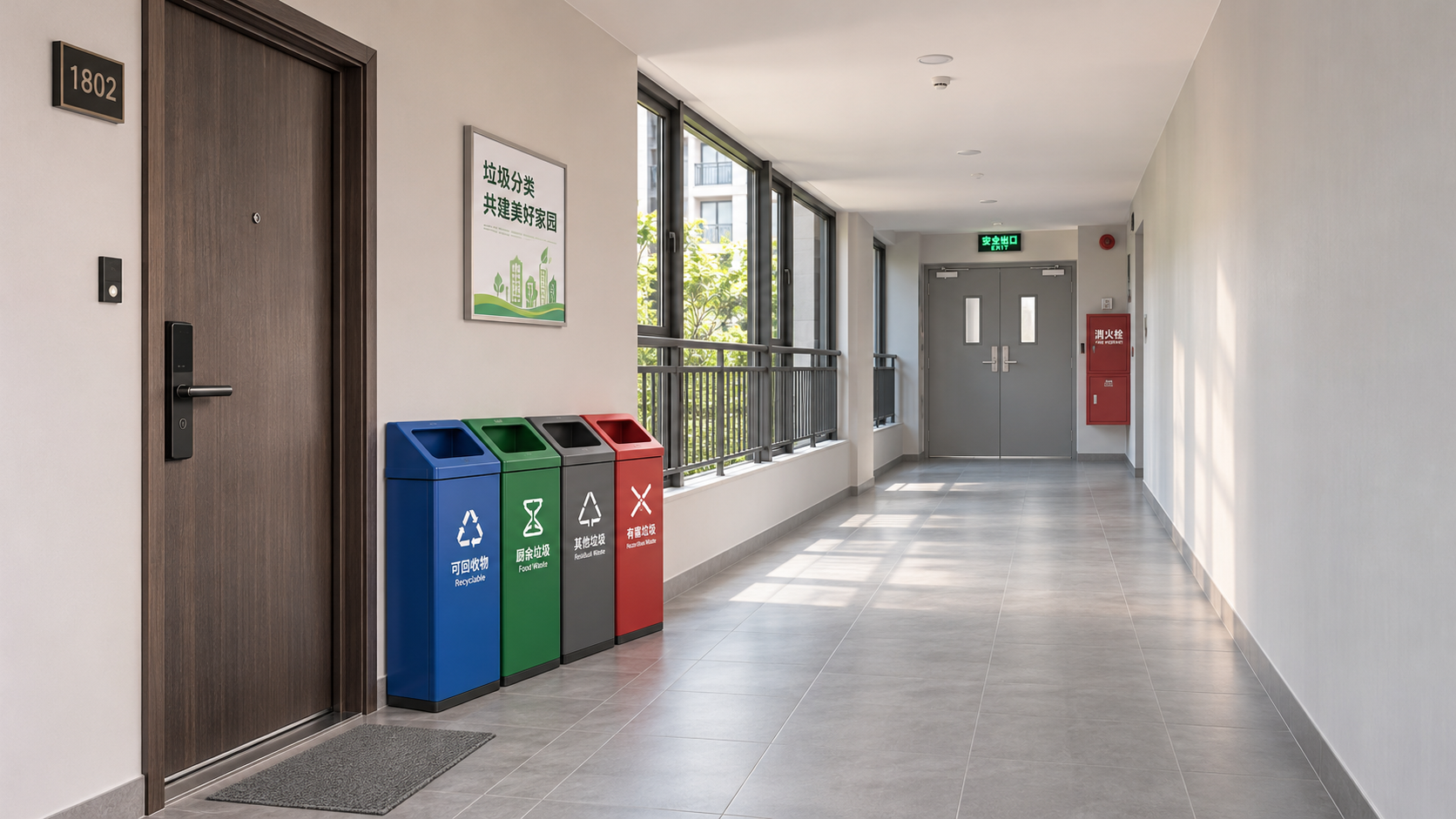
Waste requirements are often more specific than placing a bag in the nearest bin. Properties may separate recyclables, food waste and general rubbish, with collection areas and times set by the building or local authority. Flattening packaging, closing bags and keeping liquids out of shared containers can reduce spills and pests. Bulky furniture, batteries, electrical items and renovation debris may require a separate collection route rather than disposal with household rubbish.
Where waste is stored matters as much as the sorting. Leaving bags in a corridor until collection time can breach building rules and obstruct access. A full bin is not an invitation to leave items beside it; contact the person responsible for collection arrangements if the disposal area cannot be used safely.
Drainage rules protect more than a single apartment. Cooking grease can solidify in pipes, and wipes or sanitary products can contribute to blockages even when packaging suggests they are disposable. In a shared drainage system, a blockage or leak can affect several homes. Put grease and non-flushable items in the appropriate waste stream instead of relying on the drain to carry them away.
Water on a bathroom floor also deserves attention. A loose seal around a bath, failed grout or water escaping a shower enclosure can let moisture reach adjacent finishes. Wiping up a spill addresses the immediate water; recurring dampness calls for an inspection of the source. Report persistent leaks promptly, especially where pipework or waterproofing belongs to the building rather than the individual dwelling.
Repairs and Alterations: Responsibility Is Not Always Obvious
Living inside a property does not automatically give a resident authority to alter every component within it. A tap or appliance may be inside a private home, while the pipe serving it forms part of a shared system. Walls can contain electrical cables, drainage stacks or other services. In a multi-unit building, work that looks cosmetic can affect waterproofing, fire separation or sound insulation.
Before replacing bathroom tiles, for example, establish whether the existing waterproof layer will be disturbed. New grout alone should not be assumed to provide the function of a concealed waterproofing system. If a shower base, floor drain or wall lining is removed, the repair may need to extend beyond the visible finish. The property's approval process and local building requirements determine what work is permitted and whether qualified trades or inspections are required.
The same distinction applies to kitchens. Moving a sink or dishwasher changes the route and connection of water supply and drainage; replacing a cooker may involve electrical capacity, ventilation or a gas connection. A seemingly small change can require access to a shared shutoff or service area. Obtain any required written consent before work begins, and retain records of approved work and relevant maintenance.
Responsibility for a defect is a separate question from permission to repair it. A tenant may be required to report a leak without being responsible for replacing the affected pipe. An owner may be responsible for a fixture while the association maintains a shared riser. The lease, ownership documents and applicable law determine the allocation. When the source is unclear, describe the symptoms and location rather than assigning blame.
Balconies, Windows and Exterior Changes
Balconies are often part private space and part building envelope. Rules may address hanging laundry, storing combustible material, watering plants or installing screens. Water draining from a planter can damage the surface below or enter a neighbour's space; heavy containers also add load. Avoid drilling into balcony surfaces or railings without approval, since penetrations can damage waterproofing or compromise a fixing.
Exterior-facing changes can be restricted even when they are visible only from a private room. Window replacements, external blinds, satellite dishes and air-conditioning units may affect the facade, drainage, noise or structural fixings. Approval from a landlord or association does not necessarily replace any approval required by local authorities.
Balcony cooking and smoking rules deserve particular attention because the presence of an outdoor area does not establish that either activity is permitted. Review the applicable property rules and local restrictions before using a grill or storing fuel.
Smart Devices, Security and Privacy
Smart locks, doorbell cameras and leak sensors introduce questions about access, power and data as well as installation. A smart lock fitted to a rented door may need permission, particularly if it changes the cylinder or prevents required access for maintenance or emergencies. Before installation, establish how the door operates during a battery failure and whether an existing key or approved access method must remain available.
A camera aimed at a private entrance can also capture a shared corridor, a neighbour's doorway or public space. Property rules and privacy law may limit placement, recording or disclosure. Adjusting the field of view and disabling unnecessary audio recording can reduce intrusion, but these steps do not replace applicable consent or other legal requirements.
Keep device accounts protected and remove access when a household member, guest or service provider no longer needs it. When moving out, transfer or remove devices only in accordance with the agreement, and clear personal account connections. A device left physically in place may still retain access credentials or recordings.
Guests, Pets and Parking
Residential rules commonly extend to the conduct of guests. A visitor who blocks an entrance, causes repeated noise or leaves rubbish in a shared area can create an issue for the household that invited them. Short-term stays may be subject to separate lease, association or local restrictions; permission to have an overnight guest does not automatically permit paid accommodation.
Pet provisions can address registration, leads in common areas, waste disposal and nuisance noise. Some agreements restrict particular animals or require advance consent, although legal protections and exceptions may apply. A rule against pets should therefore be read in the context of applicable law and the specific agreement rather than treated as a complete answer to every situation.
Parking rights also vary. A numbered bay may be assigned to a particular home, while visitor spaces can have time limits or registration requirements. Charging an electric vehicle from a socket is a separate issue from having permission to park: the outlet, cable route and electrical installation need to be suitable and authorized. A cable across a walkway can create an obstruction even when the vehicle itself is parked correctly.
When a Rule Is Unclear or a Problem Occurs
Start with the specific issue. For a recurring leak, record where and when moisture appears, report it through the property's established channel and take reasonable steps to limit immediate damage if it is safe to do so. For a noise dispute, note the type of sound and the times it occurs; a plumbing vibration and loud music call for different responses. Keep photographs or correspondence where they help establish the facts, without recording more private information than necessary.
If a notice alleges a breach, identify the rule cited, the conduct in question and any stated process for responding. Ask for clarification or correction in writing when the facts are wrong or the obligation is unclear. Depending on the jurisdiction and property, there may be a formal complaint, dispute-resolution or appeal procedure. Urgent threats to life or safety should be reported through the appropriate emergency channel rather than left to a routine building complaint.
Good residential compliance is practical: use the current rules for the property, obtain permission where work affects shared systems or protected elements, and report problems before they spread beyond the home.
Industry Briefing
Get the top 5 industry headlines delivered to your inbox every morning.