
Shenzhen Home Expo to Add BRI Sourcing Zone
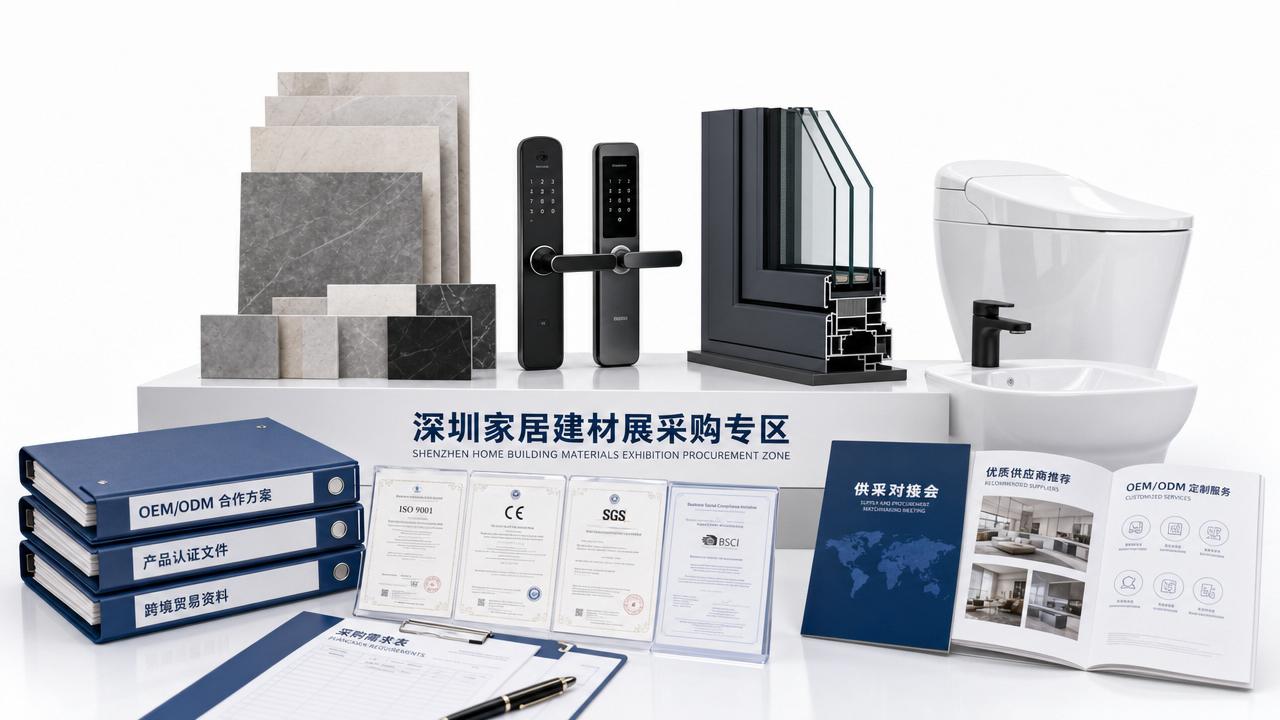
On June 19, 2026, the 54th Shenzhen International Home Decoration Expo is set to open at the Shenzhen Convention and Exhibition Center, running through June 22. For companies in tiles, sanitary ware, door and window systems, smart locks, export compliance, and OEM/ODM services, the most notable development is the event’s first dedicated Belt and Road sourcing zone, which points to a more structured link between product certification, overseas procurement demand, and transaction support.
A new procurement-focused feature at the 2026 expo
The 54th Shenzhen International Home Decoration Expo will be held in Shenzhen from June 19 to 22, 2026. The event is guided by the Ministry of Commerce and hosted by the Shenzhen Municipal Commerce Bureau.
This edition will, for the first time, introduce a dedicated Belt and Road sourcing zone. According to the provided event summary, the zone is reserved for products such as tiles, smart toilets, digital locks, and window systems that have obtained tripartite mutually recognized certification under China-ASEAN, China-Central Asia, and China-GCC arrangements.
The event will also provide one-stop export compliance consulting and OEM/ODM matching services. Confirmed overseas bulk procurement participants include Saudi Arabia’s SALAM Group, Kazakhstan’s KazBuild Procurement Center, and a total of 12 overseas centralized purchasing organizations.
Why this matters across the supply chain
Export-oriented manufacturers may face a higher bar on market readiness
From an industry perspective, manufacturers of tiles, sanitary products, smart access products, and window systems are likely to pay close attention because the new sourcing zone is not described as a general display area. It is tied to mutually recognized certification and supported by compliance and matching services, which suggests that product eligibility and export documentation may become more central to buyer engagement at the event.
For this group, the potential impact is concentrated in product qualification, buyer-facing materials, and factory coordination for OEM/ODM discussions. What deserves closer attention is whether their existing certifications, specifications, and delivery capabilities align with the requirements implied by the sourcing framework described in the event summary.
Procurement organizations may benefit from more concentrated supplier screening
For overseas procurement institutions and professional buyers, the sourcing zone could reduce preliminary screening time by concentrating products that already meet the stated certification condition. The addition of compliance consulting may also help connect sourcing decisions more directly with export execution.
Analysis shows that the practical effect for buyers is less about broader product variety and more about more efficient shortlisting, especially where procurement decisions depend on document readiness, manufacturing cooperation models, and cross-border fulfillment coordination.
Trade and compliance service providers could see demand shift toward execution support
Service providers involved in export procedures, supplier matching, and transaction support may also be affected. The event summary explicitly mentions one-stop export compliance consulting and OEM/ODM matching, indicating that the value chain around the exhibition is extending beyond display and negotiation into pre-deal and execution-stage support.
For these participants, the key business link is not product manufacturing itself, but document preparation, qualification review, communication support, and deal conversion assistance tied to cross-border orders.
What companies should watch before and during the event
Check whether product eligibility is clearly documented
Companies targeting the sourcing zone should focus first on whether their products fall within the categories mentioned in the event summary and whether the required mutually recognized certification can be clearly demonstrated in customer-facing materials. In this case, certification is not a background detail; it appears to be part of the access logic of the zone itself.
Separate policy signaling from immediate order expectations
Analysis shows that the launch of a dedicated sourcing zone is an actionable market signal, but not in itself proof of immediate sales conversion. Companies should distinguish between the event’s institutional design, the actual procurement intentions of participating organizations, and the time needed to move from exhibition contact to order fulfillment.
Prepare OEM/ODM discussions with delivery details, not just product catalogs
Because the event includes OEM/ODM matching services, suppliers may need to prepare for conversations that go beyond standard product display. What deserves closer attention is the readiness of specification sheets, production coordination information, lead-time communication, and fulfillment-related supporting documents that overseas buyers may request early in the process.
Follow any updated official wording or operational rules
Companies should also monitor whether organizers release more detailed explanations on participation rules, zone standards, or service procedures. The distinction between a broad policy-oriented label and the operational rules for actual participation may affect how suppliers prepare materials, assign teams, and schedule meetings with overseas procurement institutions.
How to read this signal at this stage
Observably, this development is best understood as a structured trade facilitation signal rather than a finished market outcome. The confirmed presence of 12 overseas procurement organizations and the creation of a sourcing zone tied to recognized certification show that the exhibition is emphasizing practical cross-border procurement conditions, not only product showcasing.
At the same time, it is more appropriate to understand this as an early-stage indicator of how trade-matching formats may evolve within the home improvement and building products segment. The deeper industry significance will depend on how effectively certification, compliance services, and OEM/ODM matching translate into repeatable procurement mechanisms after the event.
A short-term event with longer-term implications to monitor
In practical terms, this news matters because it links exhibition organization with export qualification, buyer access, and service support in a more explicit way than a standard trade fair announcement. For producers, buyers, and service firms, the immediate relevance lies in readiness for certified cross-border sourcing conversations rather than in assumptions about immediate market expansion.
At this stage, the announcement is better read as a directional signal with concrete business implications, but one that still requires follow-up observation. The most relevant question for the industry is not simply whether a new zone exists, but whether this format can turn certified product access and procurement matching into a durable channel for trade execution.
Basis of this article
This article is generated based on the user-provided news title, event date, and event summary. The confirmed factual basis includes the event schedule, organizer information, the first-time establishment of a Belt and Road sourcing zone, the product categories mentioned, the compliance and OEM/ODM support services, and the confirmed participation of overseas procurement organizations named in the input.
For this type of industry update, source categories that are typically relevant include official event announcements, government department releases, company statements, industry association updates, authoritative media coverage, and documentation from standards or certification bodies. A specific official source link was not provided in the input, so further verification remains necessary. What should continue to be watched is whether more detailed official information is released on certification scope, zone participation rules, and the practical outcomes of buyer-supplier matching during and after the event.
Industry Briefing
Get the top 5 industry headlines delivered to your inbox every morning.