CPSC Alert: Three China-Made Smart Toilets Pose Remote Access Risks
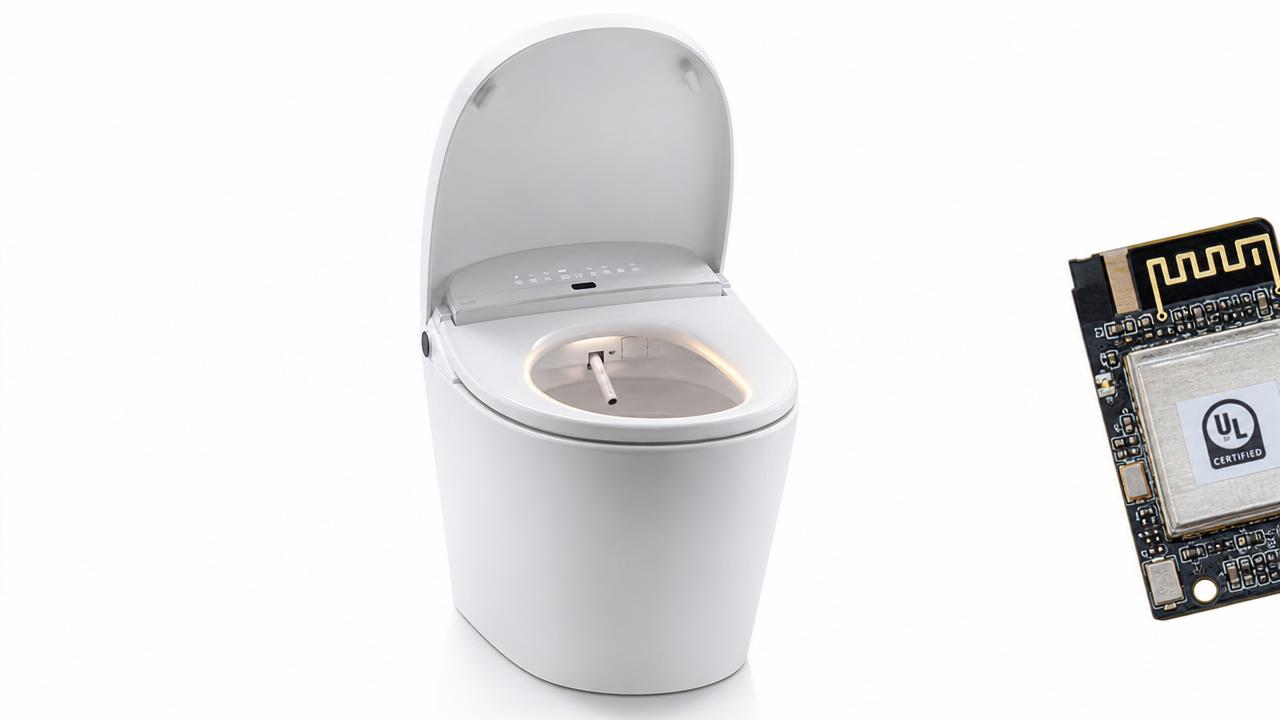
On May 28, 2026, the U.S. Consumer Product Safety Commission (CPSC) issued an urgent safety alert regarding cybersecurity vulnerabilities in three models of smart toilets manufactured in China. The notice highlights unauthorized remote control risks tied to missing UL 1083/UL 2085 certification — prompting immediate retail removal and voluntary recalls. This development warrants attention from exporters, smart home device manufacturers, North American importers, and third-party testing service providers, as it signals a tightening of cybersecurity compliance requirements for connected bathroom appliances in key consumer markets.
Event Overview
The U.S. Consumer Product Safety Commission (CPSC) published a Safety Alert on May 28, 2026, identifying three China-manufactured smart toilet models with unauthenticated remote access vulnerabilities. These products lack UL 1083 or UL 2085 certification. CPSC directed immediate off-shelf action and voluntary recall. In response, major North American home improvement retailers — including Home Depot and Lowe’s — have strengthened cybersecurity review protocols for smart bathroom products entering their distribution centers. All new smart toilet listings now require submission of third-party penetration testing reports prior to warehouse acceptance.
Industries Affected
Direct Exporters & OEM/ODM Manufacturers
Exporters and contract manufacturers supplying smart toilets to U.S. brands or retailers face heightened scrutiny on product firmware architecture and remote management interfaces. The CPSC alert directly targets non-certified models, meaning export-ready units must now demonstrate verified secure-by-design principles — not just functional compliance. Impact includes delayed shipments, increased pre-shipment verification costs, and potential loss of shelf space if documentation is incomplete.
North American Importers & Brand Owners
Importers and private-label brand owners distributing smart toilets in the U.S. are now subject to stricter due diligence obligations under CPSC guidance. The requirement for third-party penetration testing reports applies at the point of warehouse intake — shifting liability earlier in the supply chain. This increases administrative burden and may trigger contractual renegotiation with upstream suppliers over certification ownership and test report responsibility.
Third-Party Testing & Certification Service Providers
Testing labs and certification bodies accredited for UL 1083/UL 2085 — particularly those offering integrated cybersecurity assessments — are seeing rising demand for penetration testing services specific to IoT-enabled plumbing fixtures. However, no new CPSC-mandated standard has been issued; current enforcement relies on existing electrical safety standards interpreted to cover remote access risks. Demand growth is thus constrained by the scope of current accreditation and available technical expertise in smart bathroom device threat modeling.
What Stakeholders Should Monitor and Do Now
Track official updates to CPSC’s interpretation of UL 1083/UL 2085
The CPSC alert does not cite a newly adopted regulation but applies existing standards to remote functionality. Stakeholders should monitor whether CPSC issues formal guidance clarifying how UL 1083 (for electrically heated appliances) and UL 2085 (for electronic controllers) extend to networked features — especially cloud-connected control modules and mobile app integrations.
Review certification status and penetration test coverage for all smart toilet SKUs destined for U.S. retail
Brands and importers should audit existing product portfolios against UL 1083/UL 2085 certification validity and confirm whether penetration testing reports explicitly address remote command injection, authentication bypass, or insecure firmware update mechanisms. Reports accepted by Home Depot and Lowe’s must name the tested model, firmware version, and scope of remote interface evaluation.
Distinguish between policy signaling and enforceable requirements
This CPSC action functions primarily as a regulatory signal rather than a binding rule change. No new federal standard or mandatory reporting requirement has been enacted. Retailer-level policies (e.g., Home Depot’s penetration test mandate) are commercial decisions — not legal mandates — though they carry de facto compliance weight for market access.
Prepare documentation packages ahead of next shipment cycle
Manufacturers and exporters should compile UL certification documents, bill-of-materials with component-level certifications, and recent third-party penetration test reports — ensuring each report identifies the exact hardware/firmware configuration shipped. Proactive submission to import partners reduces clearance delays at distribution centers where automated compliance checks are increasingly deployed.
Editorial Perspective / Industry Observation
Observably, this CPSC alert reflects a broader trend: regulatory agencies are applying legacy electrical safety frameworks to emerging IoT functionalities — especially where physical safety intersects with digital vulnerability. Analysis shows that while no new standard has been introduced, CPSC is treating unsecured remote control as a foreseeable hazard under its statutory authority. From an industry perspective, this is less a one-off enforcement action and more a leading indicator of how connected household appliances will be assessed in future safety reviews. It is currently better understood as a signal — not yet a codified requirement — but one with immediate operational consequences for market access.
This incident underscores that cybersecurity is no longer a software-only concern for smart home devices. For smart toilets — which integrate water valves, heating elements, and motorized seats — remote exploits can pose tangible physical safety risks. As such, CPSC’s interpretation aligns with evolving global expectations around secure-by-design practices for consumer IoT, even in traditionally low-tech categories.
Current understanding should focus on implementation readiness, not regulatory novelty. The alert confirms that North American retailers are acting as de facto gatekeepers for IoT security compliance — accelerating adoption of technical due diligence well ahead of formal rulemaking.
Conclusion: This CPSC action marks a material shift in how connected bathroom products are evaluated for U.S. market entry — moving beyond electrical safety alone to include verifiable safeguards against unauthorized remote interaction. It is not yet a legislative mandate, but it is already shaping commercial requirements at the distribution level. Stakeholders should treat it as an operational benchmark, not a theoretical risk.
Source: U.S. Consumer Product Safety Commission (CPSC) Safety Alert, May 28, 2026. Note: CPSC has not published updated regulatory text or formal guidance extending UL 1083/UL 2085 to remote access controls as of publication date; ongoing monitoring of CPSC announcements and retailer policy updates is advised.
Industry Briefing
Get the top 5 industry headlines delivered to your inbox every morning.