
Red Sea Disruption Extends Range Hood Lead Times
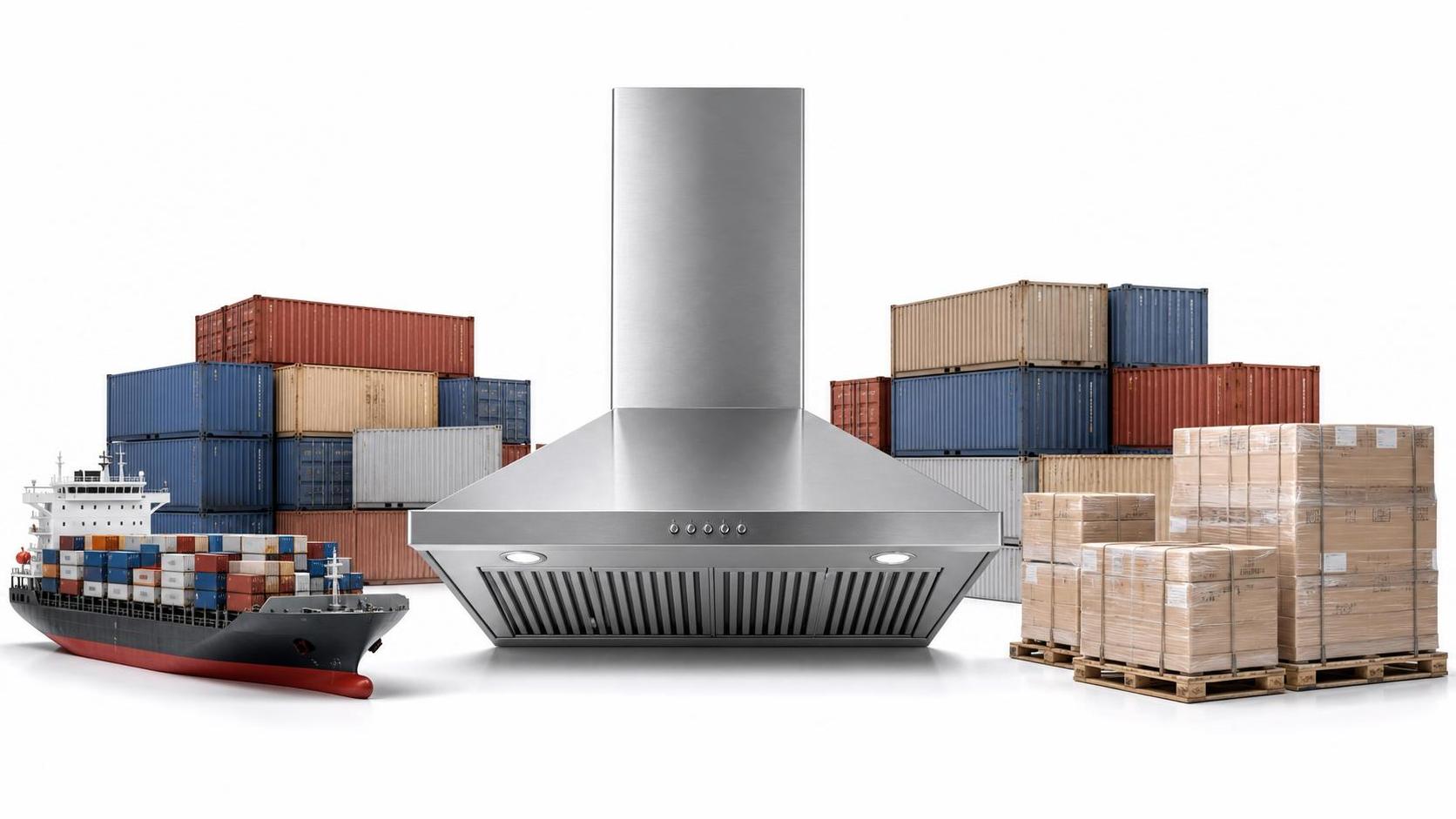
The timing of the underlying incident was not specified in the provided information, but the latest data point to a sharper logistics strain on the Asia-Europe trade. For companies involved in exporting, distributing, sourcing, and delivering range hoods, the issue is no longer limited to higher freight rates: it now directly affects booking certainty, loading schedules, and inventory planning across the route from East China to major European hubs.
Freight and booking pressure is now visible in the route data
According to combined data cited from the Shanghai Shipping Exchange and Alphaliner, spot freight rates on major Asia-Europe trunk routes including FE2 and AE10 reached $4,850 per TEU on July 11, 2026, up 42% from June. At the same time, range hood containers moving from ports in East China to Rotterdam and Hamburg have seen the average space confirmation cycle extend to 21 days. Actual loading delays have reached 10 to 14 days. The stated drivers are rerouting via the Cape of Good Hope and concentrated vessel scheduling. The provided information also states that multiple international kitchen appliance distributors have already launched backup stocking plans through secondary ports in Southeast Asia.
Where the pressure is likely to be felt along the chain
Exporters are facing a longer gap between order readiness and shipment execution
From an industry perspective, range hood exporters are likely to feel the most immediate impact in shipment planning. A longer booking confirmation cycle means production completion and container departure may no longer line up as expected. What deserves closer attention is whether customer delivery commitments, especially for Europe-bound cargo routed through Rotterdam and Hamburg, can still be managed within existing timelines.
Distributors and channel operators may need to rebalance inventory decisions
Observably, the reported move by some international kitchen appliance distributors to prepare stock through secondary ports in Southeast Asia signals concern over continuity of supply rather than price alone. For channel-side businesses, the main issue is whether replenishment windows remain reliable enough to support normal sales and warehouse turnover plans.
Supply chain service providers will be under pressure on coordination rather than transport alone
For freight forwarders, booking agents, and logistics coordinators, the impact likely sits in schedule management, space allocation, and communication frequency. A longer confirmation period combined with actual loading delays can create repeated changes in shipping plans, document timing, and customer expectations, even when cargo is ready to move.
Operational points companies should watch now
Track booking lead time separately from transit expectations
Analysis shows that the 21-day space confirmation cycle and the 10 to 14-day loading delay are two different operational signals. Companies should avoid treating them as one blended delay. The first affects booking access and planning certainty; the second affects actual departure execution.
Recheck delivery commitments tied to North European destinations
Because the provided information specifically mentions shipments from East China to Rotterdam and Hamburg, businesses serving those gateways should review whether customer-facing delivery windows still reflect current vessel allocation conditions. This is especially relevant where shipment timing is contract-sensitive or tied to downstream promotions and replenishment cycles.
Prepare customer communication around scheduling volatility, not just freight cost
What deserves closer attention is that the market signal here is broader than a freight increase. A 42% rise in spot rates is material, but the booking and loading delays may create more immediate commercial friction. Exporters and service teams should therefore prepare communication around schedule risk, revised dispatch timing, and contingency handling.
Watch the practical implications of alternative port stocking plans
The mention of backup stocking plans through secondary Southeast Asian ports indicates that some market participants are already testing flexibility outside their usual flow. Observably, the point to watch is not whether this becomes a universal shift, but whether such contingency arrangements begin to influence booking priorities, inventory placement, and regional fulfillment decisions.
Why this matters beyond a single freight spike
Analysis shows that this development should not be read only as a short-lived freight price movement. The combination of higher spot rates, longer booking confirmation, and measurable loading delay suggests a broader reliability issue on the Asia-Europe corridor for this product flow. At the same time, it is too early to treat the adjustment in distributor stocking plans as a settled structural change, because the provided information confirms response measures but does not establish their long-term effect.
How this update is best understood at this stage
It is more appropriate to understand this as an active logistics stress signal with direct commercial implications for range hood exports to Europe. The confirmed facts already point to cost pressure and delivery friction, but the longer-term industry meaning still depends on whether booking delays and rerouting-related disruption persist. For now, this is best read as a development that requires continued operational monitoring rather than a completed market reset.
Basis of this article and what still needs verification
This article is based on the user-provided news title, the note that the event timing was not clearly specified, and the supplied event summary. The specific official source link was not provided in the input, so further verification remains necessary. For this type of industry update, relevant source categories would typically include official shipping exchange releases, company announcements, industry association updates, authoritative media reporting, and documentation from standard-setting or market-tracking organizations. The key follow-up areas to monitor are whether freight levels on the Asia-Europe trunk routes remain elevated, whether booking confirmation periods continue to lengthen, and whether contingency stocking through secondary Southeast Asian ports becomes more widely adopted.
Industry Briefing
Get the top 5 industry headlines delivered to your inbox every morning.