CPSC Launches Probe on Smart Toilet Seat Thermal Surge
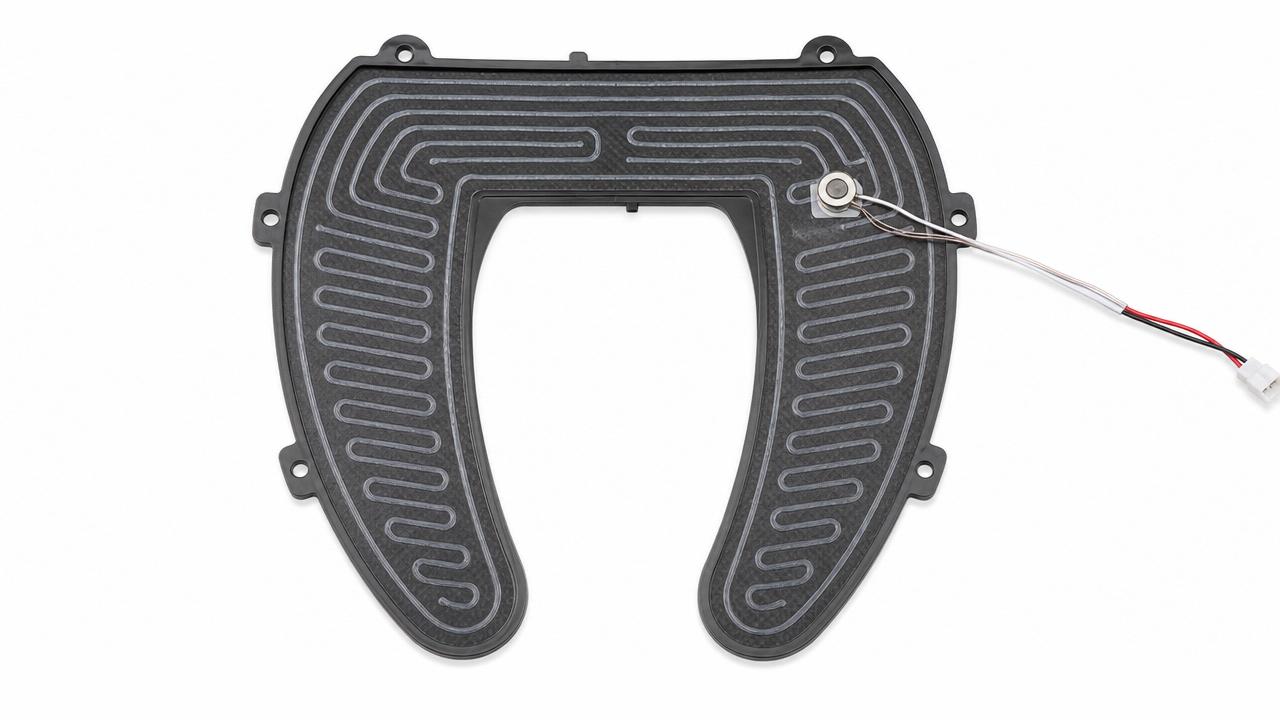
U.S. Consumer Product Safety Commission (CPSC) launched a formal safety investigation on May 10, 2026, targeting rapid temperature rise in smart toilet seat cushions — a development with immediate implications for global smart bathroom hardware exporters, component suppliers, and certification service providers.
Event Overview
The U.S. Consumer Product Safety Commission (CPSC) initiated a formal investigation on May 10, 2026, focusing on ‘thermal surge’ — defined as a surface temperature increase exceeding 15°C per second within 30 seconds of power-on — in smart toilet seat cushions. The agency has preliminarily identified 23 Chinese manufacturers. If a defect is confirmed, mandatory recalls may follow, alongside implementation of new supplemental test requirements under UL 4351-2026. These updated requirements are expected to take effect as a de facto market access threshold in North America starting Q3 2026.
Industries Affected
Direct Exporters & Trade Enterprises: Companies exporting smart toilet seats directly to the U.S. face heightened compliance risk. Affected firms may experience shipment holds, customs delays, or rejection at port if products lack verifiable thermal response documentation. Post-investigation, even non-named brands may undergo increased scrutiny during entry — particularly those sharing similar PCB designs or heating module suppliers.
Raw Material & Component Procurement Firms: Suppliers of heating elements (e.g., carbon-fiber pads, PTC ceramic modules), thermistors, and control ICs will encounter tighter specification demands. Buyers are likely to request pre-certified thermal ramp profiles and third-party validation reports — shifting procurement criteria from cost and lead time toward traceable thermal performance data.
OEM/ODM Manufacturing Facilities: Factories producing assembled units must now integrate real-time thermal mapping into functional testing lines. Process validation will extend beyond steady-state temperature checks to include sub-second thermal transient logging — requiring upgrades to test equipment and operator training. Non-compliant production batches risk quarantine or rework.
Supply Chain Service Providers: Certification consultants, lab testing partners, and logistics compliance officers will see rising demand for UL 4351-2026 gap assessments and accelerated thermal transient verification. Services tied solely to legacy standards (e.g., UL 499 or IEC 60335-1 Annex BB) are no longer sufficient; capability in dynamic thermal characterization becomes a differentiator.
Key Focus Areas & Recommended Actions
Verify thermal ramp behavior across product variants
Manufacturers should conduct internal thermal transient tests — measuring surface temperature every 100 ms for at least 30 seconds post-power-on — across all SKUs, including low-voltage and firmware-upgraded models. Relying solely on nominal ‘max temp’ ratings is insufficient.
Review supplier documentation for heating modules
Procurement teams must request time-resolved thermal response curves (not just datasheet max ΔT/min) from heating element vendors. Contracts should specify accountability for thermal surge compliance — especially where modules are sourced from shared Tier-2 suppliers.
Engage labs with UL 4351-2026 draft protocol experience
While the final standard is pending, several accredited labs are already offering pre-assessment using CPSC’s published test parameters. Early engagement helps identify design-level fixes (e.g., PWM duty cycle limits, thermal buffer layers) before full certification cycles begin.
Update technical files for FDA/CPSC portal submissions
For firms registered in the CPSC’s SaferProducts.gov database, technical documentation must now explicitly address transient thermal behavior — including test methodology, sensor placement rationale, and worst-case scenario assumptions. Omission may delay review timelines.
Editorial Perspective / Industry Observation
Observably, this investigation signals a regulatory pivot from static safety thresholds to dynamic system behavior — a trend increasingly visible in IoT-enabled appliances. Analysis shows CPSC is treating ‘thermal surge’ not as a failure mode, but as an inherent interaction between firmware logic, power delivery, and material thermal mass. From an industry standpoint, this shifts design responsibility upstream: firmware developers and thermal engineers now share equal accountability with hardware designers. Current more critical concern is not just meeting UL 4351-2026, but demonstrating that thermal transients were intentionally bounded — not merely tolerated.
Conclusion
This action reflects a broader recalibration of safety expectations for connected personal care devices: predictability of behavior matters as much as ultimate operating limits. For manufacturers, it marks the end of ‘compliance by proxy’ — where conformity to legacy standards was assumed to cover emerging risks. A rational interpretation is that thermal transient management is now a core product requirement, not an afterthought. Long-term resilience lies in embedding thermal modeling early in the design phase, not retrofitting for compliance.
Source Attribution
Primary source: U.S. CPSC Investigation Notice #CPSC-2026-0087 (issued May 10, 2026); UL Standards Group Draft Revision UL 4351-2026 (v0.9, circulated April 2026). Note: Final UL 4351-2026 publication date and enforceability timeline remain pending CPSC’s investigation outcome and public comment period — subject to ongoing monitoring.
Industry Briefing
Get the top 5 industry headlines delivered to your inbox every morning.