EU CE Rule Takes Effect for Smart Toilets
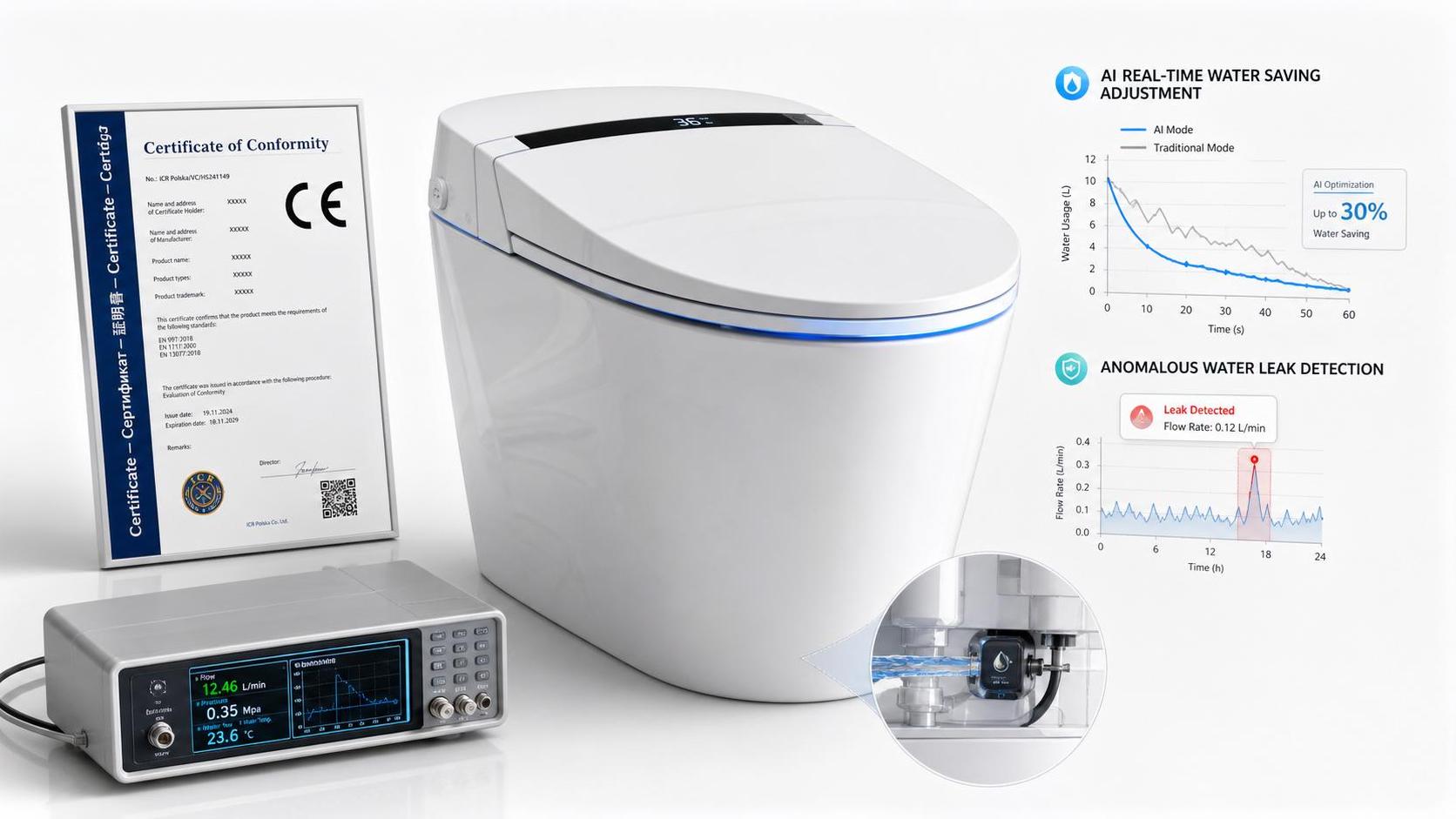
On July 15, 2026, a new EU CE compliance requirement took effect for Smart Toilets placed on the EU market. The change follows the publication of Regulation (EU) 2026/1183 in the Official Journal of the European Union on July 14 and makes compliance with EN 14839-2:2026 mandatory, including certification for AI-based real-time water-use adjustment and abnormal leak detection. This matters not only for manufacturers, but also for exporters, import-side compliance teams, authorized representatives, and delivery planning, because market access, customs clearance, and document readiness are now directly tied to the updated rule.
What changed as of July 15
According to the information provided, Regulation (EU) 2026/1183 was published in the OJEU on July 14, 2026, and from July 15, 2026, all Smart Toilets placed on the EU market are required to comply with the revised EN 14839-2:2026 standard.
The updated standard adds certification requirements for two functions: AI-driven dynamic adjustment of real-time water use and abnormal leak recognition.
The provided information also states that this certification change directly affects customs access for Chinese exporters and requires updates to compliance files maintained by EU authorized representatives.
Products that do not obtain the required certification will be intercepted by customs and may trigger ECHA notification.
Where the pressure points now sit in the supply chain
Export shipments now face a document-first market entry test
For exporters shipping Smart Toilets to the EU market, the immediate impact is at the point of customs access. Because the new requirement is described as mandatory from July 15, shipment eligibility is no longer only a product specification issue; it is also a file-completeness and certification-readiness issue. What deserves closer attention is whether goods prepared under earlier compliance assumptions can still move without interruption once customs checks begin applying the updated requirement.
Manufacturing teams need to align product functions with certification scope
For manufacturers, the rule change is tied to product functionality rather than labeling alone. Analysis shows that any Smart Toilet intended for the EU market now needs to be reviewed against the newly added AI-based water-efficiency and leak-recognition certification elements. This can affect technical file preparation, internal validation sequencing, and handoff between product development and compliance functions, even where production is already underway.
EU authorized representatives and compliance managers must refresh formal files
The event summary specifically notes the need to update compliance documentation held by EU authorized representatives. From an industry perspective, this places immediate pressure on document governance: declarations, supporting technical materials, and certification-related records may need to reflect the revised EN 14839-2:2026 requirement. The key point is not simply that a rule was announced, but that file accuracy becomes part of continued market access.
Procurement, distribution, and delivery planning may need tighter control points
For buyers, distributors, and supply-chain service providers, the operational issue is timing. If uncertified products are stopped at customs, then delivery schedules, stocking plans, and downstream commitments can be affected even before any end-market sale occurs. Observably, the rule change should be read as a compliance checkpoint that may alter order confirmation, shipment release, and supplier qualification review for Smart Toilet products intended for the EU.
What companies should review immediately
Check whether existing CE files reflect EN 14839-2:2026
Companies involved in EU-bound Smart Toilet business should review whether their current CE-related documentation already reflects the revised EN 14839-2:2026 requirement. Based on the provided facts, this is especially relevant where goods are close to shipment or already in the delivery pipeline.
Verify whether AI water-use and leak-detection functions are covered in certification work
The updated requirement expressly adds certification around AI-driven real-time water-use adjustment and abnormal leak recognition. Analysis shows that businesses should not assume prior testing or prior conformity work automatically covers these newly specified functions. The practical issue is whether the relevant technical and certification scope has been matched to the revised standard.
Review authorized representative file updates and trade paperwork
Because the summary points to both EU authorized representative file updates and customs access consequences, companies should pay close attention to whether internal and external compliance holders are working from the same version set of documents. This is particularly relevant for export declarations, product compliance packets, and market-entry paperwork used across handover points.
Track how enforcement language translates into daily execution
The provided information confirms mandatory effect and customs interception risk, but it does not include detailed operational guidance on how all checkpoints will be applied in practice. For that reason, companies should continue to monitor official wording, implementation practice, and any market-facing documentation changes that may affect shipment timing, customer acceptance, or after-sales traceability.
Why this reads as an execution signal, not just a standards update
Analysis shows that this development is more appropriately understood as an implemented market-access condition rather than a distant policy direction. The key reason is that the change is linked directly to mandatory compliance from a stated date, customs interception for non-certified products, and ECHA notification exposure. At the same time, it would be premature to treat every practical enforcement detail as fully settled, because the input does not provide broader execution guidance beyond the core requirement and consequences.
From an industry perspective, the most relevant observation is that the compliance boundary has moved from general CE maintenance to a more specific and function-linked certification expectation. That changes the discussion for affected businesses from policy awareness to shipment readiness and documentation control.
How the market should read the change now
At this stage, the event is best read as a rule already in force with immediate implications for EU market placement of Smart Toilets. The most direct significance lies in compliance access, customs treatment, and document updates rather than in broad market forecasting. A neutral reading is that businesses exposed to this product category should treat the development as an active execution requirement while continuing to watch how certification practice and enforcement wording are applied in day-to-day trade and compliance workflows.
Basis of this article and what still needs verification
This article was generated based on the user-provided news title, event date, and event summary. The summary identifies the OJEU publication of Regulation (EU) 2026/1183, the July 15, 2026 effective date, the mandatory application of EN 14839-2:2026 for Smart Toilets placed on the EU market, the added AI-related certification elements, and the stated customs and ECHA consequences for non-certified products.
For this type of development, commonly relevant source categories may include official notices, regulator publications, customs or trade authority information, industry association updates, standards organization documents, and reporting by established trade media. A specific official source link was not provided in the input, so further verification remains necessary.
What still requires continued observation includes any detailed implementation language, certification interpretation in practice, changes to tender or procurement documentation, market feedback, and how affected companies update their compliance and execution processes.
Industry Briefing
Get the top 5 industry headlines delivered to your inbox every morning.