EU EMC Rule Takes Effect for Smart Toilets
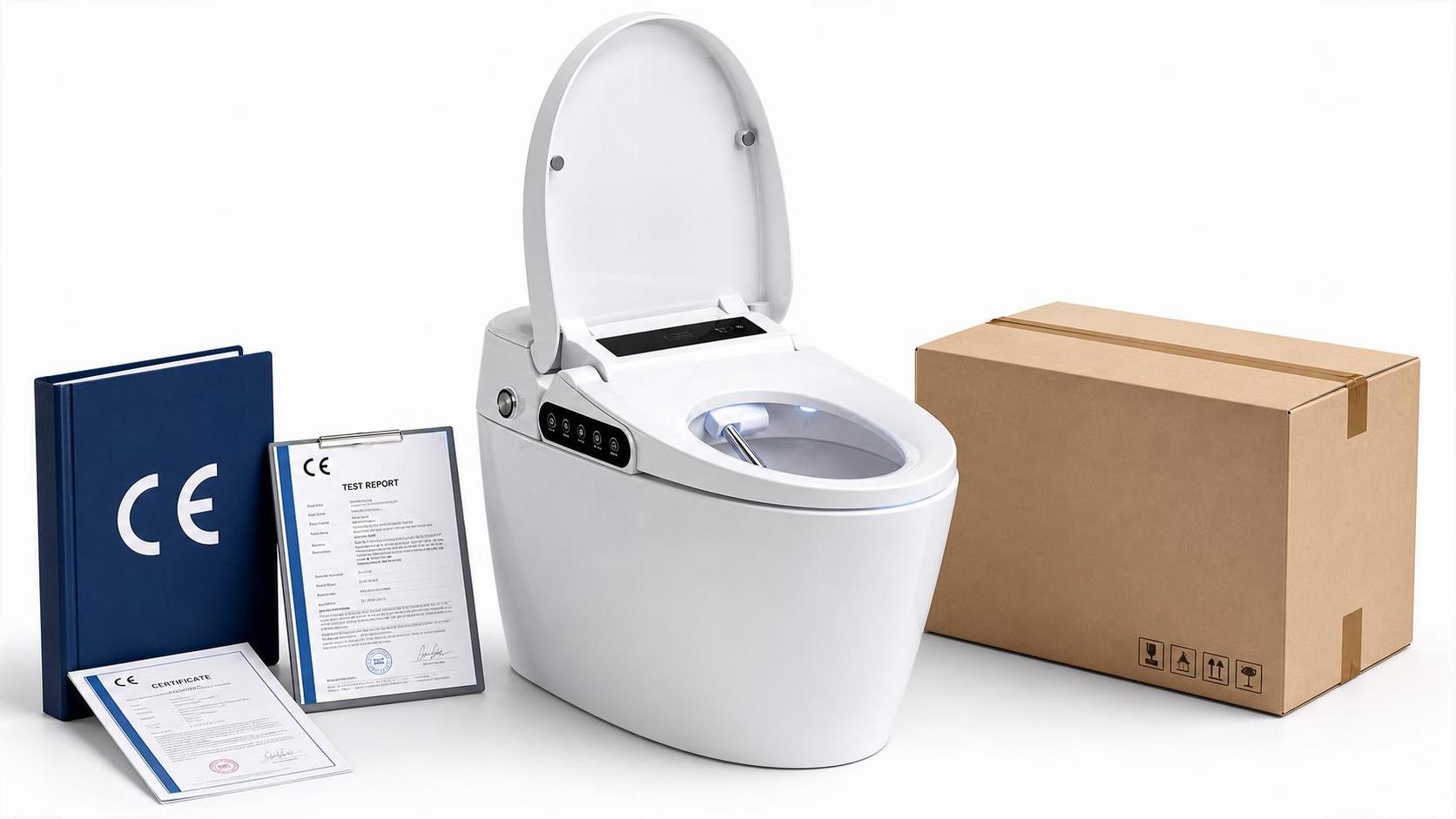
From August 1, 2026, smart toilets placed on the EU market must fall within the mandatory EMC certification scope of EN 17492:2026 under the CE compliance framework. The change follows the publication of Regulation (EU) 2026/1389 in the Official Journal of the European Union on July 27, 2026, and it deserves close attention from manufacturers, exporters, distributors, and supply chain teams involved in electronically equipped toilet products, because products without the required certification will not be allowed to clear customs or be sold in the EU.
What Has Officially Changed
According to the information provided, Regulation (EU) 2026/1389 was published in the OJEU on July 27, 2026, formally bringing smart toilets into the mandatory electromagnetic compatibility certification scope of EN 17492:2026, with effect from August 1, 2026.
The rule applies to smart toilet seats and integrated smart toilet systems placed on the EU market if they include electronic control, heating, washing, or sensing functions.
The stated consequence is direct: products that have not obtained the required certification will be barred from customs clearance and sale in the EU market.
Where the Immediate Pressure Falls
Export-facing manufacturers now face a compliance gate
From an industry perspective, the most direct impact falls on manufacturers supplying the EU market, especially those exporting smart toilets from China. The reason is straightforward: the compliance path is no longer optional for the covered product categories. The business impact is likely to concentrate in model qualification, shipment readiness, and documentation alignment before goods move into the EU market.
What deserves closer attention is whether existing product portfolios include functions such as electronic control, heating, washing, or sensing, because those features determine whether a product falls within the rule as described in the provided information.
Distributors and listing plans are exposed to timing risk
EU distributors and overseas channel operators may be affected because the rule links compliance directly to market access. If a product lacks the required certification, the issue is not limited to technical paperwork; it can interrupt listing schedules and sales preparation.
Observably, the key business pressure for this group is likely to appear in product onboarding, SKU launch planning, and coordination with upstream suppliers on proof of compliance.
Supply chain and delivery coordination may tighten
Supply chain service providers, sourcing teams, and cross-border fulfillment participants may also need to adjust. Analysis shows that once customs clearance becomes conditional on certification, the practical pressure often shifts to document completeness, shipment timing, and handoff coordination between factories, exporters, and channel partners.
Based on the provided facts, the issue to watch is not a broad market change in every bathroom product category, but a targeted compliance requirement for the smart toilet products covered by the rule.
What Companies Should Track Now
Confirm which products fall within scope
The first practical issue is product mapping. Companies should distinguish clearly between products covered by the rule and products outside the described scope, using the functions listed in the provided information: electronic control, heating, washing, or sensing. This matters because scope definition will affect compliance sequencing, internal planning, and customer communication.
Separate formal rule status from commercial assumptions
Analysis shows that businesses should avoid treating this only as a market signal or a future policy direction. The information provided describes an effective date of August 1, 2026, and states that non-certified products will be blocked from customs clearance and sale. That makes the operational consequence more immediate than a preliminary consultation or draft-stage notice.
Review document readiness across shipments and listings
For teams handling export execution and channel launch, a key focus is whether supporting certification materials and related product records are ready when goods are prepared for customs and when distributors prepare listings. The core issue here is continuity between compliance evidence and actual go-to-market timing.
Prepare for closer customer and supplier communication
What deserves closer attention is coordination across factories, exporters, and overseas distributors. Where shipment plans, launch calendars, or procurement decisions are already underway, the new requirement may trigger requests for updated compliance confirmation, revised delivery expectations, or contingency arrangements if certification is not yet in place.
Why This Looks Like More Than a Passing Notice
Observably, this development is better understood as an enforceable market-access change than as a symbolic standards update. The reason is that the provided information links the rule not only to certification scope, but also to customs clearance and sales eligibility.
At the same time, analysis should remain disciplined. Based on the provided material alone, it would be premature to extend the conclusion into broader claims about demand shifts, price effects, or structural changes across the wider sanitary ware market. What can be said with confidence is narrower: for smart toilets sold into the EU, EMC compliance under EN 17492:2026 has moved into the category of immediate commercial relevance.
How the Industry Should Read This Moment
It is more appropriate to understand this as a short-term compliance trigger with longer-term signaling value. In the short term, the consequence is concrete and procedural: covered smart toilet products without the required certification cannot proceed normally into the EU market. In the longer term, the move signals that electronically equipped sanitary products are being treated with closer regulatory attention where market access is concerned.
For industry participants, the balanced conclusion is not to overstate the change, but also not to treat it as routine paperwork. The practical importance lies in how quickly companies can align product scope, certification status, shipment documents, and distributor expectations with the rule now in force.
Basis of This Article and What Still Needs Verification
This article is based on the user-provided news title, event date, and event summary concerning Regulation (EU) 2026/1389, the OJEU publication date of July 27, 2026, the August 1, 2026 effective date, the inclusion of smart toilets within the EN 17492:2026 EMC mandatory certification scope, the covered product functions, and the stated consequence for customs clearance and sales.
For this type of industry update, relevant source categories typically include official government or regulatory notices, company announcements, industry association releases, authoritative media reporting, and standards-related documents. No specific official source link was provided in the input, so the precise official reference path still requires continued verification. Follow-up attention should remain on any subsequent official clarifications, implementation wording, and compliance-related communication affecting market entry and distribution execution.
Industry Briefing
Get the top 5 industry headlines delivered to your inbox every morning.