
EU Requires EN 17492:2026 for Smart Toilets
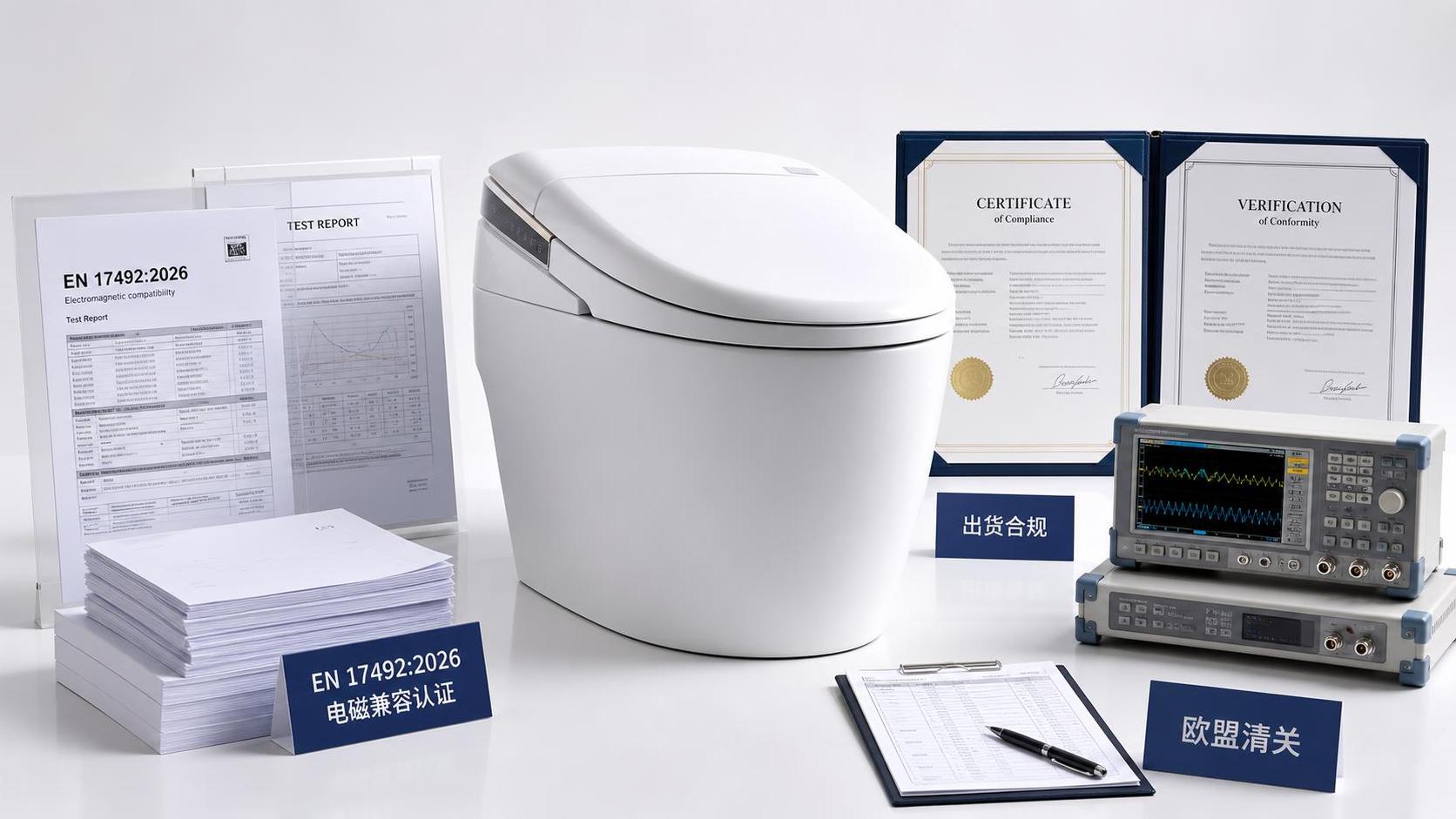
From August 1, 2026, smart toilets entering the EU market must comply with the mandatory EN 17492:2026 electromagnetic compatibility standard, according to a notice published in the Official Journal of the European Union on July 28, 2026. For exporters, manufacturers, certification-related teams, and supply chain partners, the issue is not only regulatory compliance but also whether products can clear customs on schedule, making this a practical development with immediate relevance for delivery planning and market access.
What the new EU notice confirms
The confirmed facts are clear. The OJEU published a notice on July 28, 2026 stating that, starting on August 1, 2026, all smart toilets placed on the EU market must meet EN 17492:2026 for electromagnetic compatibility. Products without this certification will be refused customs clearance.
The new requirement replaces the previous EN 55014 series for this product area. The update also adds testing requirements for radio-frequency immunity and standby power consumption of smart modules.
Where the pressure is likely to appear first
Export-facing product compliance
From an industry perspective, direct trading companies are likely to feel the impact first because customs clearance is explicitly tied to certification status. The most immediate business effect may appear in shipment readiness, document preparation, and confirmation that product models intended for the EU match the new standard requirement.
Manufacturing and product testing cycles
For manufacturers, the change may affect the testing and compliance preparation stage before shipment. Analysis shows that the newly added radio-frequency immunity and smart-module standby power testing requirements deserve close attention because they may influence whether existing product configurations can move through certification without delay.
Delivery coordination across the supply chain
Supply chain service providers and channel partners may also need to watch timing risks more closely. Observably, when certification becomes a customs-gate condition, handover planning, lead-time coordination, and communication around delivery dates can become more sensitive, especially for products already scheduled for the EU market.
What companies should track now
Check product scope against the new mandatory standard
Companies handling smart toilet exports to the EU should first verify which product models fall within the scope of the new mandatory EN 17492:2026 requirement and whether existing compliance work was prepared under the replaced EN 55014 series.
Review testing and documentation readiness
What deserves closer attention is whether current technical files, certification materials, and test arrangements reflect the newly added radio-frequency immunity and smart-module standby power requirements. In practice, this is likely to affect pre-shipment review and customs documentation preparation.
Reassess delivery timelines and contract execution
Because uncertified products may be refused customs clearance, exporters and suppliers should closely review order schedules, shipment windows, and delivery commitments linked to the EU market. The practical issue is not only meeting the rule itself, but also avoiding timeline mismatches between testing, certification completion, and shipment release.
Maintain clear communication with customers and partners
For customer-facing teams, it is important to distinguish between a published regulatory requirement and the operational readiness of each shipment. Analysis shows that buyer communication, supplier coordination, and internal planning should all reflect the August 1, 2026 effective date and the possibility of compliance-related delivery adjustments.
Why this reads as more than a routine standards update
This section is an editorial observation. It is more appropriate to understand this development as an immediate compliance change with broader signaling value, rather than as a distant policy trend. The reason is straightforward: the notice sets a clear effective date, names a mandatory standard, and links non-compliance directly to customs refusal.
At the same time, this should not be overstated beyond the confirmed facts. Based on the available information, the market impact still needs to be assessed through actual certification execution, shipment arrangements, and any further official clarification around implementation.
How the industry may best interpret this stage
In summary, the update matters because it converts electromagnetic compatibility compliance for smart toilets in the EU market into an immediate market-access condition under EN 17492:2026. For businesses connected to export, manufacturing, compliance, and delivery, the near-term priority is execution: certification status, testing scope, documentation readiness, and shipment timing.
At this stage, it is more appropriate to understand the development as a confirmed short-term operational requirement that may also signal tighter product compliance expectations going forward. The most reasonable industry response is continued monitoring combined with concrete preparation, rather than assumption or delay.
Basis of this article and points for continued verification
This article is based on the user-provided news title, event date, and event summary. The confirmed information used here comes from the described OJEU notice, the stated August 1, 2026 effective date, the mandatory application of EN 17492:2026 to smart toilets entering the EU market, the replacement of the EN 55014 series, and the addition of radio-frequency immunity and smart-module standby power testing requirements.
For this type of industry update, commonly relevant source categories may include official notices, standardization documents, company compliance disclosures, industry association information, and reporting by authoritative media. A specific official source link was not provided in the input, so the exact link still requires ongoing verification. Follow-up attention should focus on any further official wording, implementation details, and how certification timing affects actual shipment and customs processes.
Industry Briefing
Get the top 5 industry headlines delivered to your inbox every morning.