
EU Requires Digital Water Labels for Smart Toilets
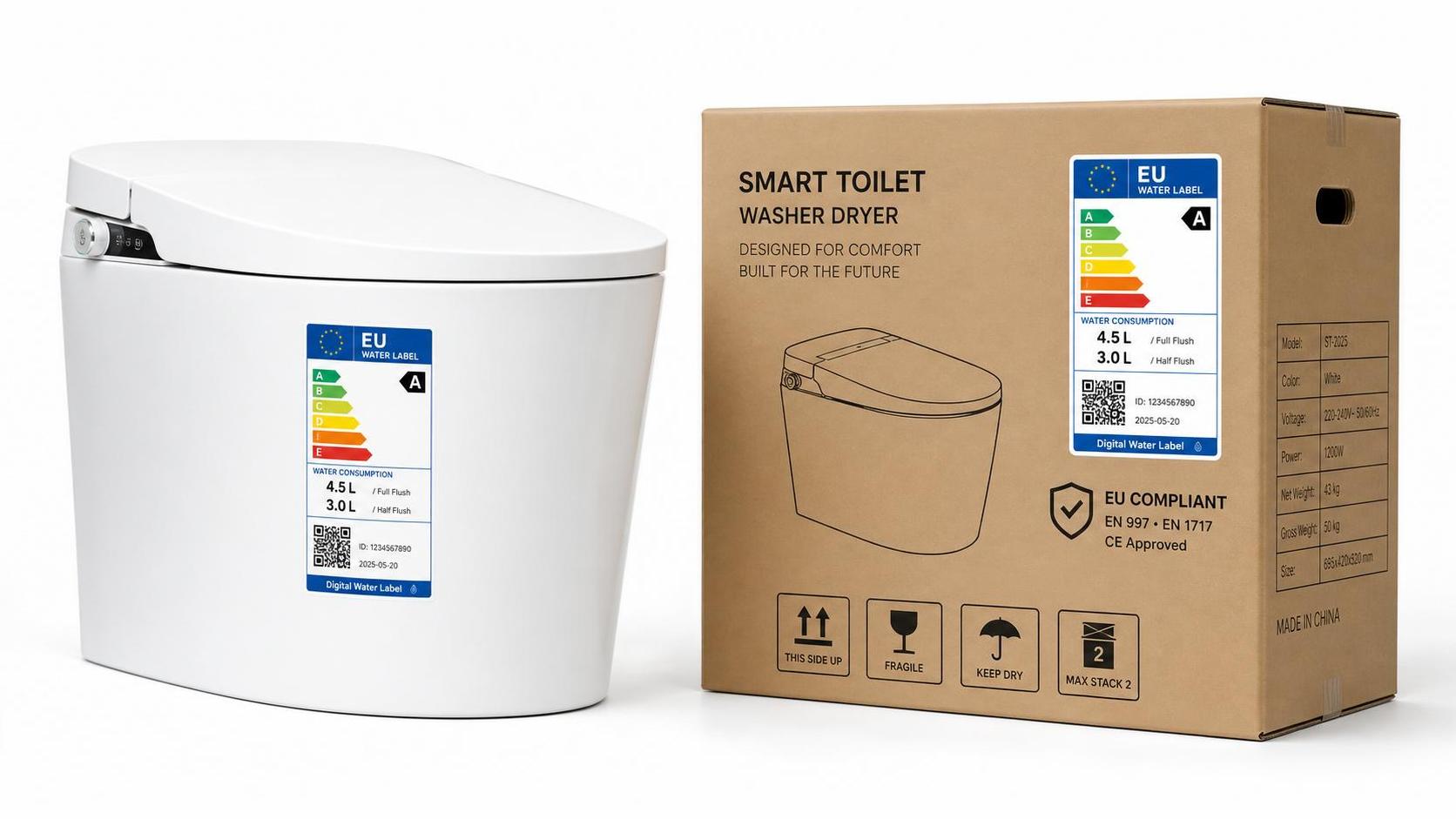
On July 9, 2026, the European Commission released Implementing Regulation (EU) 2026/1342, introducing a new compliance requirement for Smart Toilets entering the EU market. From August 1, 2026, these products must carry a dynamic QR-code water-efficiency label on both the product itself and its packaging, linking to real-time efficiency data in the EU EPREL database. Because the label must support multilingual scanning and connect with ERP requirements and the new EcoDesign framework, this development deserves attention from exporters, manufacturers, certification-facing teams, packaging functions, and delivery management personnel handling EU-bound shipments.
What the new rule now requires
The confirmed change is that Smart Toilets placed on the EU market will be subject to a mandatory digital water-efficiency labeling requirement from August 1, 2026. According to the event summary provided, the label must appear on the product body and on the packaging, use a dynamic QR code, and direct users to real-time efficiency data in the EU EPREL database. The same summary states that the label must support multilingual scan-based access and that it forms a compliance loop together with ERP requirements and the new EcoDesign rules.
Where the pressure is likely to appear across the business chain
Export shipment readiness may tighten first
From an industry perspective, exporters and manufacturers shipping Smart Toilets to the EU are likely to feel the impact most directly at the pre-delivery stage. The reason is straightforward: the requirement applies to products entering the EU market and covers both the product body and packaging. Analysis shows that this can turn labeling accuracy, packaging alignment, and document consistency into immediate shipment-control points before dispatch.
Packaging and product marking become part of final compliance control
For production and packaging teams, the change is not limited to adding a new graphic element. Observably, the rule links the physical label to dynamic QR access and EPREL-based real-time data, which means product marking and packaging execution need to remain consistent with the data destination the QR code is meant to reach. What deserves closer attention is whether internal release procedures, artwork approval, and final inspection practices are prepared for a label that is both physical and data-linked.
Certification and compliance teams will need closer file coordination
For companies managing CE-related market access, the practical effect is likely to fall on technical documentation control and cross-functional compliance review. The event summary explicitly connects the new label to ERP requirements and the EcoDesign framework. Analysis shows that firms involved in conformity review, compliance documentation, and market entry preparation should watch for how labeling, product data, and supporting records are aligned before goods are released for export.
Buyers and channel-side operators may face stricter acceptance checks
Procurement teams, import-side buyers, and downstream distribution partners may also need to update receiving and acceptance criteria. It is more appropriate to understand this as a likely business-process consequence rather than a confirmed enforcement detail: if the digital water-efficiency label is a mandatory market-access element, commercial acceptance, inbound inspection, and product listing checks may increasingly reference whether the required QR-linked labeling is present and usable in the required languages.
What companies should watch before EU delivery
Review whether current labeling workflows cover both product and packaging
Analysis shows that companies should first verify whether their existing labeling workflow for EU-bound Smart Toilets already controls marking on both the product body and the outer packaging. Where these steps are handled by different teams or suppliers, the risk is less about the rule itself and more about inconsistent execution close to shipment.
Check how QR-linked data management fits existing compliance files
Because the label must connect to real-time data in the EU EPREL database, companies should pay close attention to how product data, internal records, and external-facing label content are coordinated. The input does not provide detailed execution mechanics, so this should not be treated as a settled operating model. What deserves closer attention is the readiness of document control and data update processes around the QR-linked label.
Track multilingual usability as a practical compliance point
The summary states that the label must support multilingual scanning and reading. Observably, this creates a practical checkpoint beyond simple label placement. Companies involved in export preparation, packaging approval, after-sales documentation, and importer coordination should watch how multilingual accessibility is interpreted in actual implementation and review practice.
Build more time into final release and handover decisions
From an operational perspective, this rule is described as the final compliance gate before delivery for manufacturers exporting to the EU. Analysis shows that firms may need to reassess final release timing, supplier handover controls, and pre-shipment review steps for affected products. Since the input does not provide detailed transition guidance, companies should continue monitoring how the requirement is reflected in compliance checks, technical files, and customer-side acceptance conditions.
Why this looks like an execution signal, not just another policy note
Analysis shows that this development is better understood as a concrete execution signal tied to market entry rather than as a distant policy discussion. The requirement comes with a stated effective date, identifies the covered product category, and links physical labeling to EPREL data access and broader ERP and EcoDesign compliance. At the same time, the available input does not include detailed enforcement practice, review criteria, or market feedback, so continued observation remains necessary before drawing firmer conclusions about implementation intensity.
How this update is best understood now
At this stage, the most reasonable reading is that the EU has moved the compliance focus for Smart Toilets closer to the final delivery checkpoint. The confirmed change is narrow but operationally meaningful: a mandatory digital water-efficiency label with QR-based EPREL linkage, applied to both product and packaging from August 1, 2026. From an industry perspective, this is less about broad market prediction and more about immediate readiness in labeling, documentation alignment, and shipment release control for EU-bound products.
Basis of this article and what still needs verification
This article is based on the user-provided news title, event date, and event summary. For developments of this type, relevant source categories usually include official notices, releases from regulatory authorities, customs or trade-administration information, industry association updates, standard-setting documents, and reporting by authoritative media. No specific official source link was provided in the input, so the exact official reference path still needs ongoing verification. Observably, the points that still merit follow-up include detailed implementation language, certification and compliance interpretation, changes in tender or procurement documents, market-side feedback, and how companies actually execute the new labeling requirement in delivery practice.
Industry Briefing
Get the top 5 industry headlines delivered to your inbox every morning.