Hygienic construction choices that hold up over time
For quality control and safety managers, hygienic construction is more than a design preference—it is a long-term performance standard. Choosing materials and systems that resist moisture, bacteria, wear, and cleaning chemicals helps reduce risk, support compliance, and extend service life. This article explores practical construction choices that stay sanitary, durable, and efficient over time in both residential and commercial spaces.
What does hygienic construction really mean in long-term building performance?
Hygienic construction refers to the selection and integration of building materials, finishes, joints, fixtures, and maintenance-friendly details that help spaces remain clean, safe, and stable over years of use. For quality control teams and safety managers, the focus is not just on how a wall, floor, ceiling, or wash area looks at handover. The real test is whether the space can resist contamination, moisture intrusion, microbial growth, impact damage, and repeated cleaning cycles without losing performance.
In practical terms, hygienic construction supports environments where sanitation standards matter every day: public restrooms, healthcare support areas, hospitality kitchens, food-contact zones, schools, transport hubs, high-rise residences, and mixed-use developments. It also matters in premium homes, where kitchen and bath systems are exposed to humidity, hard water, detergents, and frequent touch.
A long-lasting hygienic construction strategy usually combines four principles: non-porous surfaces, controlled moisture pathways, fewer dirt traps, and easy inspection or replacement of vulnerable components. GIAM’s industry tracking consistently shows that the most successful projects are not necessarily the ones with the most expensive finishes, but those that match hygiene demands with realistic maintenance conditions and lifecycle expectations.
Which materials and surface systems tend to hold up best over time?
The best hygienic construction materials are not chosen by appearance alone. They are chosen by how they handle water, chemicals, abrasion, thermal movement, and cleaning routines. For wet and high-touch areas, quality managers should assess material performance as a system rather than in isolation.
Ceramic and porcelain tile remain strong choices because they offer a hard, non-porous surface with broad chemical resistance and good cleanability. However, tile performance depends heavily on grout quality, joint spacing, substrate stability, and edge detailing. Epoxy grout often performs better than cementitious grout in demanding hygienic construction applications because it resists staining, moisture penetration, and aggressive cleaning agents more effectively.
Solid surface panels and compact laminates are also widely used in sanitary partitions, wash counters, and wall cladding. Their appeal lies in smooth seams, low absorbency, and easier wipe-down performance. Stainless steel remains essential where impact resistance and frequent disinfection are priorities, especially in commercial kitchens and utility zones. In contrast, some painted gypsum surfaces, untreated wood products, or decorative laminates can fail early when exposed to repeated moisture and strong cleaning chemicals.
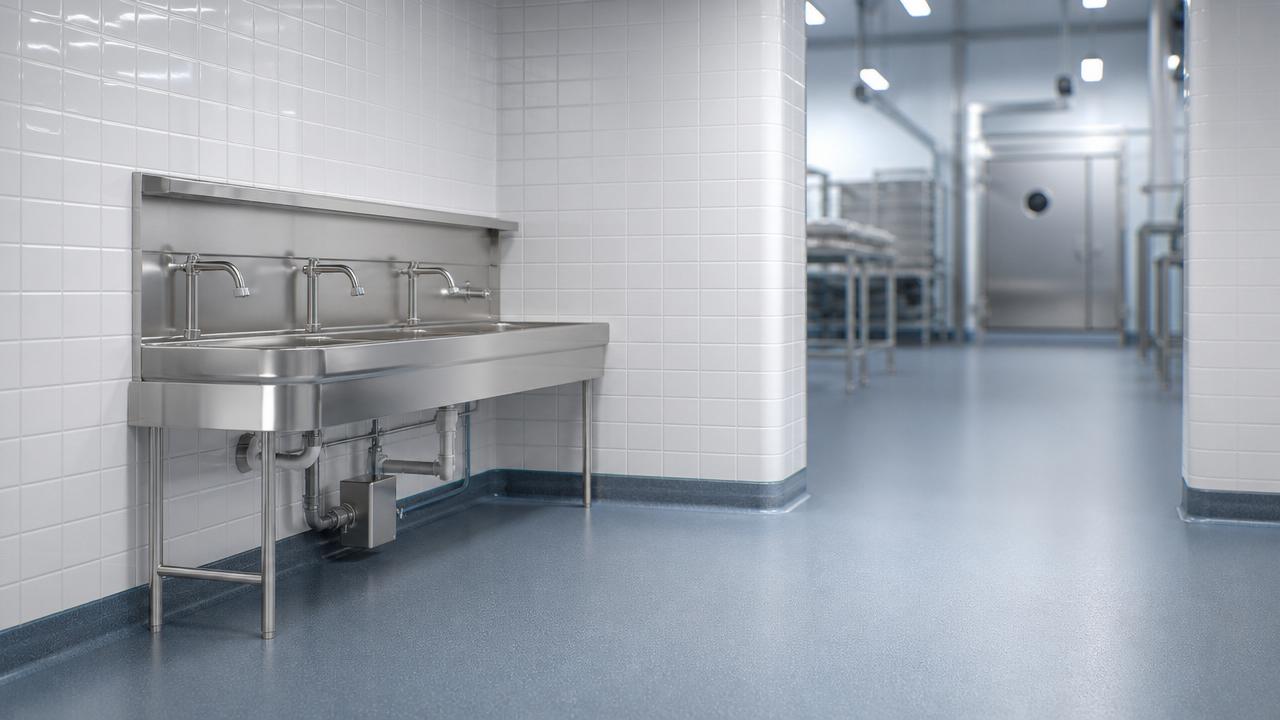
Flooring deserves special attention. Slip resistance, water resistance, and seam integrity are just as important as antimicrobial claims. In many commercial settings, resin flooring, safety vinyl with welded seams, or textured porcelain tile can outperform visually appealing but maintenance-sensitive alternatives. The key is to balance hygiene with actual foot traffic, cleaning equipment, and drainage design.
Quick comparison for common hygienic construction choices
The table below can help teams compare common options before specification or procurement review.
How should quality control and safety managers evaluate hygienic construction choices?
A common mistake is to judge hygienic construction only by supplier brochures or surface-level certifications. In reality, quality and safety teams should evaluate a combination of performance criteria, installation risks, and operational fit. The most useful questions are often simple: Will this material trap moisture? Can it be cleaned with the chemicals already used on site? What happens at corners, penetrations, drains, and movement joints? Can damaged sections be repaired without disrupting operations?
Start with moisture behavior. Hygienic construction fails quickly when water enters hidden layers, especially behind wall panels, under floor coverings, or around sanitary fittings. Waterproofing continuity, vapor management, and properly sealed transitions matter more than decorative finish claims. A premium surface placed over a weak substrate will not stay hygienic for long.
Next, review cleanability and chemical compatibility. Some surfaces can handle neutral detergents but degrade under disinfectants, acids, alkalis, or descaling products. Quality managers should request test data relevant to actual maintenance practice rather than generic “easy-clean” language. In many facilities, the cleaning regime is more aggressive than designers assume.
Then look at wear patterns. Door thresholds, sink surrounds, grout lines, faucet bases, touchpoints, and floor-to-wall transitions are high-risk areas. Hygienic construction is strongest when details reduce dirt retention and simplify inspection. Rounded coves, welded seams, accessible traps, concealed fixing protection, and smooth junctions often contribute more to sanitation than a single “antibacterial” label.
Where do hygienic construction systems most often fail, even when good materials are specified?
Failure usually occurs at interfaces, not on the material datasheet. Many hygienic construction problems begin with poor detailing, rushed installation, or maintenance that was never aligned with the original specification. This is why project teams should inspect the whole chain from design intent to site execution.
One major weak point is the joint. Joints can absorb moisture, crack under movement, discolor after repeated chemical exposure, or open up around penetrations. In wet rooms, back-of-house kitchens, and public wash areas, unprotected joints become collection points for dirt and microbial growth. Another frequent issue is incompatible layering, such as adhesive systems that lose bond strength under moisture or cleaning heat.
Drainage design is another overlooked factor. A hygienic construction floor that does not drain correctly will keep moisture on the surface, accelerate slip risk, and increase cleaning time. Similarly, wall-hung fixtures, sealants around basins, splash zones behind taps, and cabinet bases near wet cleaning equipment all need lifecycle thinking. If replacement parts are hard to source or inspection access is blocked, a minor hygiene issue can become a recurring compliance risk.
GIAM’s cross-market intelligence also highlights a strategic point: digital and smart sanitary systems improve hygiene only when they are serviceable. Touchless faucets, sensor flush valves, smart locks, and monitored water controls can reduce contamination and water waste, but they must be integrated with robust housings, moisture-protected connections, and realistic maintenance protocols.
Are antimicrobial and smart features enough to guarantee hygienic construction?
No. Antimicrobial coatings and smart touch-free products can support hygienic construction, but they should never replace sound material selection and correct detailing. A coated surface that chips, a sensor tap installed above a water-trapping counter, or a smart dispenser mounted on a difficult-to-clean backing can still create hygiene problems. Technology helps, but the underlying construction logic must remain strong.
For decision-makers, it is useful to separate active features from passive protection. Active features include touchless controls, air purification components, antimicrobial additives, leak sensors, and usage monitoring. Passive protection includes smooth surfaces, sealed edges, slope control, durable hardware, and reduced dirt-trap geometry. Long-term hygienic construction depends more on passive protection because passive elements continue working even when power, calibration, or user behavior changes.
That said, smart systems are increasingly valuable in large commercial properties and public infrastructure. They can provide data on water consumption, cleaning frequency, fixture usage, and maintenance timing. For safety managers, this data can support preventive action. For procurement and quality teams, it can also validate whether a specified hygienic construction solution is performing as intended in the field.
How can teams balance hygiene, durability, cost, and sustainability without overbuilding?
The best hygienic construction strategy is not always the most heavy-duty option in every room. Over-specification raises cost and may complicate installation, while under-specification leads to frequent repairs, complaints, and shutdowns. The answer is zoning. Divide a project by exposure level, cleaning intensity, contact frequency, and operational consequence of failure.
For example, a hospital utility room, hotel guest bathroom, school washroom, and high-end residential ensuite all require hygienic construction, but not the same system. The utility room may justify seamless chemical-resistant flooring and stainless detailing. The hotel bathroom may need premium water-resistant wall and vanity systems with strong aesthetic control. The school washroom may benefit most from impact resistance, vandal-resistant fixtures, and easy maintenance access.
Sustainability should also be assessed through lifecycle performance, not only material marketing claims. Durable systems that reduce water damage, lower cleaning chemical demand, and avoid early replacement often outperform lower-cost options with shorter service lives. GIAM’s material and market analysis repeatedly shows that carbon reduction and hygiene goals can align when teams specify durable, repairable, water-efficient construction assemblies and smart kitchen and bath components that minimize waste.
A practical checklist before approval or procurement
- Does the hygienic construction system include verified resistance to moisture, cleaning chemicals, and expected wear?
- Are joints, transitions, edges, penetrations, and drains clearly detailed?
- Can maintenance teams clean, inspect, and repair the system without major disruption?
- Is the specification aligned with the real cleaning regime and user load?
- Are smart or touchless features protected against water ingress and service failure?
- Does the product documentation cover lifecycle cost, spare parts, and compliance evidence?
What are the most common misconceptions about hygienic construction?
One misconception is that harder surfaces are always more hygienic. Hardness helps with abrasion resistance, but if the surface has open joints, poor drainage, or difficult cleaning geometry, hygiene performance may still be weak. Another misconception is that “antibacterial” means maintenance-free. In reality, residue buildup, soap scaling, standing water, and hidden moisture can undermine even advanced surfaces.
A third misconception is that hygienic construction is only relevant to hospitals or food production. Today, users expect cleaner, safer, and more durable kitchens, baths, and public spaces across nearly every property type. Rising standards in residential civilization and commercial space design mean that hygienic performance is now tied to brand reputation, user trust, asset value, and operational continuity.
Finally, many teams assume that if a product is certified, the project is protected. Certification is important, but construction quality depends on system compatibility, installation discipline, and ongoing facility management. A compliant product can still fail in a non-compliant assembly.
What should be clarified first before selecting a final hygienic construction solution?
Before moving into final specification, tendering, or supplier comparison, quality control and safety managers should define the decision framework. Clarify the hygiene objective of the space, the expected cleaning chemicals and frequency, the moisture exposure level, the service life target, and the cost of downtime if failure occurs. These answers make it easier to compare products beyond marketing language.
It is also wise to ask for mock-up validation or sample testing at the detail level, especially for wall-floor transitions, drains, grout systems, and sanitary fixture interfaces. If the project includes smart kitchen and bath systems, confirm service access, spare part availability, waterproofing around controls, and compatibility with local standards or operational protocols.
If you need to confirm a practical path forward, start the conversation with a few priority questions: Which zones need the highest hygienic construction performance? Which materials have the strongest lifecycle data under real cleaning conditions? What details are most likely to fail first? How will inspections be documented after handover? And what balance of durability, sustainability, maintenance efficiency, and budget best supports the project over time?
Industry Briefing
Get the top 5 industry headlines delivered to your inbox every morning.