
Modern sanitary trends are moving beyond touchless features
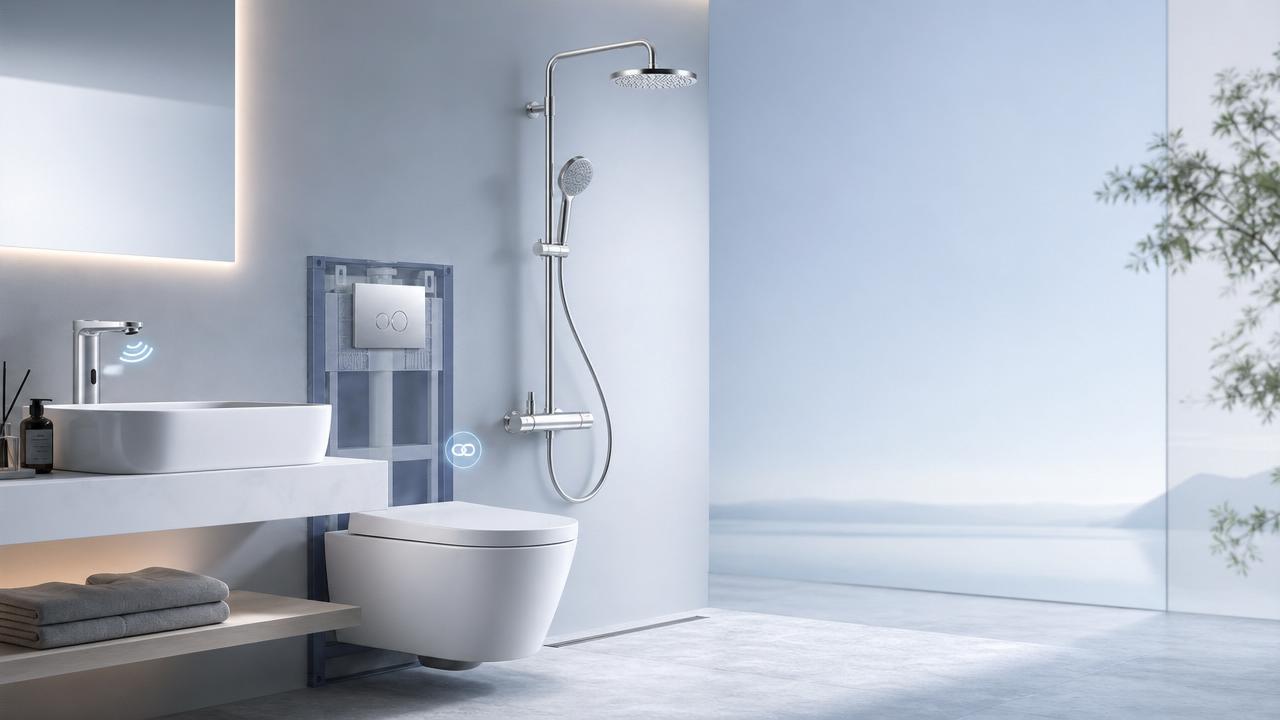
Modern sanitary trends are no longer defined by touchless functions alone. For distributors, agents, and channel partners, the real opportunity lies in solutions that combine hygiene, water efficiency, smart integration, and premium design value. As global demand shifts across residential and commercial projects, understanding modern sanitary trends helps businesses align product portfolios with evolving buyer expectations and secure stronger positioning in competitive building-material markets.
For the sanitary channel today, the market question is no longer whether touchless products matter. They do. But touchless is now only one layer of a much broader value proposition. Buyers in hospitality, healthcare, residential development, office renovation, and premium retail increasingly evaluate sanitary products through a more complex lens: hygiene performance, water-saving compliance, maintenance efficiency, digital compatibility, visual appeal, and long-term operating cost.
That shift matters directly to distributors and agents. If your product mix is still centered on “sensor equals premium,” you may be underserving what project owners, contractors, architects, and procurement teams now actually want. The strongest channel players are moving earlier, building portfolios around complete sanitary solutions that answer regulatory pressure, consumer lifestyle upgrades, and facility-management realities at the same time.
In other words, modern sanitary trends are becoming more strategic. They are tied not only to public health and convenience, but also to sustainability targets, aesthetic expectations, smart-building infrastructure, and lifecycle value. For channel businesses, this creates both opportunity and risk: opportunity for higher-margin category expansion, and risk if portfolios remain too narrow or technologically outdated.
What buyers really mean when they ask about modern sanitary trends
When a buyer searches for modern sanitary trends, they are rarely asking for a list of fashionable faucet finishes or a generic overview of sensor taps. They usually want to know which sanitary products are gaining traction, why demand is changing, and which features will still create commercial value over the next three to five years.
For distributors and agents, this means the most useful interpretation of the trend is practical rather than decorative. Which products deserve warehouse space? Which technologies are becoming standard instead of premium? Which specifications help win projects? Which claims are real market drivers, and which are just marketing noise?
In many regions, the answer starts with a clear market correction: touchless functions are still relevant, especially in high-traffic commercial environments, but they no longer differentiate on their own. Many project stakeholders now see them as expected in certain applications. The next competitive layer comes from how well sanitary products combine hygiene with water efficiency, durability, easy servicing, modular design, and smart controls.
That is why modern sanitary trends should be understood as a convergence trend. Products are no longer evaluated in isolation. A faucet, toilet, flush system, shower assembly, mirror cabinet, or basin mixer is increasingly judged by how it contributes to the total sanitary environment, both functionally and aesthetically.
Why touchless alone is no longer enough for channel growth
Touchless sanitary products grew rapidly because they addressed an urgent and visible need: reducing contact in shared spaces. In airports, hospitals, malls, restaurants, and office buildings, hands-free operation quickly became associated with hygiene leadership. That demand remains, but the market has matured.
Today, several limitations are becoming more visible. First, touchless systems alone do not guarantee hygiene if materials, drainage design, flushing performance, or cleaning access are poor. Second, low-quality sensor products can create false premium positioning while introducing battery, calibration, and after-sales problems. Third, many buyers have become more educated and now ask harder questions about actual water use, reliability, and maintenance cost.
For distributors, this changes the sales conversation. The commercial advantage is no longer in promoting “contactless” as the main story. It is in presenting sanitary solutions that improve the total user and operator experience. That includes anti-bacterial surfaces, water-efficient flushing, concealed system reliability, easy-clean forms, durable finishes, leak detection, temperature control, and compatibility with smart-building platforms.
In short, touchless features are moving from headline feature to baseline expectation in many project categories. Channel partners that continue to position them as the primary innovation may find it harder to justify premium pricing or defend differentiation against lower-cost suppliers.
The strongest modern sanitary trends shaping product demand
Among today’s modern sanitary trends, hygiene remains central, but its meaning has expanded. Buyers now look beyond hand-free activation to the full hygiene ecosystem. Rimless toilets, self-cleaning glaze technologies, anti-bacterial materials, optimized drainage geometry, odor-control systems, and easier-to-sanitize surfaces are all gaining attention because they reduce labor burden and improve user confidence.
Water efficiency is equally important. Across both developed and emerging markets, stricter regulations, rising utility costs, and green-building requirements are pushing low-flow faucets, dual-flush toilets, aerated shower systems, and pressure-optimized fittings into mainstream demand. For many commercial projects, water performance is no longer optional; it affects specification approval and total operating cost.
Smart integration is another major shift. Not every sanitary space needs a fully connected ecosystem, but more projects now require compatibility with occupancy monitoring, usage analytics, centralized control, leak alerts, or digital temperature management. This is particularly relevant in premium hospitality, healthcare, mixed-use development, and high-end residential projects where user experience and operational visibility matter.
Design value is also rising in importance. Sanitary products are becoming more visible to end users, especially in upscale residential and boutique commercial spaces. Matte finishes, minimalist forms, concealed installations, coordinated accessories, thin-edge ceramics, and integrated storage are helping buyers create spaces that feel more intentional and premium. For channel partners, design-sensitive products often support higher margins if backed by reliable quality and supply continuity.
Finally, installation and maintenance efficiency are becoming trend drivers in their own right. Installers, contractors, and facility managers increasingly prefer products that reduce fitting complexity, simplify part replacement, and shorten repair time. In this environment, technical practicality can be as influential as appearance or smart functionality.
What distributors and agents care about most before adding new sanitary lines
The target reader in this market is not just asking what is trending. They want to know what is commercially safe, scalable, and profitable. For distributors, the main concerns typically include sell-through speed, product reliability, after-sales risk, certification readiness, inventory complexity, brand positioning, and margin sustainability.
One of the biggest concerns is whether a trend translates into repeat business or is simply short-term attention. A product may look innovative at a trade show but fail in the channel if replacement parts are hard to source, installers are unfamiliar with the system, or claim rates are high. This is why distributors often prioritize proven engineering and service support over novelty alone.
Another key concern is segmentation. Not every modern sanitary trend fits every market tier. Premium smart toilets, for example, may perform well in luxury residential, hospitality, and export-led urban projects, but have limited movement in value-driven distribution networks. Water-saving mixers and durable rimless WCs, by contrast, often have wider commercial applicability.
Channel partners also worry about education burden. If a new sanitary category requires significant explanation, showroom training, installer onboarding, and post-sale technical support, the margin must justify that effort. This is where suppliers that provide strong documentation, installation guidance, certifications, and digital sales tools become much more attractive.
Most importantly, distributors want confidence that the trend aligns with where project specifications are moving. If architects, developers, and MEP consultants are increasingly writing water-efficiency, hygiene materials, concealed systems, and smart controls into tenders, then carrying those solutions becomes a strategic necessity rather than a product experiment.
How to evaluate which sanitary trends deserve portfolio investment
Not every trend should be treated equally. The best way for distributors and agents to evaluate modern sanitary trends is to use a layered decision framework. Start with demand evidence. Are you seeing inquiries from developers, architects, contractors, or existing dealers? Are these requests concentrated in a niche segment, or appearing across multiple project types?
Next, assess regulatory and specification momentum. Water-saving technologies, anti-bacterial surfaces, lead-free materials, and energy-efficient systems often have stronger long-term potential because they align with policy and compliance direction. Trends supported by regulations generally have more staying power than trends driven only by visual fashion.
Then review operational fit. Can your team explain the value proposition clearly? Can your warehouse manage the SKU count? Do you have access to spare parts, warranty processes, and technical support? If not, the product may still be promising, but rollout should be staged rather than broad.
Margin quality matters as much as headline margin. A product with high initial gross margin can still be unattractive if service claims, installation errors, or slow inventory turns consume the upside. The best sanitary trends for channel expansion are usually those that balance commercial premium with manageable support requirements.
It is also useful to score trends by market depth. Some products create excellent branding value but limited volume. Others may not look exciting but can become dependable revenue anchors. A well-built sanitary portfolio usually needs both: premium innovation categories to elevate brand positioning, and scalable core categories to maintain cash flow.
Residential and commercial demand are diverging in useful ways
One reason modern sanitary trends can be misunderstood is that residential and commercial buyers often prioritize different outcomes. In residential markets, design cohesion, comfort, personal wellness, quiet operation, and smart convenience often drive stronger purchase decisions. Homeowners and developers may accept a premium if the product enhances lifestyle perception and bathroom aesthetics.
In commercial markets, the decision logic is more performance-based. Hotels care about guest experience and maintenance efficiency. Hospitals prioritize hygiene control, easy cleaning, and compliance. Office and retail projects focus on durability, sensor reliability, and water management. Public infrastructure buyers often emphasize vandal resistance, replacement speed, and lifecycle cost.
For distributors and agents, this means a single “trend story” is not enough. The same product may need different positioning depending on the project channel. A smart flush plate can be sold to a residential customer as a design-forward control element, while to a commercial operator it may be positioned around maintenance access, water control, and concealed-system reliability.
The practical takeaway is clear: portfolio strategy should be segment-specific. The more precisely a channel partner maps sanitary trends to buyer use cases, the easier it becomes to improve conversions and reduce mismatched stocking decisions.
Where the best near-term opportunities are for channel partners
For many distributors, the most immediate opportunities do not sit only in headline smart products. They often sit in “practical premium” categories—products that feel advanced, solve visible problems, and fit mainstream project economics. Examples include water-saving faucets with durable internal components, rimless and easy-clean toilet systems, concealed cisterns with dependable service access, anti-bacterial surfaces, thermostatic shower controls, and coordinated sanitary hardware collections.
Mid-to-high tier renovation markets are especially attractive because buyers are often upgrading both appearance and functionality at the same time. In these cases, modern sanitary trends are not abstract concepts; they become concrete selling points tied to hygiene, reduced utility bills, better aesthetics, and perceived property value.
Commercial retrofits also present strong potential. Older buildings frequently need sanitary updates to meet current expectations around cleanliness, accessibility, efficiency, and maintenance. Distributors that can supply retrofit-friendly systems, modular components, and clearly documented installation pathways are often better positioned than those pushing only fully new-build solutions.
Another opportunity lies in bundle selling. Because sanitary purchasing is becoming more system-oriented, channel partners can increase order value by combining faucets, flushing systems, accessories, vanity solutions, mirrors, drainage, and smart controls into coordinated packages. This approach supports margin growth and strengthens supplier loyalty at the same time.
How to position your business around modern sanitary trends without overcommitting
The smartest response to modern sanitary trends is not to chase every innovation. It is to build a structured assortment that reflects where demand is truly moving. For most channel businesses, that means maintaining a reliable core range while selectively adding growth categories that offer clear differentiation or compliance advantage.
Start by defining three product layers. The first is the volume layer: proven sanitary essentials with broad demand. The second is the upgrade layer: products with clear user or operator benefits, such as water-saving, easy-clean, or concealed-system improvements. The third is the image layer: premium smart or design-led products that strengthen market perception and open higher-value project access.
Training is critical. Sales teams need to explain not just what the product does, but why it matters in commercial terms. Installers need clarity on fitment and maintenance. Dealers and showroom staff need comparison tools that connect product features to project outcomes. Without this translation layer, even strong sanitary products can underperform.
It is also wise to work with suppliers that provide specification support, localized compliance information, spare-part continuity, and stable lead times. In sanitary categories, service credibility often determines whether a trend becomes a profitable line or a costly distraction.
Conclusion: the next phase of sanitary demand is integrated, not single-feature driven
Modern sanitary trends are moving beyond touchless features because the market itself has evolved. Buyers are now looking for integrated value: hygiene that is measurable, water efficiency that supports compliance, smart functions that improve operations, and design that enhances user perception. Touchless products still matter, but they are no longer the whole story.
For distributors, agents, and channel partners, the business implication is straightforward. Winning portfolios will be built around solutions that match real project needs across residential and commercial sectors, not around isolated features with fading novelty. The most valuable response is to evaluate trends through demand quality, specification direction, maintenance practicality, and margin durability.
Those who understand modern sanitary trends in this broader sense will be better positioned to advise buyers, refine assortments, and capture premium opportunities in an increasingly competitive building-material market. In the years ahead, the leaders in sanitary distribution will not be those who sell the most sensors, but those who best connect hygiene, efficiency, intelligence, and design into commercially relevant solutions.
Industry Briefing
Get the top 5 industry headlines delivered to your inbox every morning.