Smart Bathroom Technology Features That Make Maintenance Easier
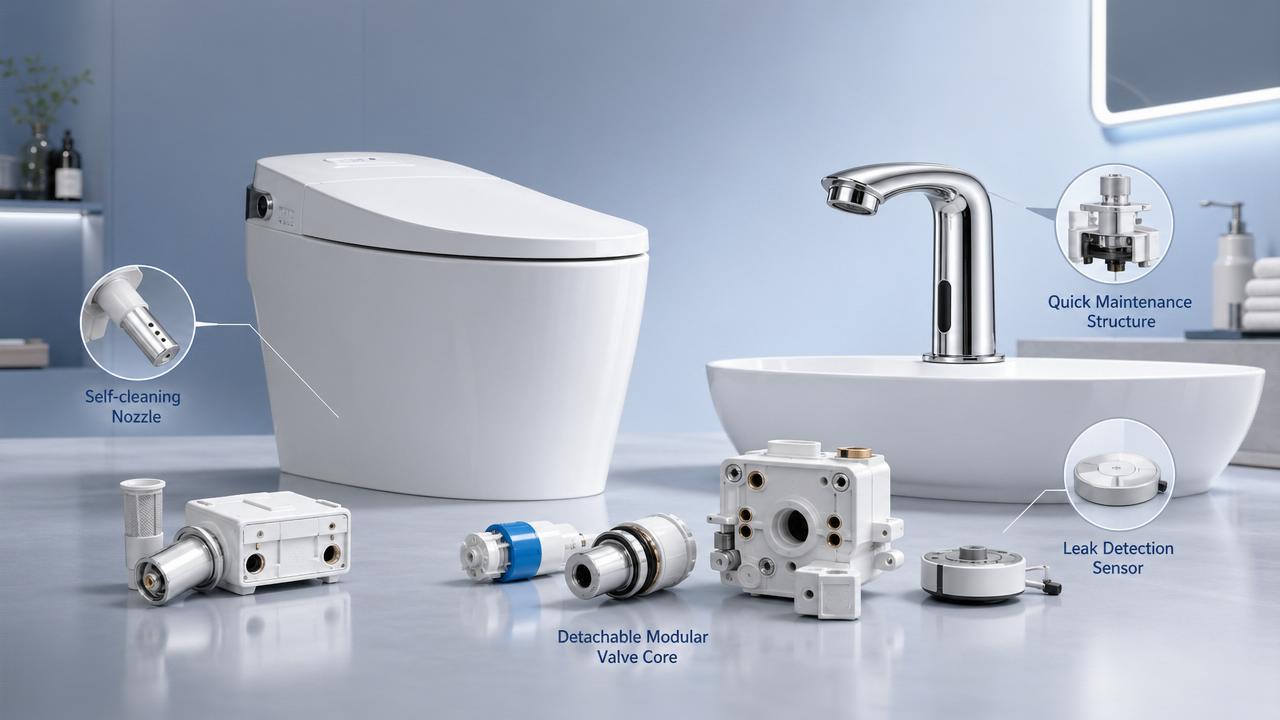
For after-sales maintenance teams, smart bathroom technology can reduce service time, simplify diagnostics, and prevent recurring issues. From self-cleaning functions and leak detection to app-based monitoring and modular components, these features make routine upkeep far more efficient. Understanding how smart bathroom technology supports easier maintenance helps technicians improve response speed, lower costs, and deliver more reliable long-term performance.
Why maintenance priorities are shifting in smart bathroom technology
A clear industry change is underway: bathroom products are no longer judged only by comfort, design, or water efficiency. For project owners, facility operators, distributors, and service contractors, maintainability has become a major selection factor. In both residential and commercial environments, smart bathroom technology is now expected to shorten fault-finding time, reduce site visits, and support faster part replacement over a service life that often extends 5 to 10 years.
This shift matters especially to after-sales maintenance teams. Traditional bathroom fixtures often required manual inspection across multiple mechanical points, and failures were only discovered after user complaints. Newer smart bathroom technology changes that workflow by adding sensors, onboard diagnostics, remote alerts, and software-based status reporting. Instead of spending 60 to 90 minutes tracing an intermittent issue, technicians can often narrow the likely cause within the first 10 to 20 minutes.
The trend is not limited to premium homes. Hotels, healthcare spaces, offices, serviced apartments, and mixed-use developments are increasingly adopting touchless faucets, intelligent toilets, leak detection modules, and app-connected control systems. As installation volumes rise, maintenance teams are under pressure to manage more units with the same labor headcount. That is why smart bathroom technology that supports preventive service is gaining attention across the broader building materials and sanitary systems market.
Key signals behind the change
Several market signals explain this move toward easier upkeep. First, labor costs and response-time expectations have both increased. Second, smart devices are becoming more modular, making field servicing more practical. Third, water-saving and hygiene-focused features now rely on electronics and sensors, which means maintenance methods must evolve from purely mechanical repair to hybrid mechanical-digital service. In many service environments, the difference between a 1-visit fix and a 2-visit fix can directly affect profitability.
- More projects require preventive service planning rather than reactive repair only.
- Remote diagnostics are reducing unnecessary dispatches for low-risk faults.
- Maintenance teams increasingly need access to firmware status, sensor logs, and replacement module compatibility.
- Specifiers are paying closer attention to spare-part availability within 24 to 72 hours.
For platforms such as GIAM that track building materials and smart sanitary systems, this is an important evolution signal. Product value is no longer measured only at installation. It is increasingly measured through lifecycle stability, service efficiency, and how well smart bathroom technology fits long-term operating demands.
The features driving easier maintenance and why they matter now
The strongest maintenance trend is a move from hidden failure toward visible condition monitoring. Instead of waiting for scale buildup, seal wear, or sensor drift to create user-visible problems, smart bathroom technology can flag abnormal conditions earlier. This does not eliminate maintenance work, but it changes the timing and improves planning. For after-sales teams handling 50, 200, or even 1,000 installed units across sites, early visibility can make route planning and spare-part management far more efficient.
Another major trend is functional integration. Features once treated as premium add-ons—such as leak alerts, self-rinse cycles, cartridge status indicators, and usage counters—are becoming standard in more product categories. This reflects a broader market direction: maintenance support is being built into the product architecture itself. In practical terms, smart bathroom technology is increasingly designed to reduce disassembly steps, lower contamination risk, and minimize repeated troubleshooting.
For maintenance teams, the most useful features are not always the most visible to end users. A consumer may focus on touchless operation or a digital interface, while a technician values standardized connectors, removable sensor housings, fault codes, and service-access panels. That difference in perspective is shaping procurement conversations more than before.
Maintenance-relevant functions gaining importance
The table below summarizes how common smart bathroom technology features are affecting real maintenance workflows. The focus is not on marketing appeal, but on service outcomes such as response speed, repeat-visit risk, and component accessibility.
The practical message is straightforward: not every smart feature improves maintenance, but the right ones clearly do. When evaluating smart bathroom technology, teams should distinguish between user-facing convenience and service-facing functionality. The latter often determines whether total support costs stay stable after the first 12 to 24 months of operation.
Where service efficiency improves most
The biggest service gains usually appear in three areas. First is diagnosis, because data points narrow the fault path. Second is cleaning and hygiene control, because automated rinse or anti-fouling functions slow down contamination. Third is replacement logistics, because modular design reduces the number of tools, seals, and sub-parts needed during each visit.
- Digital fault indicators help junior technicians follow a consistent troubleshooting path.
- Usage counters make it easier to plan maintenance after defined thresholds such as 5,000 or 10,000 cycles.
- Quick-release assemblies reduce the chance of damage during disassembly in compact bathroom spaces.
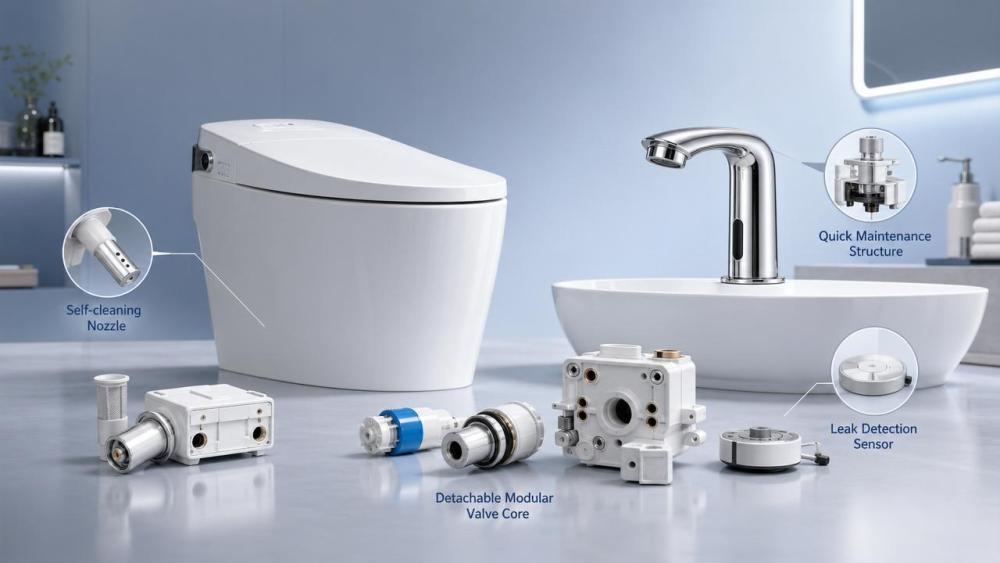
As this feature set becomes more common, maintenance workflows will continue to move from reactive repair toward scheduled intervention. That is one of the most meaningful long-term signals in smart bathroom technology today.
What is driving this trend across projects and supply chains
This maintenance-oriented evolution is not happening by accident. It is being pushed by a combination of operational cost pressure, hygiene expectations, water-management concerns, and the digitalization of building systems. In many regions, project teams want fewer water-loss incidents, lower downtime, and more predictable lifecycle planning. Smart bathroom technology fits this direction when it provides actionable maintenance data rather than just adding electronic complexity.
A second driver is the wider use of connected building infrastructure. Bathrooms are no longer isolated fixtures in many commercial settings. They are increasingly part of building management, occupancy, hygiene, and sustainability strategies. This encourages manufacturers to design products that communicate conditions such as battery status, abnormal flow, usage spikes, and maintenance intervals. For after-sales teams, that creates a better operating environment if system compatibility is handled correctly from the start.
A third factor is spare-part economics. Site operators do not want large inventories of highly specific repair parts that may remain unused for 18 months. Manufacturers therefore have an incentive to standardize modules across product lines. When smart bathroom technology uses shared cartridges, sensors, or control boards across several models, service organizations can carry fewer stock-keeping units while still covering more installed assets.
Main drivers behind easier-maintenance design
The following comparison highlights the main forces shaping maintainability in the current market and how each one influences service expectations.
The broad lesson is that easier maintenance is now part of product competitiveness. For GIAM readers following spatial intelligence and material-system evolution, this is a useful signal: the value chain is shifting from product sale to lifecycle performance, and smart bathroom technology sits directly in that transition.
Signals worth tracking over the next 12 to 36 months
Maintenance teams and procurement decision-makers should watch several indicators over the coming 1 to 3 years. These indicators can reveal whether a product line is truly becoming easier to service or simply adding more electronics.
- Whether fault reporting is visible at product level, app level, or building-system level.
- Whether wear parts are standardized across multiple SKUs or locked to single models.
- Whether firmware updates can be performed safely without taking the unit out of service for long periods.
- Whether service manuals provide threshold-based guidance, such as expected cleaning intervals or battery replacement windows.
A product that performs well in a showroom may still be expensive to maintain in year 2 or year 4. That is why trend evaluation should include service architecture, not only feature lists.
How different maintenance teams are affected by these changes
The impact of smart bathroom technology is not identical across all service environments. A residential installer handling 10 units per month faces different pressures than a facility maintenance provider responsible for 300 touchless fixtures in a public building. The trend, however, is consistent: where service scale increases, the value of faster diagnostics and modular maintenance increases as well.
For independent after-sales technicians, the biggest advantage is often time certainty. If diagnostic logic is clear, they can estimate whether the issue is likely electrical, hydraulic, sensor-related, or software-related before opening the unit. That improves van stock preparation and reduces unnecessary return visits. For service managers, the benefit is easier training because fault trees are more standardized.
For distributors and project service partners, easier maintenance can also support stronger client retention. When smart bathroom technology delivers fewer repeated faults and shorter downtime windows, it strengthens long-term relationships with developers, property managers, and commercial operators. In a competitive market, service quality can become as important as the product itself.
Impact by service context
Different environments prioritize different maintenance outcomes. The matrix below can help teams align product choices with actual service conditions.
This comparison shows why maintenance strategy should be linked to installation type, user density, and expected service intervals. Smart bathroom technology delivers the best operational value when its service design matches the actual environment.
Common challenges teams still need to manage
Even with advanced features, easier maintenance is not automatic. Teams still need training on sensor calibration, power management, firmware compatibility, and water-quality-related wear. In hard-water regions, for example, self-cleaning functions help, but they do not fully replace periodic inspection every 3 to 6 months in high-use settings.
- Battery-powered devices need predictable replacement cycles and low-battery alerts.
- Connected devices need clear rules for resets, pairing, and firmware version control.
- Mixed installations with old and new units can complicate spare-part planning.
The result is a new skill mix. Maintenance teams now benefit from both plumbing experience and light digital troubleshooting capability. That blended service model will likely become more common across the sanitary and smart building sectors.
How to judge future-ready smart bathroom technology for easier upkeep
Because the market is expanding quickly, maintenance teams should use a practical evaluation framework before recommending or supporting a product line. The best smart bathroom technology for service operations is not necessarily the model with the longest feature list. It is the one that balances user functionality with stable parts support, clear diagnostics, and realistic maintenance intervals.
A useful first step is to assess the expected service lifecycle. Ask whether routine maintenance is likely every 3 months, 6 months, or 12 months based on use intensity and water quality. Then check whether the product provides maintenance prompts, fault memory, and modular replacement options aligned with that reality. If not, the product may create hidden service costs after installation.
A second step is to verify support readiness. Strong smart bathroom technology should be backed by accessible technical documentation, spare-part identification logic, and a defined lead time for critical modules. In many projects, acceptable replacement-part response falls within 48 to 96 hours, especially for heavily used spaces.
A practical checklist for maintenance-focused evaluation
- Confirm whether the product provides visible diagnostics for common faults such as low pressure, blocked nozzles, sensor errors, or abnormal leakage.
- Check if routine service tasks can be completed with standard tools in less than 20 to 30 minutes for common maintenance items.
- Review whether critical parts are modular and whether cross-model compatibility reduces inventory burden.
- Ask for realistic cleaning and descaling intervals under different water conditions rather than assuming a single universal schedule.
- Verify whether software or control updates require onsite presence or can be managed through a simpler service process.
These checks help distinguish durable service design from feature-heavy complexity. For maintenance teams, that distinction matters more over the long term than initial product novelty.
Where GIAM insight adds value
GIAM’s cross-sector view of building materials, sanitary spaces, and smart systems is especially relevant here. Trends in material science, hydraulic design, water-saving standards, and digital controls increasingly converge inside the bathroom environment. Understanding these intersections helps service teams and procurement stakeholders judge not only what is available today, but which directions are likely to stay practical over the next product cycle.
For example, anti-bacterial surfaces, low-flow controls, sensor-managed dispensing, and modular maintenance architecture are no longer separate topics. They are part of one broader movement toward safer, more efficient, and more serviceable sanitary systems. That is exactly why smart bathroom technology deserves attention from both technical and commercial decision-makers.
Why choose us for smarter maintenance decisions
If your team is assessing smart bathroom technology from a maintenance, project, or sourcing perspective, GIAM can help you judge the trend with more clarity. Our focus is not limited to isolated product features. We look at the full spatial intelligence picture, including material compatibility, hydraulic logic, digital serviceability, and long-term operating value across residential and commercial applications.
You can contact us to discuss practical questions such as parameter confirmation, product selection logic, maintenance-friendly configurations, spare-part planning, expected delivery cycles, certification-related concerns, sample support, and quotation communication. This is especially useful when you need to compare multiple smart bathroom technology options across different service environments or project scales.
If you want to understand how current maintenance trends may affect your business in the next 6 to 24 months, reach out with your application scenario, service challenges, or target specification. We can help you identify which features are truly reducing service burden, which configurations are easier to support after installation, and what questions to confirm before procurement or deployment.
Industry Briefing
Get the top 5 industry headlines delivered to your inbox every morning.